
Why Web Flex Screens Meet Your Needs
A coach feeding front toss in a crowded cage does not need a screen that almost works. One bad ricochet, one bent frame, or one screen that takes too long to move can slow down practice and put people at risk. That is why finding the best baseball screen for coaches starts with one question: what kind of work does your screen need to survive every day?
For some programs, that means heavy batting practice with constant ball contact. For others, it means a portable setup that can go from the garage to the field to a weekend tournament. The right screen is not just about size. It is about protection, stability, setup speed, and how well it holds up when your practice volume gets serious.
What makes the best baseball screen for coaches?
The best screens earn their place by making practice safer and more efficient. Coaches need protection during front toss, overhand batting practice, pitching drills, and fungo work. They also need equipment that does not become a project every time it comes out of storage.
A strong baseball screen should do three jobs well. First, it should give the coach a clean shield from line drives and hard comeback balls. Second, it should stay stable through repeated impact without twisting, sagging, or walking across the turf. Third, it should fit the pace of your training environment, whether that is a backyard session, a school field, or a high-rep facility.
That last part matters more than people think. A screen that is great for travel ball families may not be the best fit for a varsity program that runs batting practice five days a week. On the other hand, a massive heavy-duty unit is not always the smart choice if you need to load it in and out of a truck every weekend.
Start with the screen style, not the marketing
Different screen shapes solve different coaching problems. If you buy based only on the photo, you can end up with a screen that is solid in general but wrong for your drills.
L-screens for batting practice
The L-screen is the standard for a reason. It protects the coach or pitching machine operator while leaving a throwing window to deliver pitches. For coaches who throw live BP regularly, this is usually the first screen to consider.
A good L-screen needs enough width and height to protect the body without forcing awkward throwing mechanics. It also needs a net and frame that can absorb repeated direct contact. If the pocket wears down fast or the frame starts to wobble, the screen stops doing its job.
Z-screens for flexibility
A Z-screen gives coaches more setup options. It can work well for both right-handed and left-handed use without constant repositioning, and it is a practical choice for mixed training environments where drills change quickly.
This style makes sense for coaches who want one screen to cover multiple roles. That said, flexibility only helps if the frame is sturdy. A lightweight design can be easy to move but less confidence-inspiring when hitters are turning on balls in close quarters.
Field screens and protective screens for team practice
When the goal is broader protection during team drills, larger field screens can be the better answer. These are useful for fungo stations, side work, and protecting players or coaches during defensive repetitions. They are less about feeding pitches and more about controlling space safely.
For school programs and facilities, this type of screen often becomes part of the daily practice infrastructure. That makes durability and wheel design especially important. A big screen that does not move well becomes dead weight.
Durability is not a bonus feature
Coaches put more wear on a screen than most buyers expect. Repeated impact breaks down weak netting. Dragging equipment across dirt, turf, and concrete exposes flaws in the frame. Sun, rain, and storage conditions do the rest.
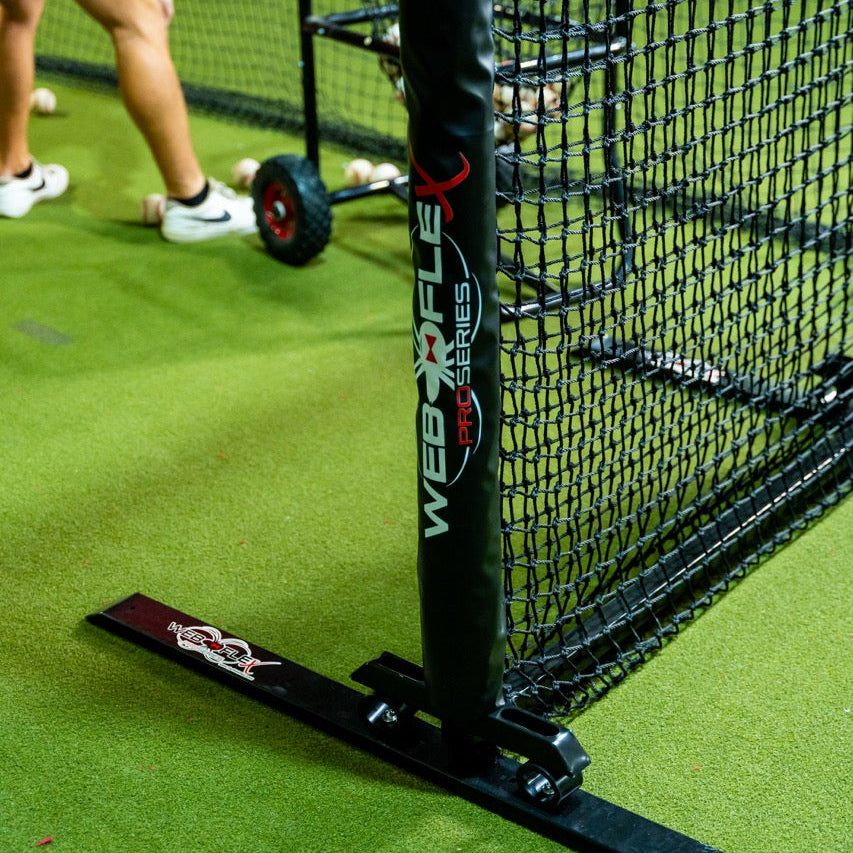
If you are shopping for the best baseball screen for coaches, pay attention to the frame construction first. A heavy-duty frame with strong joints and a design built to absorb impact is a better long-term investment than a lighter screen that looks fine on day one but loosens up by midseason.
Net attachment also matters. A screen can have a strong frame and still fail early if the netting stretches too much or takes concentrated damage in the strike zone. Coaches who run high-volume batting practice should lean toward screens designed for repeated impact, not occasional backyard use.
This is where product tier matters. Portable, lighter options are useful for families, part-time instructors, and teams that need easier transport. Premium models make more sense for programs and facilities that need serious daily durability. It depends on your rep count, storage setup, and how often the screen gets moved.
Portability has to match real life
Every coach says portability matters, but not every coach means the same thing. For some, portability means folding it into the trunk after lessons. For others, it means rolling it from cage to cage without a hassle.
The best choice depends on where the screen lives. If it stays at one facility, heavier construction usually wins. If it travels constantly, setup speed, manageable weight, and compact storage become more important.
Wheels can be a major advantage, especially for larger screens, but they need to be built for actual field use. A wheel system that works on smooth concrete is not automatically useful on grass, turf edges, or dirt. Coaches should think through the full path of movement before deciding how much portability they really need.
Safety is the whole point
A baseball screen is not just another practice accessory. It is a piece of protective equipment. That means the best one is the one that gives coaches confidence to work close, stay efficient, and keep reps moving.
Coverage is the first part of safety. A screen that leaves too much exposed area can force poor positioning. Stability is the second part. If the frame tips, slides, or rocks on impact, protection drops fast. The third part is visibility. Coaches need to see pitches, swings, and ball flight clearly without working around bulky blind spots.
There is always a trade-off here. Bigger screens provide more coverage, but they can be harder to move and store. Lighter screens are easier to handle, but they may not offer the same planted feel during high-velocity work. The right balance depends on the age of the players, the distance of the drill, and the pace of the session.
How coaches should choose by use case
A youth coach running basic front toss does not need the exact same setup as a training facility operator seeing hitters all day. The smart buy comes from matching the screen to your workload.
If you coach younger players and move locations often, a portable screen with dependable protection and easy setup is usually the better fit. If you run a high school or college practice plan with frequent batting practice, a heavier-duty screen gives you better long-term value because it is built for repetition.
If your sessions mix front toss, overhand BP, and defensive work, a more versatile shape can reduce the need for multiple screens. If your focus is almost entirely batting practice, a dedicated L-screen often remains the cleanest solution.
Facilities and serious travel organizations should think beyond this season. Daily use changes the equation. Frame integrity, impact absorption, and warranty support start to matter more than shaving a few pounds or choosing the smallest footprint.
What coaches often regret after buying
Most screen regret comes from underbuying. Coaches choose a screen based on convenience, then realize it is taking damage too quickly or does not feel safe enough for close work. A screen that needs replacing early is rarely the efficient choice.
The second common mistake is buying too much screen for the job. If your setup is small, mobile, and occasional, a massive professional unit can become frustrating to transport and store. Better gear is only better when it matches the way you actually train.
It also helps to think about who is using it. A solo instructor may care most about speed and maneuverability. A school program may care more about all-season toughness. A parent-coach may need something that can do both without becoming a burden.
Best baseball screen for coaches means the right one for your reps
There is no single screen that wins for every coach. The best baseball screen for coaches is the one that protects consistently, holds up under your training volume, and fits your practice environment without slowing anything down.
That usually means being honest about how much ball impact your screen will take, how often you will move it, and how much risk you are willing to accept when hitters are getting their swings in. For lower-volume use, portability can carry more weight. For serious daily work, durability and stability should lead the decision.
Web Flex Sports builds around that reality with options that serve both ends of the training spectrum, from more portable setups to premium heavy-duty screens designed for high-rep environments. The right choice is not about buying the biggest frame on the page. It is about putting the right protection in the right spot, then letting your practice run at full speed.
Choose the screen that can handle your routine on its busiest day, not your easiest one.