
A full batting cage setup is great when you have the space, budget, and a dedicated training area. Most players, coaches, and families do not. That is why the search for a batting cage net alternative usually starts with a simple question: what gives you real reps, solid protection, and easy setup without turning your backyard or field space into a permanent cage?
The right answer depends on how you train. A hitter taking front toss in the backyard needs something different than a high school program running station work every day. A private instructor needs fast setup and breakdown. A travel ball family may care most about portability. What matters is not finding a cheap substitute for a cage. It is finding training equipment that fits your volume, your space, and your safety needs.
What makes a good batting cage net alternative?
A batting cage does two jobs well. It contains balls and creates a predictable training lane. Any strong alternative has to cover at least one of those functions, and ideally both, without adding unnecessary hassle.
For most athletes, the best alternative is not a single giant net. It is a more flexible setup built around portable hitting nets, protective screens, and target-based training tools. That combination can be more practical than a cage because it creates focused reps instead of forcing every session into the same format.
A good alternative should be easy to move, stable through repeated impact, and strong enough to handle regular baseball or softball use. It should also match the type of work you actually do. Tee work, front toss, overhand BP, and pitching stations all place different demands on your setup.
Portable hitting nets are the most common batting cage net alternative
If you want the closest thing to a cage without the footprint of a cage, a portable hitting net is usually the first place to look. It gives hitters a clear visual target, contains most balls in a compact area, and can go from storage to practice-ready fast.
That portability matters more than most buyers expect. Equipment that takes too long to build often gets used less. A portable net can live in a garage, ride to a practice field, or travel with a team. For families and coaches trying to squeeze in extra reps, convenience is part of performance.
That said, not all portable nets are built for the same workload. A lightweight net works well for tee work, soft toss, and moderate front toss. A heavier-duty frame and stronger netting make more sense if you are training multiple hitters in a row, working with older players, or using the setup several days a week. High-repetition environments expose weak frames, poor tension, and netting that sags or tears early.
This is where product tier matters. Some athletes need grab-and-go portability. Others need a frame that can take daily abuse and still hold shape. The better choice is the one that matches your volume, not just the one that looks good in a product photo.
Protective screens can be a smarter alternative than a full net
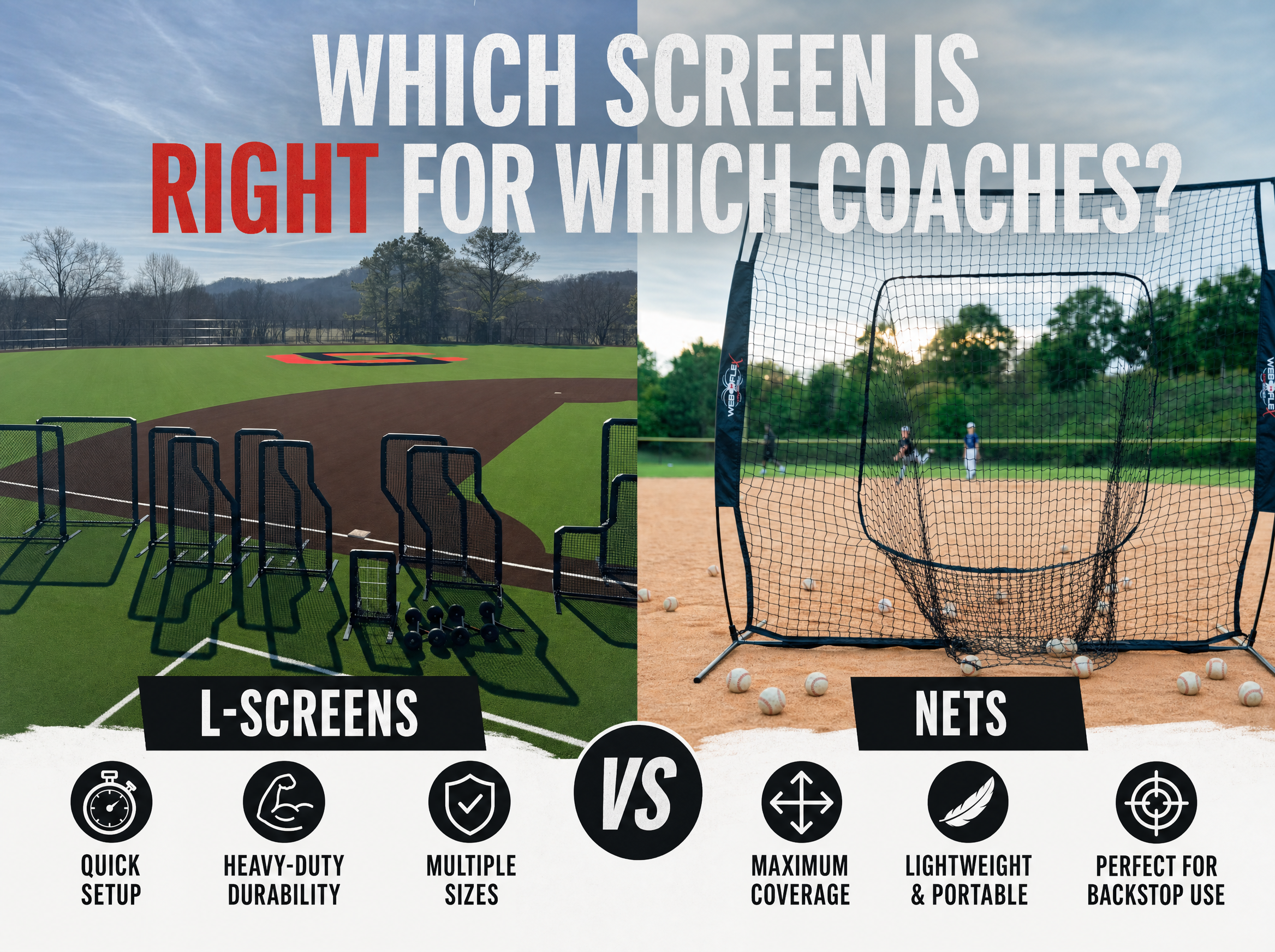
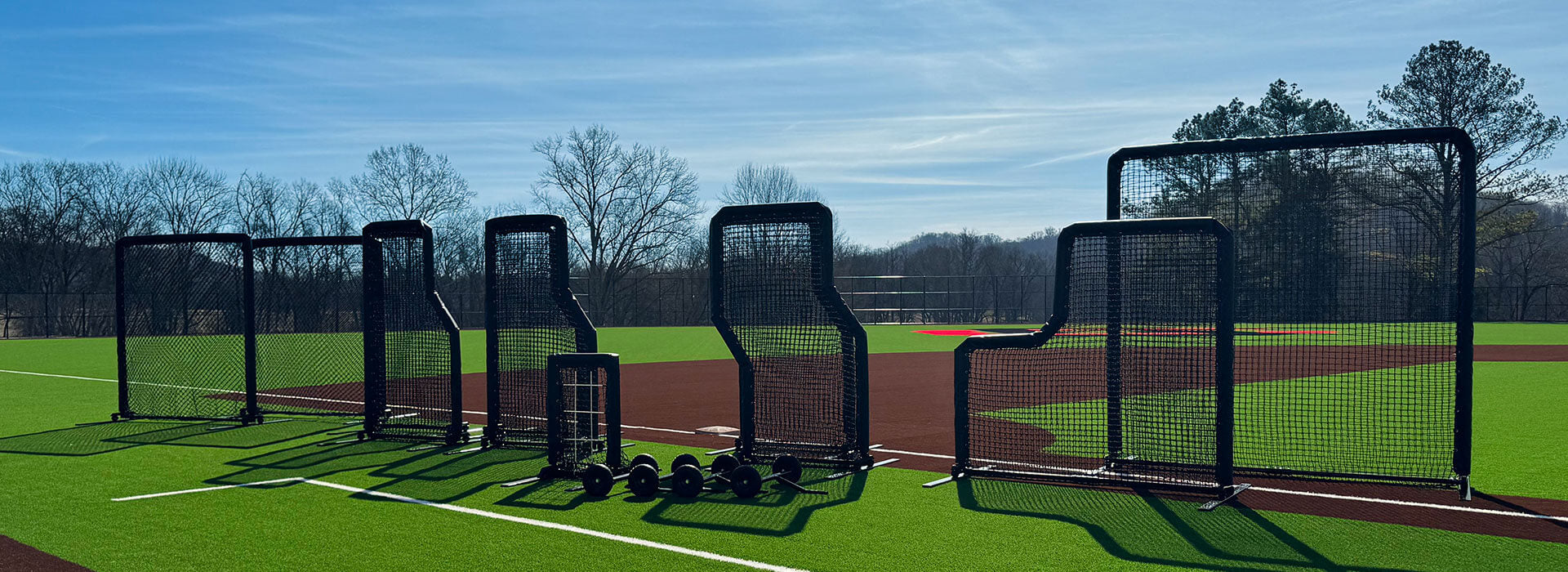
For coaches, instructors, and serious hitters, a batting cage net alternative is often not a hitting net at all. It is a protective screen setup. L-screens, field screens, and specialty protective screens can make batting practice safer and more efficient while using far less space than a cage.
This matters most during front toss and overhand work. A cage contains balls, but a quality screen protects the person feeding the hitter. That is a different job, and it is one that directly affects how confidently and efficiently you can run practice.
An L-screen is a strong choice when pitchers or coaches are throwing from in front of the hitter. A field screen works well for side toss stations, skill stations, and general field protection. In team settings, screens also help organize traffic and create cleaner practice flow. Instead of building one large batting area, coaches can create multiple controlled stations that keep players moving.
The trade-off is obvious. Screens do not fully contain every ball the way a cage can. If your top priority is limiting ball scatter in a small yard, a hitting net may be better. If your top priority is protecting a coach or creating a safe live-rep station, a screen may be the stronger choice.
Rebounders and target systems change the purpose of training
Sometimes the best batting cage net alternative is one that does not try to copy a cage at all. Rebounders, strike zone targets, and plyo-style training walls can be better tools when the goal is skill development rather than ball containment.
For example, a rebounder supports hand-eye work, quick reaction training, and defensive reps in a small space. A pitching target helps pitchers and catchers train command without needing a catcher every session. A plyo wall can support arm care, throwing progression, and athletic movement. None of these tools replace batting practice on their own, but they can make your training setup far more useful than a single-purpose cage.
That is an overlooked point. Buyers often search for a batting cage net alternative because they want something smaller or cheaper. A better way to think about it is this: what training limitation are you trying to solve? If the real issue is lack of safe reps, poor practice flow, or wasted setup time, a different category of equipment may solve the problem better than another large net.
Backyard, team, and facility needs are not the same
The biggest mistake in this category is buying for a picture in your head instead of your actual environment. A backyard setup has to consider storage, neighbors, ball retrieval, and quick setup. A team setup has to handle multiple athletes and repeated impact. A facility setup has to survive volume.
For backyard training, compact hitting nets and portable screens usually make the most sense. They give players a place to work without dominating the whole yard. For teams, durability becomes more important. Thin frames and light netting wear out quickly when used by a full roster. For facilities, premium-grade construction is not a luxury. It is what keeps training on schedule.
This is also where safety separates smart gear from disposable gear. Frames need to stay stable. Netting needs to absorb impact without breaking down early. Protective screens need to hold their shape and do their job session after session. Serious training equipment should reduce risk, not create new problems after a month of use.
How to choose the right batting cage net alternative
Start with rep type. If the session is mostly tee work and front toss, a portable hitting net is probably your best fit. If the session includes coach-fed BP or higher-velocity work, a protective screen should be part of the setup. If the goal is all-around skill development in a tight area, adding rebounders or targets may give you more value than going bigger on one net.
Then look at usage level. Occasional home use and daily team use are different categories, even if the product names sound similar. Portable gear is great when movement matters. Heavy-duty gear is better when your equipment never gets a day off.
Finally, think about setup friction. The best equipment is the gear that gets used consistently. If it takes too long to assemble, is too awkward to move, or does not fit your practice space, it will limit reps instead of creating them.
That is why many athletes and coaches move away from the idea of a full cage and toward a modular system. A portable net, one solid protective screen, and a few targeted training tools can create a more useful practice environment than a bulky setup that only works in one location. For players who train at home, coaches who need fast station work, and teams trying to balance safety with efficiency, that is usually the smarter path.
Web Flex Sports serves that kind of athlete well because the equipment focus is not just on having a net. It is on building a setup that holds up, protects people, and keeps training moving.
If you are choosing a batting cage net alternative, do not chase the biggest footprint. Choose the setup that gives you more quality reps, better protection, and less wasted time. The best training gear earns its place every session.