
A bullpen can look busy and still waste half its time. Balls roll behind the mound, catchers wait for a bucket refill, coaches step into the throwing lane to give feedback, and the next pitcher stands around until someone clears space. A good bullpen workflow analysis identifies those small breakdowns before they become the routine.
For a pitching coach, the goal is not simply to get more pitches thrown. The goal is to get more quality reps from every pitcher while protecting arms, catchers, coaches, and the equipment that makes the session possible. That takes a bullpen layout built around movement, safety, and a clear purpose for every station.
Start Bullpen Workflow Analysis at the Mound
The mound is the center of the session, but it should not be the center of all activity. When pitchers, catchers, coaches, and ball runners all work in the same small area, the bullpen slows down and the risk of getting hit goes up.
Start by watching a normal bullpen from the side. Track what happens from the moment a pitcher takes the rubber until the next pitcher starts their first pitch. Where do balls collect? Who retrieves them? Where does the pitcher wait before throwing? Does the coach have a protected place to observe and communicate? Those answers show you where the process is breaking down.
The best workflows create a simple loop: pitcher throws, catcher receives, balls move to a collection point, and the next round begins without anyone crossing the live throwing lane. That may sound basic, but most inefficient bullpens fail because one part of that loop has not been planned.
A coach should also decide what the bullpen is trying to accomplish before setting the field. A command session needs a visible strike-zone target and room for immediate feedback. A velocity day may need a radar setup and more recovery time. A pitcher working on a new pitch may need fewer total throws and a clearer observation angle. The same physical space can support all three, but not with the exact same workflow.
Build a Safe Traffic Pattern
The safest bullpen is one where nobody has to guess where to stand. Pitchers should have a defined waiting area behind the mound or off to the throwing-arm side, away from any backswing, warm-up toss, or foul-ball path. Catchers need a clear route to their gear and ball supply. Coaches need a position that allows them to see the delivery without becoming part of the drill.
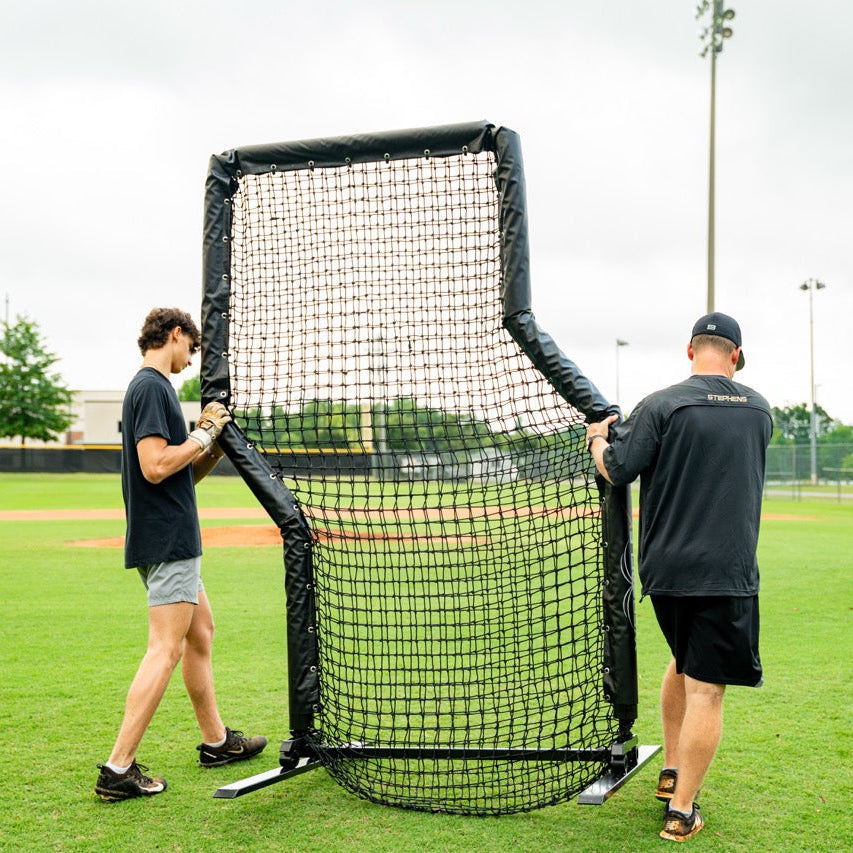
Protective screens make that structure possible. An L-screen placed properly gives the coach a dependable spot for front-toss work, short-box drills, or close-range feedback. A full field screen can separate adjacent throwing lanes or protect a ball collection area when multiple pitchers are working at once.
Screen placement is not about putting as much steel and netting as possible around the mound. Too many barriers can create tight corners, blocked sightlines, and awkward ball retrieval. Use screens to protect people at the highest-risk points, then leave enough open space for athletes to move naturally.
For high-volume programs, Web Flex Sports Pro Series screens are built for this kind of repeated work. Their heavy-duty construction and shock-absorbing design fit bullpens where coaches and players need equipment that stays planted through daily use. A Spider Series screen is the better fit when portability matters most - such as travel teams, temporary practice spaces, or families building a compact home throwing setup.
Separate Throwing From Ball Retrieval
A bullpen loses rhythm when the catcher has to chase every missed pitch or stop a live set to search for baseballs. This is one of the easiest problems to fix and one of the most overlooked.
Place a ball bucket or collection cart where the catcher can access it without turning their back on the pitcher for long. If the bullpen has a backstop, keep loose baseballs contained behind the catcher rather than allowing them to spread across the facility. In an outdoor setup, use a screen or net system behind the target area to reduce long retrieval runs.
For team sessions, assign the job before the first warm-up pitch. One athlete may handle ball collection between sets, while another tracks pitch count or target results. That does not mean players should be busy for the sake of being busy. It means everyone knows how they contribute to the session without interrupting live work.
There is a trade-off here. A pitcher should not rush through a delivery just to maintain pace. If a player needs a few seconds to reset mechanics or process a cue, give them that time. The point is to remove dead time caused by poor organization, not to turn every bullpen into a race.
Give Each Pitcher a Defined Work Block
A bullpen becomes more productive when pitchers know exactly where they are in the plan. Instead of calling out random pitch types, organize the session into short work blocks with a clear objective.
A younger pitcher may begin with fastball direction, move to glove-side and arm-side command, then finish with a small number of changeups. A more advanced pitcher may throw a focused sequence designed to sharpen a secondary offering or practice getting ahead in the count. The workload should match the athlete's age, season, recent use, and physical condition.
The workflow should support those blocks. Keep the target visible. Keep pitch count available. Keep the coach's cue short and specific. If the player is working on landing direction, do not bury them under three unrelated mechanical thoughts. One adjustment, several intentional reps, then reassess.
This is where a pitching target or plyo wall can add value outside the main mound work. A pitcher who needs to feel a new hand position, improve catch-play intent, or rehearse a movement pattern may be better served by a separate station before getting on the mound. That keeps the bullpen lane reserved for actual mound reps and prevents long explanations from holding up the group.
Use the right amount of feedback
Immediate feedback is useful when it changes the next rep. It becomes a problem when the coach stops the pitcher after every ball. Let the athlete throw enough pitches to show a pattern, then give a direct correction. Video, radar, and pitch-tracking tools can help, but only if the staff uses them to make a decision rather than collect data for its own sake.
A practical rule is simple: if feedback does not affect the next few throws, save it for after the set. The pitcher needs a chance to compete with the adjustment, not just hear it.
Design for Multiple Bullpen Lanes
Programs with several pitchers should avoid building one long line behind a single mound. If space permits, create separate lanes with enough distance that a wild miss, throwback, or broken ball does not enter the next group’s workspace.
Each lane needs its own target, ball supply, and protected coaching position. Shared equipment creates bottlenecks. If one catcher must move a single screen or target between every pitcher, the system is already behind.
The Pro Series is the right answer for permanent training facilities, schools, and programs that need screens capable of handling constant impact and frequent use. Its purpose is durability under volume. The Spider Series gives smaller programs and mobile teams an easier way to establish protected stations without committing to a fixed field layout. Neither line is automatically better. The right choice depends on how often the equipment is used, how far it travels, and how much punishment it will take.
When space is limited, stagger the work rather than forcing every athlete into the same action at once. One group can throw mound bullpens, another can work catch play into a target, and a third can complete a movement or recovery drill. Rotate groups on a schedule so the mound stays active without becoming crowded.
Measure What the Workflow Is Actually Producing
The final step in bullpen workflow analysis is checking whether the new setup improves the work. Do not judge the session by how loud or exhausting it felt. Look at how many intentional pitches each athlete threw, how often the lane stopped, whether anyone entered a danger area, and whether coaches had time to give useful instruction.
Ask players a few direct questions after practice. Did they know the goal of their bullpen? Did they have enough time to recover between throws? Were they waiting on equipment, baseballs, or instructions? Players usually identify the bottleneck quickly because they are the ones standing in it.
Adjust one issue at a time. Move a screen. Change the bucket location. Give the catcher a clearer ball-retrieval plan. Add a second protected station if the coach is repeatedly working too close to live contact. Small changes can produce more quality work than adding another drill ever will.
A well-run bullpen should feel controlled, not complicated. When every person has a safe place to work, every pitch has a purpose, and the equipment supports the pace of the session, players can spend less time waiting and more time getting better.