
A batting screen that suddenly hangs low in the middle, leans toward the plate, or lets balls roll underneath is more than an annoyance. It changes how safely a coach can throw BP and how much time gets wasted chasing balls. So, why do batting screens sag? Usually, the answer is a combination of normal net stretch, impact fatigue, frame movement, and setup issues. The key is knowing which kind of sag you are seeing, because not every loose-looking screen is failing.
Not All Batting Screen Sag Is the Same
A net is supposed to give a little when a baseball or softball hits it. That flex absorbs energy instead of sending the ball back toward the hitter, pitcher, or coach. A small pocket in the net after a hard throw is normal, especially on a new screen that is still settling into use.
The concern starts when the net stays low between impacts, the frame bows inward, the screen twists, or the bottom gap gets large enough for balls to escape. Those are signs that the screen is no longer holding its intended shape. In a high-rep cage, on a school field, or during daily front toss, that loss of structure can become a safety issue quickly.
The first job is to separate healthy net deflection from permanent screen sag. If the net snaps back after contact and the frame remains square, the screen is doing its job. If it remains baggy or the frame has lost its stance, it is time to inspect the equipment.
Why Do Batting Screens Sag Over Time?
Repeated impacts stretch the netting
Every ball transfers force into the net. Over hundreds or thousands of repetitions, net fibers can elongate, particularly when a screen is used for close-range overhand throwing, machine work, or hard-hit exit velocity training. UV exposure, moisture, and temperature swings can speed up that process when a screen lives outside.
Netting that is too light for the workload will show this first. It may not tear right away. Instead, it develops a deeper pocket that catches balls lower and lower. That is why a screen that works fine for occasional backyard use may struggle in a facility or with a varsity program running daily stations.
The frame is flexing, bending, or loosening
A screen frame does not need to visibly collapse to create sag. A slight bend in a vertical leg or crossbar can reduce net tension across the entire face. Loose connections create the same result. Each impact moves the frame a fraction, and eventually the screen no longer sits square.
Lightweight frames have a real place. They are easier to move from a garage to a field or pack into a travel ball trailer. The trade-off is that they need to be matched to the workload. A lightweight portable screen will not absorb endless close-range adult BP the same way a heavier, reinforced frame can.
Net attachments have slipped or worn out
The net is only as secure as the points holding it to the frame. Ties, laces, clips, hook-and-loop straps, and sewn sleeves all take stress during use. When one attachment loosens, the load shifts to the attachments around it. That creates the familiar low spot in the middle or a loose corner that keeps getting worse.
Check the top corners first, then work down both sides. Look for stretched ties, missing fasteners, torn loops, or a net that has slid down the upright. This is often the most fixable cause of batting screen sag, and it is easy to miss when teams are focused on the net itself.
The screen is set up on uneven ground
A batting screen can look bent when the problem is the surface underneath it. One leg sitting in a low spot, soft infield dirt, loose turf, or a drainage seam puts the frame out of square. Once the legs are uneven, the net hangs unevenly too.
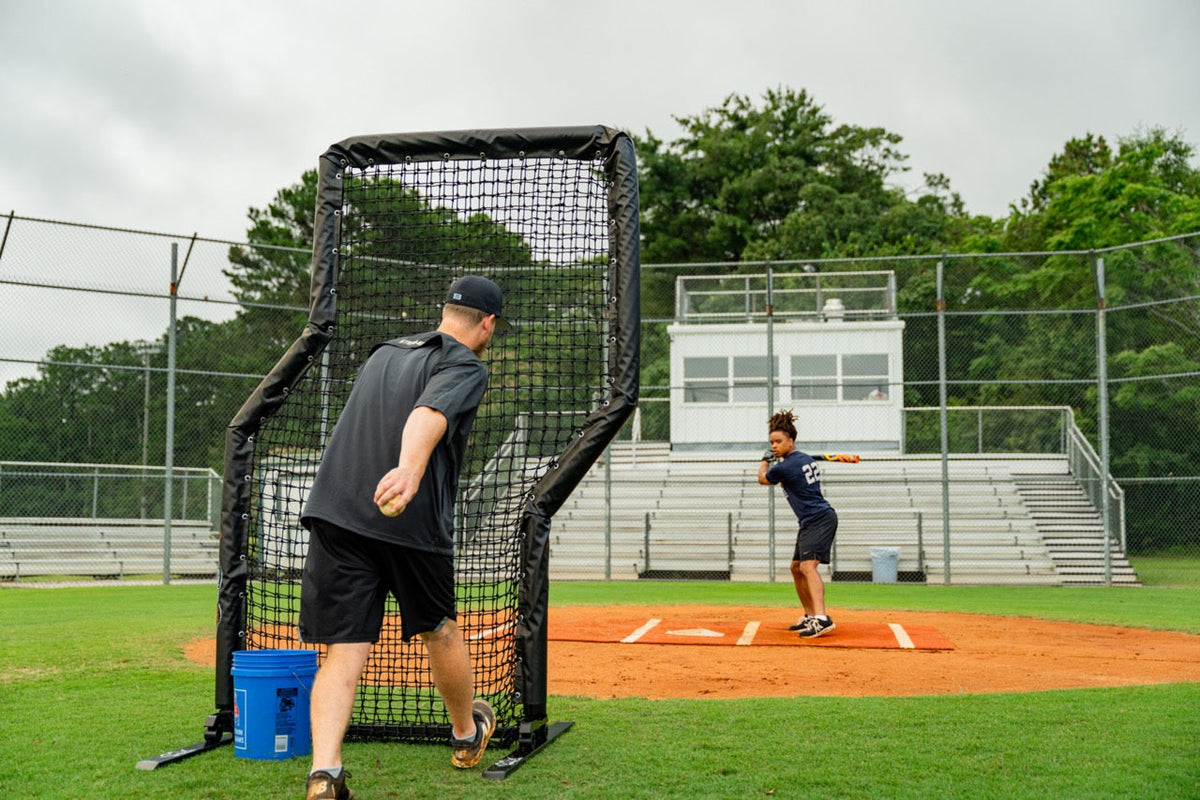
This matters most with L-screens and other angled protective screens. Their shape depends on the base sitting flat and stable. Before assuming the frame is damaged, move the screen to a level surface and check whether it stands square without being held.
Wind and poor storage add damage between practices
Wind can work a screen harder than many people realize. A net catches air, and a screen that is left outside can rack sideways, tip over, or repeatedly flex at its joints. That stress adds up even if no ball is hitting it.
Storage also matters. Leaning a screen against a wall for months can create pressure on one upright. Throwing it loose into a trailer allows heavier gear to sit on the net or frame. If the screen is portable, transport is part of its use cycle, not an afterthought.
How to Tell Whether You Can Fix It
Start with a simple inspection before the next practice. Set the screen on level ground and look at it from the front and side. The frame should be square, the legs should make full contact with the surface, and the net should have even tension from one side to the other.
If the frame is straight and the netting is intact, reattaching or tightening the net may solve the problem. Replace worn ties or attachment hardware, pull the net evenly across the frame, and avoid over-tightening one side while the other remains loose. A screen needs balanced tension, not a net stretched like a drumhead.
If the frame is bent, cracked, or permanently twisted, tightening the net will not restore the screen. The net may look better for a short time, but it will keep shifting because the structure underneath is compromised. The same goes for netting that has become thin, badly sun-faded, torn, or permanently elongated. At that point, repair may cost practice time without restoring dependable protection.
Do not keep using a sagging screen in the highest-risk position just because it still catches most balls. A coach behind an L-screen or a player taking close front toss needs predictable coverage. If a ball can get under, around, or through the screen, move it out of that role until it is repaired or replaced.
Choosing a Screen That Matches the Workload
The best way to prevent premature sag is not simply buying the heaviest screen available. It is buying the right screen for where and how it will be used. A parent setting up tee work and soft toss in the yard has different needs than a training facility protecting coaches through year-round BP.
For travel teams, youth programs, and players who need a screen that is easier to carry and set up, the Web Flex Sports Spider Series is built around practical portability. It is the better fit when the screen must move often and the training volume is moderate. Treat it well, store it correctly, and it can handle the everyday jobs it was designed for without dragging a heavy frame across every field.
For programs with constant high-velocity contact, busy batting cages, serious pitcher protection, and repeated daily use, the Pro Series is the better answer. A heavier-duty frame and patented shock-absorbing technology help manage the force that causes lesser screens to flex and fatigue. It is built for coaches and facilities that cannot pause a session because a screen has started to lose its shape. The lifetime frame warranty also speaks to the difference between equipment meant for occasional use and infrastructure meant to stay in the rotation.
Neither option removes the need for basic care. Even a premium screen should be checked for loose net attachments, kept off unstable surfaces, and secured or stored when wind is expected. Durability gives a team a larger margin, but proper use preserves that margin.
Keep Your Screen Tight and Useful
Build a quick screen check into field setup. Confirm that every connection is secure, the base is level, and the net has not shifted from the previous practice. After hard machine sessions or a windy day, inspect the frame before assigning it to coach protection again.
A batting screen should absorb the work without becoming part of the problem. When the net rebounds, the frame stays square, and the screen matches the intensity of your training, hitters get more quality reps and coaches can stay focused on the next pitch instead of the next ricochet.