
A college baseball screen replacement is rarely just a netting decision. When a screen fails, it usually happens in the middle of the work: front toss before practice, high-volume cage rounds, pitcher fielding drills, or a live BP session where a coach needs protection now. The right replacement restores more than a barrier. It restores the pace, safety, and confidence of the entire practice plan.
College programs put equipment through a different kind of workload than most backyard or occasional-use setups. Screens get moved across concrete, turf, warning tracks, and wet grass. They take repeated baseball impacts from stronger hitters and throwers. They are handled by multiple players, managers, and coaches throughout the week. That volume changes what a good replacement looks like.
Know When a Screen Needs Replacement
A torn net is the obvious sign, but it is not the only one that matters. Netting can look mostly intact while losing the tension and strength needed to stop a hard line drive. Frames can also bend gradually, making a screen unstable even if it still stands upright.
Replace the full screen when you see several of these issues at once:
- Holes, frayed squares, or stretched netting in common impact zones
- A frame that rocks, twists, or no longer sits square on the ground
- Bent tubing, cracked welds, or broken wheel hardware
- Loose or missing attachment points that let netting sag
- A screen that takes too long to set up, move, or stabilize during practice
Do Not Let a Small Tear Become a Practice Hazard
Coaches often keep a damaged screen in service because it is "good enough" for soft toss or low-intensity work. That can be reasonable for a short period, but it becomes a bad habit when the same screen gets pulled into live hitting or fungo work. A small opening can turn into a large failure quickly, especially once a baseball catches a loose edge.
The standard should be simple: if the screen is positioned between a hard-hit ball and a player or coach, it needs to perform every rep. Protective equipment should not require everybody to remember where the weak spot is.
College Baseball Screen Replacement Starts With the Drill
The best replacement depends on what the screen must do, where it will live, and how often it will move. A college program may need several screen styles rather than one generic model for every station.
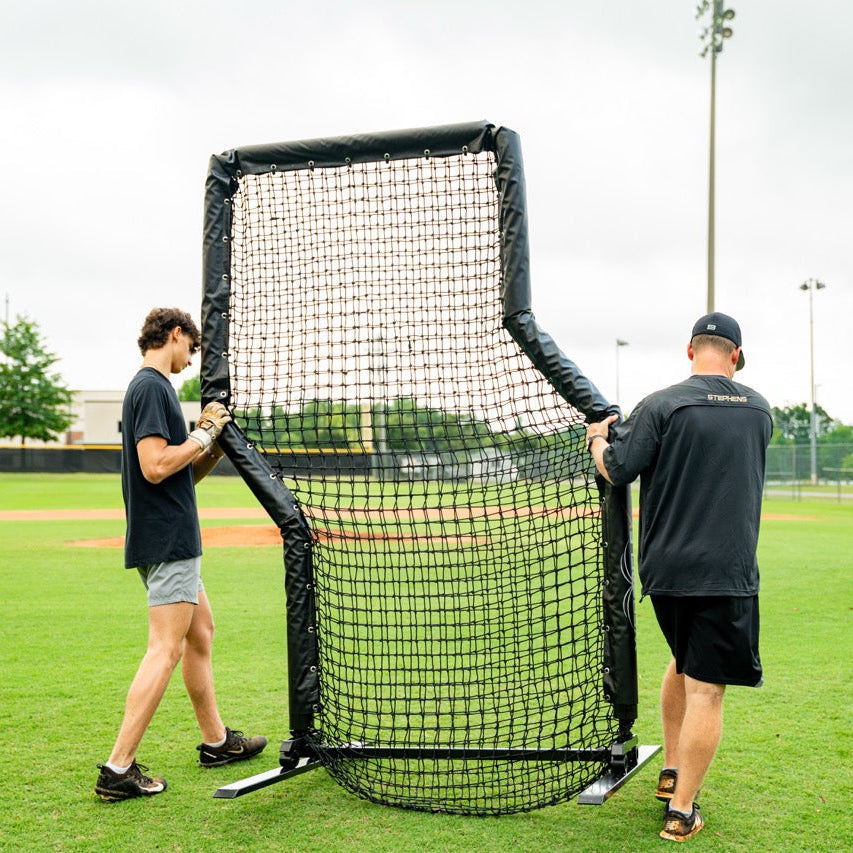
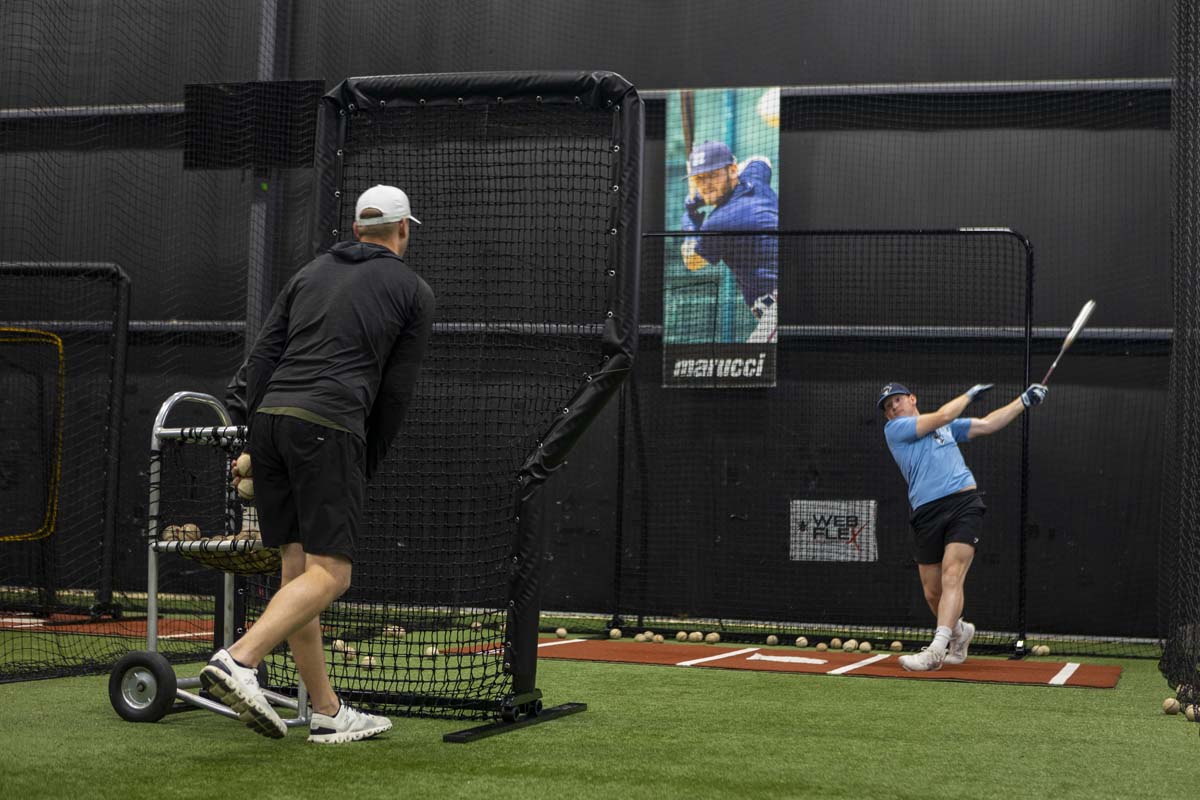
An L-screen is built for protected throwing, front toss, and pitching machine work. Its offset opening gives a coach or pitcher a throwing lane while keeping the body protected behind the frame. A field screen is a better fit for fungo work, infield stations, and general barrier use. A Z-screen adds flexibility when the angle of protection matters, particularly in batting practice setups where the operator needs a clearer lane and better coverage.
For cage work, consider whether the screen is a permanent resident or a piece of equipment that must be moved before every session. A heavy screen can be an advantage when it stays in one place and absorbs constant impact. The same screen can become a nuisance if players need to drag it across a facility several times a day.
That is why the decision should begin with the drill, not the catalog description. Ask who stands behind it, what kind of contact it takes, how many times it moves in a week, and whether it is stored indoors or exposed to weather. Those answers will tell you whether to prioritize mass, wheels, portability, or maximum frame strength.
Frame Strength Matters More Than a Fresh Net
Netting gets the attention because it stops the ball. The frame determines whether the screen remains dependable after months of use. For college baseball, look for a frame that resists twisting, stays balanced when hit, and does not depend on perfect ground conditions to stand correctly.
Thicker steel tubing generally handles repeated impact better than lightweight recreational frames. Quality welds and secure corner connections matter just as much. A screen can have strong netting and still fail if the frame flexes enough to loosen connections or pull netting out of position.
Weight is a trade-off, not a flaw. More weight usually means better stability and less movement on hard contact. It also means more effort when moving the screen. Programs that run daily batting practice may prefer a heavier, wheeled screen that stays planted at the field. Teams with limited storage or frequent road use may need a lighter setup that one player can handle without sacrificing basic protection.
Match Netting to the Real Impact Zone
Not all netting is asked to do the same job. A screen used behind a pitching machine or in front of a coach will see repeated impact in a tight area. A field screen may take scattered balls from fungos, throws, and errant swings. The net must be durable enough for its actual assignment, not merely adequate on day one.
Pay attention to mesh construction, border reinforcement, and how the net attaches to the frame. Reinforced edges help the net keep its shape. Proper tension prevents sagging and reduces the chance of balls pushing through a loose section. A well-designed attachment system also makes maintenance easier when netting eventually needs replacement.
A screen with a deep pocket can absorb energy well, but too much slack can interfere with the drill and create an awkward rebound area. A tighter setup may look cleaner and create a smaller footprint, but it needs a frame capable of managing the added force. There is no single best net profile for every college field. There is only the right balance for the screen's job.
Choose the Right Series for Your Program
At Web Flex Sports, the screen choice is built around workload instead of one-size-fits-all claims. The Pro Series is the answer for college programs that need heavy-duty practice infrastructure, especially for everyday batting practice, high-repetition throwing, and coach protection. Its patented shock-absorbing technology helps manage impact, while the heavy-duty construction is designed for programs that cannot afford to replace frames every season. The lifetime frame warranty also matters when equipment is expected to serve a program over the long haul.
The Spider Series is the better answer when portability, space, and budget discipline lead the decision. It is built for athletes and teams that need practical training equipment they can set up, break down, and move without turning every practice station into a crew project. For a college club program, a developing roster, a satellite practice area, or a team that travels with its gear, that mobility can be more valuable than added frame mass.
Neither choice is automatically better. A Pro Series screen makes sense when volume and protection are non-negotiable. A Spider Series screen makes sense when the screen must work hard while staying easier to transport and store. The mistake is buying a portable screen for a permanent high-impact station, or buying the heaviest possible screen for a practice environment that demands constant movement.
Plan the Replacement Around Your Entire Practice Setup
Before ordering a college baseball screen replacement, measure the spaces where the screen will actually be used. Check cage width, gate openings, storage doors, bullpen paths, and the route from the equipment room to the field. A screen that fits on paper can still become frustrating if it cannot clear a doorway or turn through a narrow walkway.
Also consider the screens around it. Replacing one worn L-screen may reveal that your field screen, hitting tunnel barrier, or pitching target is nearing the same point of failure. Building a consistent screen setup makes practice easier to organize. Players know where each station goes, coaches know what protection is available, and equipment managers do not have to improvise every afternoon.
A screen should never be the weak link in a serious practice. Replace the damaged gear with equipment that matches the speed, repetition, and accountability of your program, then put your attention back where it belongs: getting better reps.