
A softball academy setup is not a collection of cages filled with whatever equipment was available. It is a training system built to keep athletes moving, coaches protected, and reps productive from the first lesson of the day through the last team workout. If players are waiting on a coach to reset a net, chasing balls between stations, or crowding one narrow hitting lane, the facility is leaving development on the table.
The right setup depends on your space, athlete volume, and programming. A private instructor working with six players after school needs something different than a high-volume academy running pitching, hitting, and defense sessions at the same time. The common requirement is simple: every piece of gear needs a job, and it needs to hold up to repeated use.
Start Your Softball Academy Setup With Training Flow
Before ordering screens, nets, or targets, walk the space as if a full session is already underway. Where does a player enter? Where does she warm up? Where does the coach throw front toss? Where do loose balls collect? Those answers determine whether the room feels organized or constantly congested.
Build the floor plan around the activities that produce the most repetitions. Most softball academies need dedicated room for hitting, pitching, throwing, and movement work. Hitting usually demands the clearest lanes and the strongest protective infrastructure. Pitching needs a stable pitching lane with enough distance for full deliveries, a catcher or target area, and room for instruction without another athlete stepping into the flight path.
Do not force every drill into a permanent cage. Open training zones have value, especially for fielding, quick hands, reaction work, and small-group instruction. The goal is not to fill every square foot with equipment. The goal is to make each usable square foot productive.
Measure the real working area
Ceiling height, clear throwing distance, doorway width, and storage access matter as much as the facility's total square footage. A net that technically fits can still be a bad choice if it blocks traffic or cannot be moved by one coach. Mark lane boundaries on the floor and leave a clear walking path behind hitters and pitchers.
Also plan for right-handed and left-handed hitters. A screen positioned safely for one side may expose a front-toss coach when the station flips. Equipment that can move quickly gives instructors more options without requiring a complete room reset.
Build Four Zones That Can Run at Once
A productive academy should let several athletes train without putting everyone in the same drill. Establishing four core zones creates that separation while keeping coaches close enough to supervise.
Hitting lanes need coach protection first
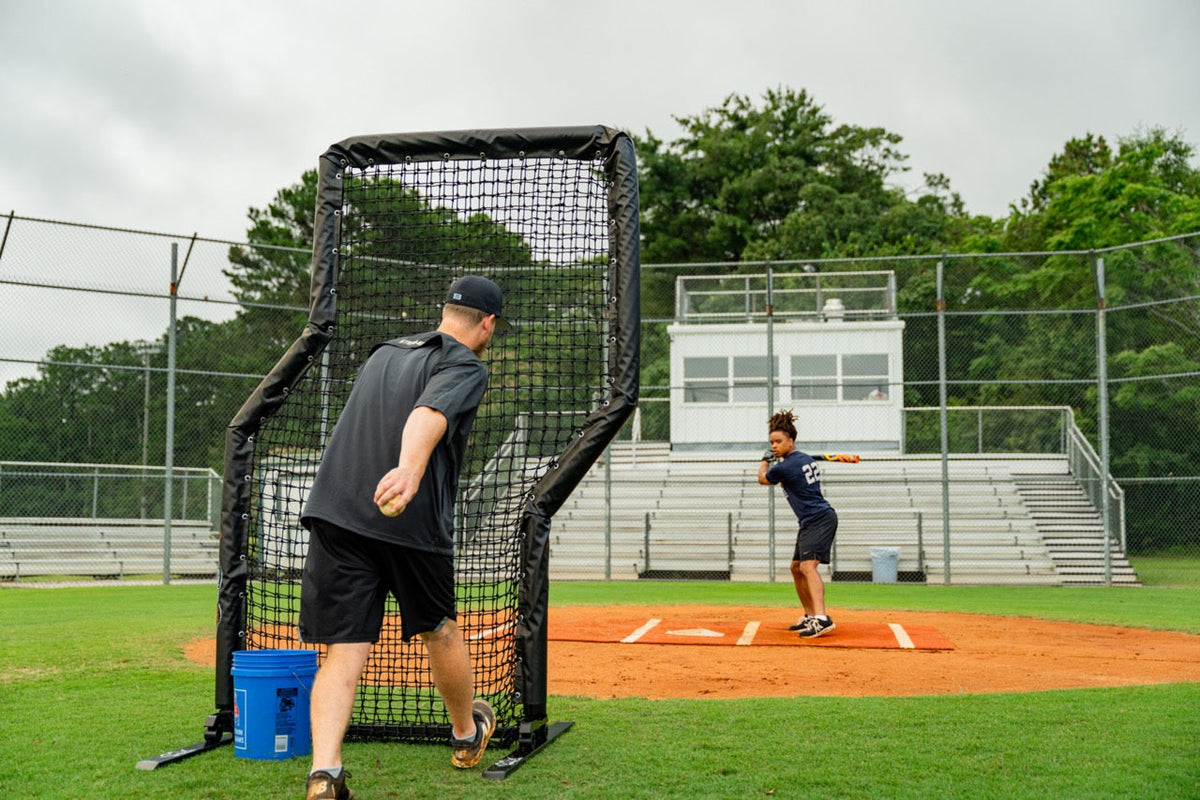
The hitting lane is where academy equipment takes the most abuse. Screens protect coaches during front toss, side toss, and machine work, while a quality net system contains balls and keeps the session moving. Choose a screen footprint that gives the coach real cover, not a narrow target that leaves shoulders, legs, or hands exposed when a hitter turns on an inside pitch.
For a travel-based instructor, smaller facility, or academy that frequently rearranges stations, the Spider Series is the practical starting point. Its portable construction makes it easier to build flexible hitting lanes, move screens between stations, and store gear when multi-sport use takes over the room. It is a fit for programs that need dependable training infrastructure without committing every area to permanent equipment.
Pitching lanes should reward command
A pitching lane should not only catch pitches. It should tell a player whether she hit the intended location. Use a visible strike-zone target so athletes can train to a specific quadrant rather than simply throwing into open netting. That matters when a pitcher is working on rise balls, drops, changeups, or setting up a sequence.
Keep the target stable, particularly when younger pitchers miss wide or high. A target that folds, slides, or requires constant adjustment interrupts instruction and teaches players that setup time is normal. It should not be. The best pitching stations allow a coach to make one adjustment, explain the goal, and let the athlete stack quality reps.
Defensive stations need fast resets
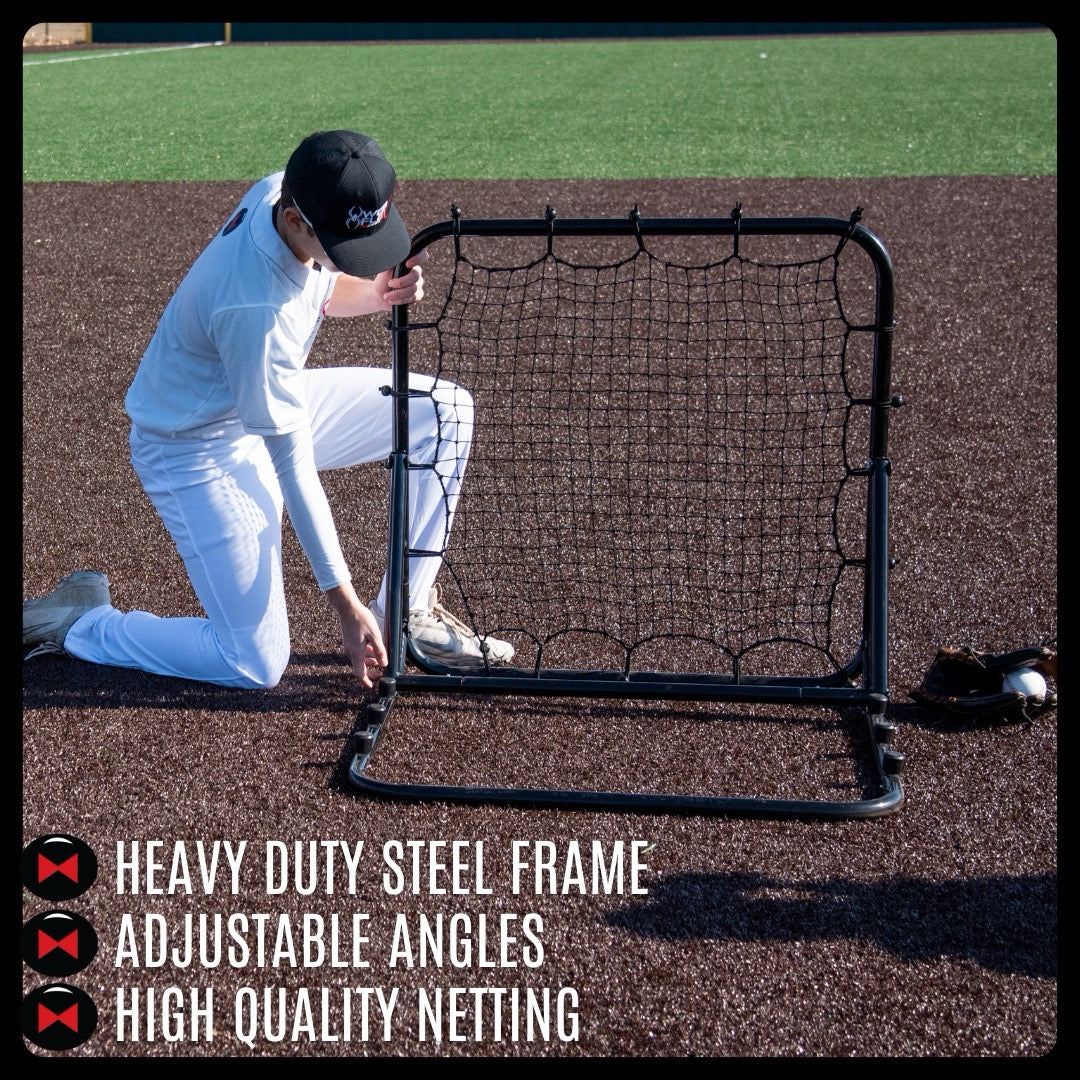
Softball players need more than cage work. A rebounder or plyo wall can create repeatable ground-ball, short-hop, and reaction drills without requiring another player to feed every rep. Place defensive stations away from live hitting whenever possible, and give athletes enough room to field through the ball rather than reaching around equipment.
Portable netting is useful here because it defines the drill area and reduces ball retrieval. For an academy with limited square footage, the same net can support a throwing station during one session and serve as a backstop for machine work later. That flexibility is valuable, but only if the frame is designed for frequent setup and movement.
Arm-care and movement areas need open space
Leave one zone clear for bands, plyo balls, throwing progressions, mobility work, and warmups. This area does not need a cage, but it does need order. Wall-mounted storage, ball carts, and a clear return path prevent athletes from wandering across live throwing lanes to find what they need.
The open zone also gives coaches a place to assess mechanics without a net frame blocking the view. In a smaller academy, it can double as a classroom space for video review and team instruction between skill blocks.
Choose Equipment for Volume, Not Just the First Week
A screen that looks fine on delivery day can become a problem once it absorbs hundreds of batted balls each week. High-volume academies should evaluate frame strength, net attachment points, wheel design, base stability, and how the unit handles repeated impact. The lowest-effort choice at purchase can turn into the highest-maintenance item in the building.
For daily lessons, team practices, and heavy front-toss usage, the Pro Series is built for the harder workload. Its heavy-duty construction and patented shock-absorbing technology help manage repeated ball impact, while the lifetime frame warranty gives established facilities confidence in the backbone of their training area. This is the right direction when screens stay on the floor all day and coaches cannot afford downtime from bent frames or unstable bases.
That does not mean every academy needs premium equipment in every corner. A smart setup can mix heavy-duty screens in the main hitting lanes with portable Spider Series gear in flex spaces, secondary tunnels, and traveling team use. Match the equipment to the work. The most-used station should get the strongest infrastructure.
Install for Safety and Efficient Reps
Set screens close enough to protect the coach but far enough from the hitter to avoid crowding the swing path. Secure nets so a hard-hit ball cannot roll into an adjacent station. Position ball buckets and carts behind the coach or outside the player's finish path, never where an athlete can trip during a swing or delivery.
Create a simple reset standard for every station. Balls go into a designated cart, loose equipment returns to one storage location, and athletes know where to stand when their round ends. These details may sound basic, but they determine whether a 60-minute lesson produces focused work or fifteen minutes of avoidable transition time.
Coaches should inspect high-use screens regularly. Check netting for worn areas, make sure connections remain secure, and confirm wheels or bases are functioning as intended. Equipment lasts longer when small issues are handled before they become a bent frame or a safety concern.
Avoid Building a Facility That Cannot Adapt
The biggest setup mistake is treating the opening layout as permanent. Your academy will change as player demand changes. One season may bring an influx of pitchers. Another may require more team hitting blocks, catching instruction, or college-prep work. Choose a layout with clear anchor stations and enough portable equipment to shift the remaining space.
Web Flex Sports equipment supports that balance with training gear made by people who understand the difference between a backyard session and an academy that runs real volume. Build your core lanes around protection and durability, then use movable stations to keep programming flexible as your athletes grow.
A good facility does not need to look crowded to work hard. It should feel purposeful: coaches protected, athletes active, balls contained, and every station ready for the next rep. Build that standard into the setup from day one, and the academy will be easier to run long after opening week.