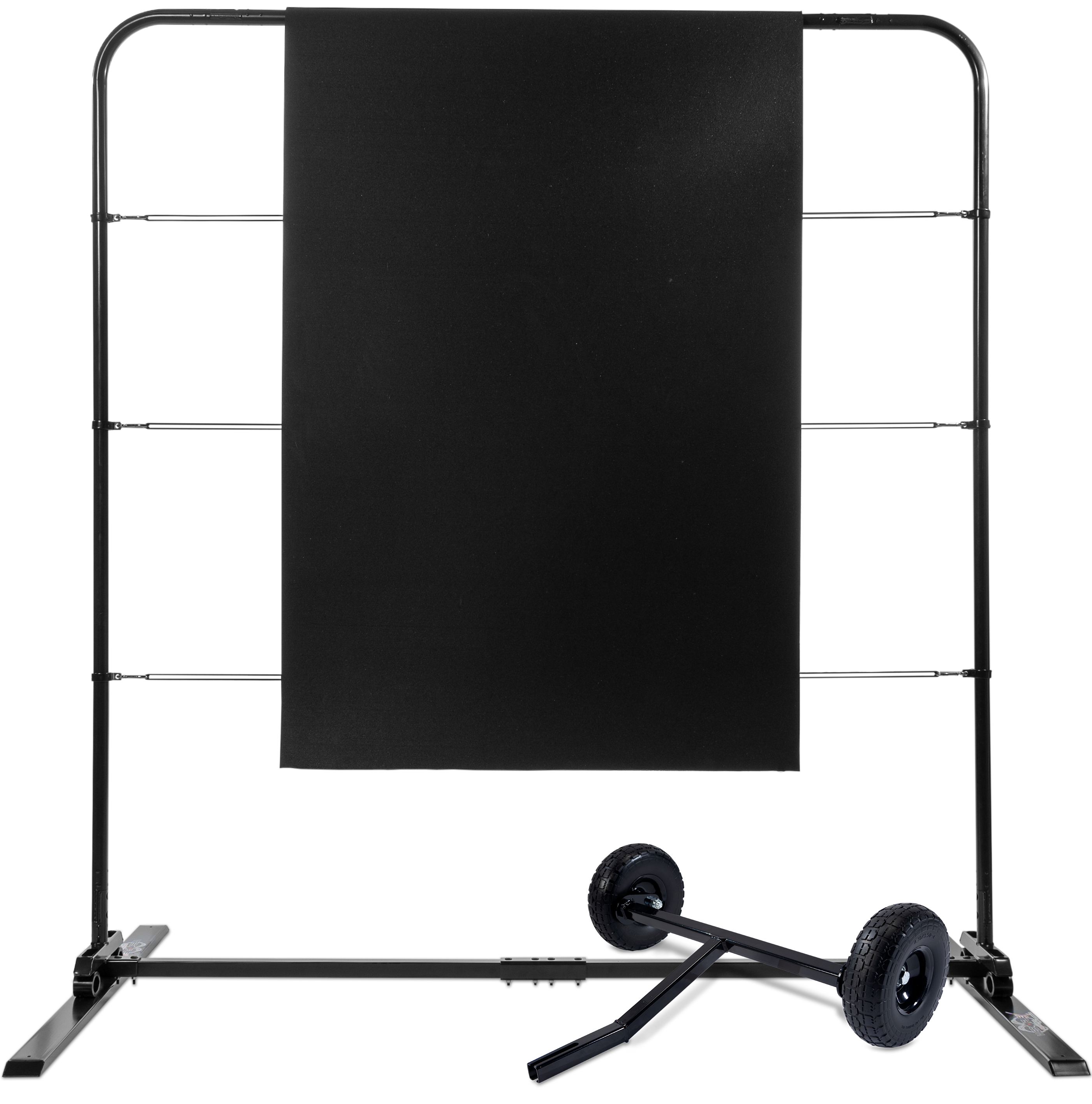

Missed spots cost more than velocity ever fixes. A pitching target net for accuracy gives pitchers a clear objective on every rep, which changes a bullpen from random throwing into focused command work. For players, parents, and coaches trying to get more out of limited practice time, that matters.
A good target net does two jobs at once. First, it gives immediate visual feedback, so pitchers know whether they hit the intended zone or missed arm side, glove side, up, or down. Second, it helps create structure. Instead of throwing 40 pitches with no real plan, a pitcher can work to specific quadrants, sequence locations, and track progress over time.
Why a pitching target net for accuracy works
Command improves when the target is consistent. Catchers move. Bullpens vary. Practice settings change from backyard to cage to field. A target net creates a repeatable strike zone reference, which is especially useful for younger athletes still learning body control and older players refining pitch intent.
That repeatability also sharpens mechanics. When a pitcher misses the same spot in the same direction over several throws, the pattern says something. Maybe the front side is flying open. Maybe posture is drifting. Maybe tempo changes from pitch to pitch. A target net will not fix mechanics by itself, but it makes misses easier to diagnose.
There is also a practical advantage. Not every session needs a catcher, and not every family has access to a full bullpen setup. A net makes solo work possible and safer, while still keeping training specific. That is a big deal for travel ball families, school programs, and facilities trying to maximize reps without adding chaos.
What to look for in a pitching target net for accuracy
Not all target nets are built for the same player or training environment. The right setup depends on who is throwing, how often it will be used, and where it needs to go.
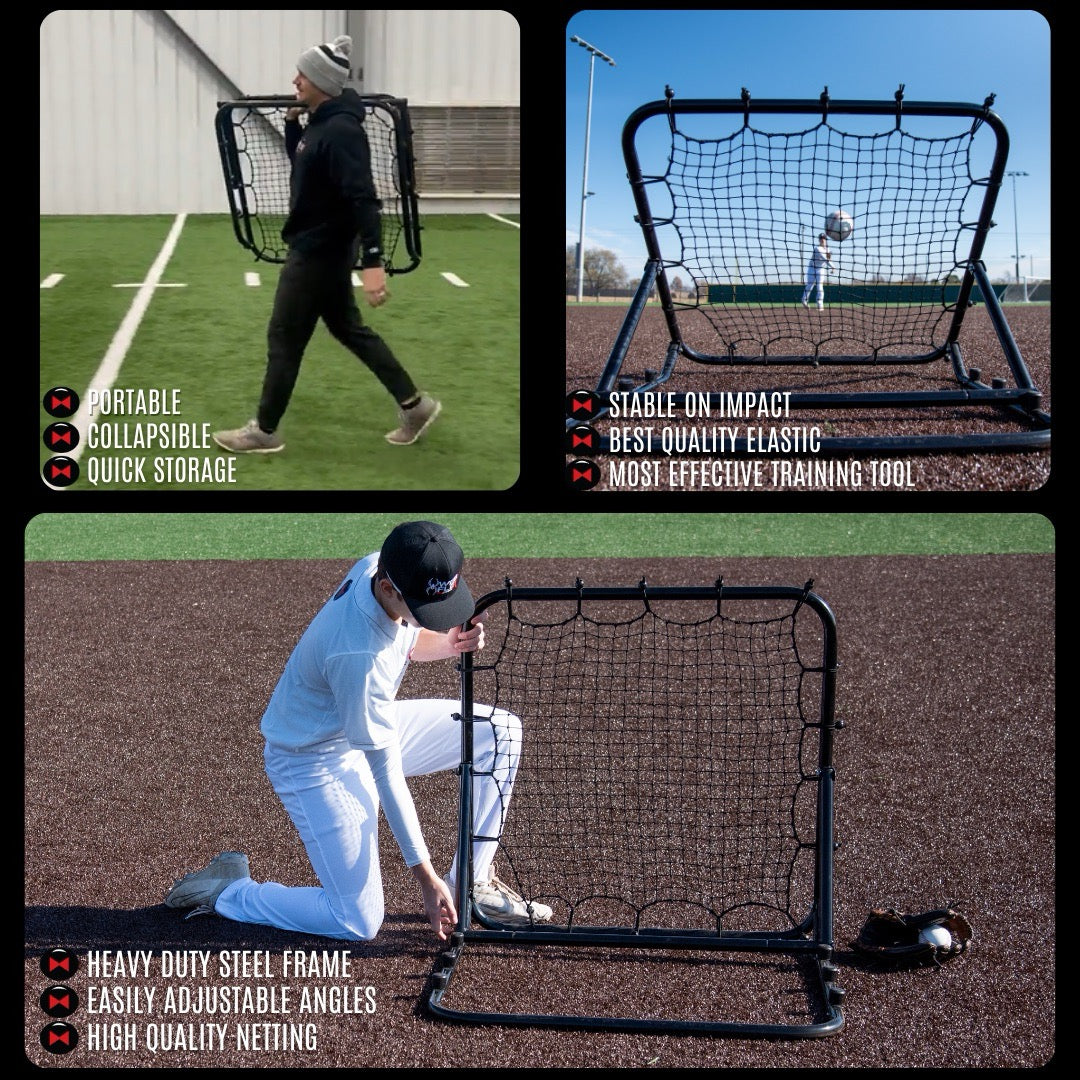
Frame strength matters first. Light-duty frames are easier to move and store, which is a real advantage for backyard sessions, younger players, and teams that travel often. But high-volume use is harder on equipment than most buyers expect. Older athletes, hard throwers, school programs, and indoor facilities usually need a heavier build that stays stable through constant impact.
Net tension matters just as much. If the pocket is too loose, the target can feel vague. If it is too tight without enough give, the setup may wear faster under repeated use. The best training nets balance clear ball capture with enough durability to handle serious bullpen work.
Target design is another point buyers often overlook. Some pitchers benefit from a simple strike zone box. Others train better with multiple smaller targets that force precision. A younger pitcher may need a larger visual window to build confidence, while a high school or college arm may need clearly defined quadrants to sharpen glove-side fastballs or work to the lower edge.
Portability is the final trade-off. If the net has to move from garage to yard to field, lighter and faster setup has real value. If it is going to live in a facility or get daily team use, stability and long-term toughness usually matter more than quick breakdown.
Matching the net to the athlete
A youth pitcher does not need the same setup as a varsity starter or private instructor. That sounds obvious, but it is where many buying decisions go wrong.
For younger players, the best target net is often one that encourages repeat use. Easy setup, manageable size, and a visible strike zone keep practice simple. At that stage, building confidence and consistent direction is more useful than turning every bullpen into a highly technical command chart.
For middle school and high school athletes, the target should support more intentional work. This is where quadrant training, pitch sequencing, and location-based routines start to matter. The net needs to hold up to stronger velocity and more frequent sessions, especially if the player is training year-round.
For colleges, programs, and facilities, durability becomes the headline feature. Equipment in these settings takes real abuse. Heavy repetition, multiple users, and constant setup cycles expose weak frames and low-grade netting fast. Coaches and facility owners need gear that can take volume without becoming a maintenance project.
That tiered approach is one reason brands like Web Flex Sports build for both portability-focused athletes and high-volume users. The right answer is not always the biggest or heaviest option. It is the one that matches the workload.
How to train with a target net instead of just throwing at it
The biggest mistake with target nets is using them as decoration. A pitcher sets one up, throws generally toward the middle, and calls it command work. That is not enough.
Accuracy training works better when each set has a purpose. One round might focus on glove-side fastballs. Another might alternate up-and-in and down-and-away. Another could train first-pitch strikes, finishing every rep only if the target is hit. The structure forces intent, and intent is what transfers to games.
Short bullpens are especially effective here. Ten to fifteen quality pitches to defined spots usually beat a longer session full of mindless reps. Pitchers stay sharper, mechanics hold together better, and the data is easier to remember. Coaches can also pair target work with simple feedback like, "five out of eight to the low glove-side quadrant," which gives the athlete something concrete to improve.
A target net also helps with off-speed accountability. Many pitchers think a breaking ball is good because it moves. But if it cannot start on line or finish near the intended window, it is not game-ready. A target frame gives shape to that evaluation. The same goes for changeups. Location and intent matter more than just reduced speed.
Common buying mistakes
The first mistake is buying purely for convenience. Easy setup is great, but not if the frame shifts every few throws or the target area loses shape quickly. A training tool only helps if it stays consistent.
The second mistake is overbuying. Some families purchase a facility-level setup for an athlete who only throws light weekly sessions. That extra weight and bulk can actually reduce use because the equipment becomes harder to move and store. Toughness matters, but only if it fits the routine.
The third mistake is ignoring safety and environment. Outdoor use means dealing with uneven ground, wind, and repeated assembly. Indoor use can mean tighter training spaces and more constant traffic. The best net for a garage lane may not be the best one for a school bullpen or team practice field.
The fourth mistake is treating the target as a substitute for coaching. A net gives feedback, but interpretation still matters. If a pitcher keeps missing up and arm side, there is a reason. Good training equipment should support instruction, not replace it.
Where target nets fit in a full training setup
A pitching target net is rarely the only piece that matters. It works best as part of a practice environment built for repetition, safety, and efficiency.
For home use, that might mean pairing the target with a portable net system and enough space for flat-ground command work. For team settings, it may sit alongside protective screens so coaches can run pitching and hitting stations at the same time. In facilities, target nets often become one part of a larger progression that includes mounds, rebounders, and wall work.
That broader setup is important because command develops through quality reps, not isolated gadgets. The target net is valuable because it keeps those reps intentional. It gives the athlete something specific to attack and gives the coach something visible to evaluate.
The real return on a target net
The value of a target net is not that it looks like serious training equipment. The value is that it makes practice measurable. When a pitcher can see the target, repeat the drill, and compare one session to the next, progress stops being a guess.
That matters for a youth player learning to throw strikes, for a high school pitcher trying to earn innings, and for a coach managing a staff through a long season. Better command saves pitches, creates weak contact, and builds trust on the mound. A well-built target net supports that work by making every throw count.
If you are choosing one, think less about the flash and more about the workload. Pick the setup that fits the athlete, holds up to the environment, and makes it easier to train with purpose. The best gear is not the gear that gets noticed first - it is the gear that keeps showing up, session after session, when improvement is earned.