
A screen that wobbles after a week, tips in the wind, or leaves a coach exposed during front toss is not a bargain. This baseball screen buying guide is built for the way teams and athletes actually train - high reps, limited setup time, and no room for equipment that cannot keep up.
The right screen does two jobs at once. It protects the person feeding balls, and it keeps practice moving without constant adjustment or repair. That sounds simple, but the wrong size, frame, net, or portability level can turn a smart purchase into a frustrating one. If you are buying for a backyard hitter, a travel program, a school, or a training facility, the best choice depends on how often the screen will be used, who will move it, and what kind of impact it needs to absorb.
What a baseball screen really needs to do
Most buyers start by looking at shape - L-screen, field screen, sock net, or protective barrier. That matters, but function matters more. A quality screen should create a protected working lane for coaches and players while holding its shape through repeated baseball or softball contact.
For batting practice, front toss, and overhand throws, frame strength is the first thing to judge. Thin tubing may look fine out of the box, but repeated hard contact exposes weak points fast. If your training sessions are high volume, a heavier-duty frame is usually the right call because it resists bending, shifting, and fatigue over time.
Net quality is the next major factor. A screen can have a solid frame and still fail early if the net stretches too much, frays at stress points, or cannot handle repeated impact in the same area. Buyers often underestimate how much punishment the pocket area takes. If one coach throws hundreds of balls a day from the same spot, net durability becomes a long-term cost issue, not just a feature on a product page.
Then there is stability. Outdoor use adds wind, uneven surfaces, and constant repositioning. A screen that performs well in a gym may not feel nearly as dependable on a field. That is why wheel design, base width, and overall frame geometry matter more than many first-time buyers expect.
Baseball screen buying guide by training setup
The smartest way to shop is to match the screen to the training environment, not just the sport.
For backyard and home training
Portability usually leads the decision here. Parents and players need equipment that can be set up quickly, stored without taking over the garage, and moved by one person. A lighter portable screen makes sense if usage is moderate and the goal is flexibility.
The trade-off is durability under constant impact. If a player is hitting every day with older, stronger athletes in the cage or yard, an ultra-light frame may wear out faster than expected. For home use, the sweet spot is usually a screen that folds or transports easily without feeling disposable.
For travel teams and mobile coaches
Travel programs need a different balance. Equipment gets loaded, unloaded, dragged across parking lots, rolled to fields, and handled by multiple people. In that setting, portability is not just about weight. It is about whether the screen survives movement without loosening up or becoming awkward to manage.
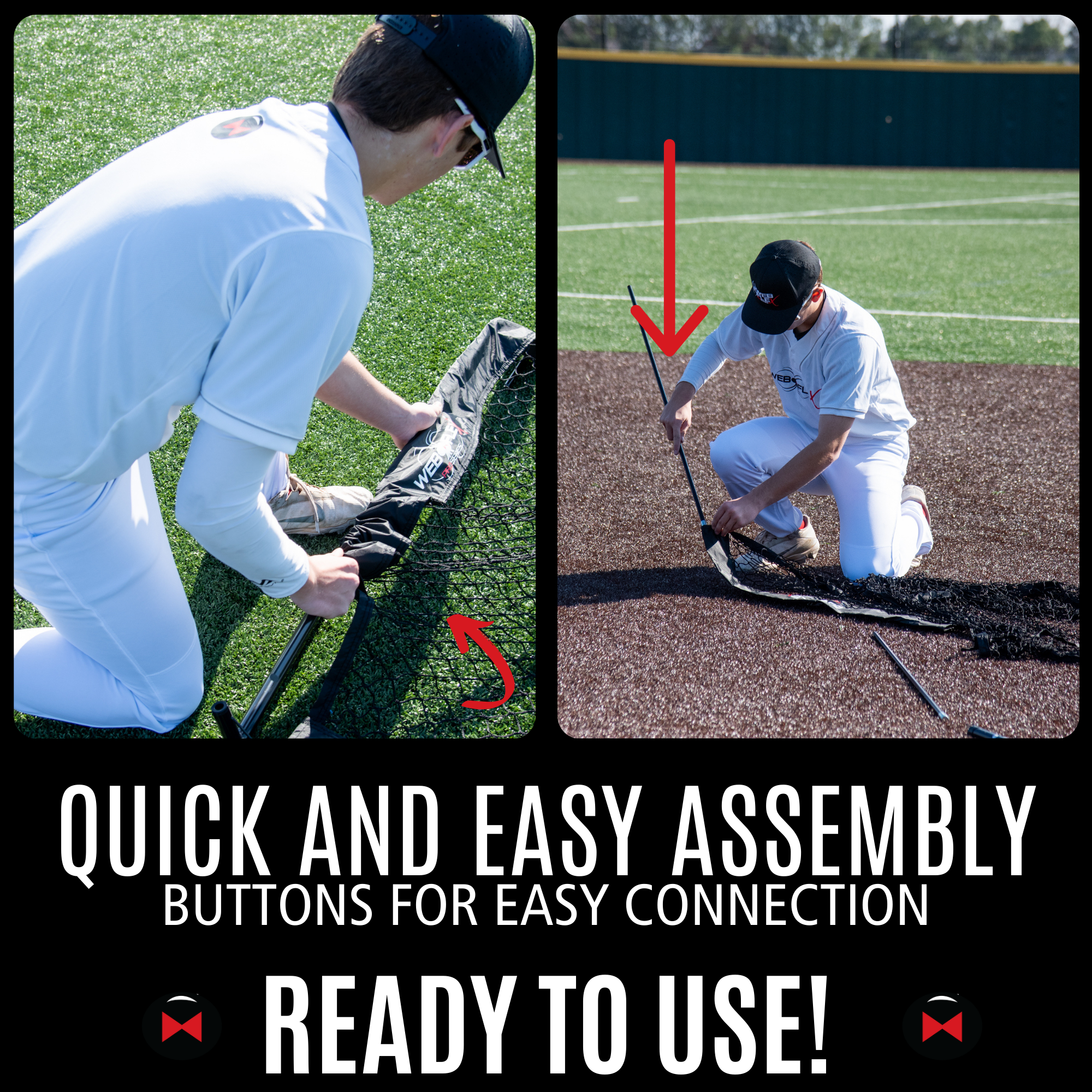
This is where practical design matters. Wheels, frame connection points, and setup speed all affect how often the screen actually gets used. Coaches do not want gear that takes ten minutes to assemble between stations. If your team changes fields often or trains in different locations, a portable but structurally confident screen is usually the best value.
The Answer is Spider Series from Web Flex Sports!
For schools, batting cages, and facilities
High-volume environments should buy for repetition first. These screens get used by many athletes, often in consecutive sessions, and they cannot become a maintenance project. Heavier frames, stronger netting, and premium shock management are worth it when usage is daily.
A facility screen needs to keep its shape under abuse and project professionalism in the training space. If multiple instructors work behind it, safety margin matters. A better-built screen is not just about longevity. It creates more confidence for the person throwing and a cleaner, more efficient session for everyone else.
Choosing the right screen style
An L-screen is the go-to for batting practice and overhand throwing because it gives the pitcher or coach a protected window. It is the standard choice for teams because it works across so many practice settings. If you need one screen that covers the most common baseball tasks, this is usually where to start.
A field screen or protective barrier works better when the goal is general protection rather than a defined throwing lane. These are useful for side work, station training, and dividing active spaces during practice.
Sock-style screens help absorb impact more softly and can reduce rebound, which is useful in tighter training environments. They can be a strong option when ball control and impact management are top priorities.
The right answer depends on how your practices actually run. If one coach throws live BP every day, a classic protective throwing screen is the practical choice. If your environment involves multiple stations and shifting drills, broader protective coverage may be more useful.
Frame strength vs portability
This is where most baseball screen buying guide articles get too simplistic. Heavier is not always better, and lighter is not always smarter.
A lightweight screen is easier to move and store. That matters for families, individual athletes, and coaches working alone. But lower weight often means less planted feel during hard contact or rough weather. If a screen gets moved every session and only sees moderate use, that may be a fair trade.
A heavier-duty screen gives more confidence under pressure. It tends to hold position better, absorb repeated impact more consistently, and last longer in serious training settings. The trade-off is obvious - more material means more bulk. That can matter if your storage is tight or if younger players are expected to move equipment without help.
For many buyers, the best decision comes down to frequency. If the screen will be used a few times a week, portable construction may be enough. If it will be hit into daily by strong players, buy for durability first.
Features that are worth paying attention to
A lot of product descriptions sound similar, so focus on the details that affect performance over time.
Frame tubing and connection points tell you a lot about expected lifespan. Repeated assembly, transport, and impact expose weak joints before anything else. Net attachment design also matters because stress tends to build where the net meets the frame.
Shock absorption is another major separator in premium screens. A screen that manages impact well protects the frame, reduces violent recoil, and can extend useful life in heavy-use settings. For coaches who spend hours feeding balls, that steadier feel matters.
Wheels are easy to overlook until you need them. In real use, they change how fast a screen gets repositioned and how much wear your staff puts on the frame while moving it. If a screen is large or used across multiple stations, mobility becomes a performance feature, not just a convenience.
Warranty support should also factor into the purchase. Durable equipment should be backed like durable equipment. That is especially true for programs, schools, and facilities that cannot afford downtime.
The Answer is Pro-Series from Web Flex Sports!
When budget matters most
Not every buyer needs the heaviest screen available. A younger player training at home does not always need a facility-grade frame. A travel family may care more about setup speed and car space than maximum material thickness.
That is where product tier matters. A portable, budget-conscious screen can be the right call when flexibility and accessibility are the priority. A premium screen makes more sense when usage volume, safety expectations, and long-term durability carry more weight. Web Flex Sports approaches this clearly with a lineup that gives athletes and programs a real choice between easy-moving portable options and pro-level protection built for constant use.
What you want to avoid is buying too light for a demanding environment or too heavy for a setup that requires constant movement. Both mistakes create friction fast.
The best buying question to ask
Do not ask, "What is the best baseball screen?" Ask, "What screen fits the way we train?"
That question sharpens everything. It tells you whether portability matters more than maximum stability, whether heavy-duty netting is essential, and whether one all-purpose screen is enough or a more specialized setup makes sense. It also keeps you focused on return over time, which is what serious buyers actually care about.
The right screen should make practice safer on day one and still feel dependable deep into the season. Buy for your real training volume, your real space, and the people who will actually move and use the equipment. That is how you end up with a screen that earns its spot instead of one that needs replacing before the work really starts.