
A glove that feels great for two innings can become a liability halfway through a long practice. The best softball glove for practice is not always the flashiest model or the one with the deepest pocket. It is the glove that lets a player catch, transfer, throw, and repeat without fighting the fit, losing the ball in the pocket, or worrying about the laces giving out.
Practice is where equipment gets exposed. A glove may take hundreds of catches during infield work, machine reps, front toss, live pitching, and team defense. That workload changes what matters. Players need a glove that breaks in predictably, holds its shape, and matches the position they are actually training for.
What Makes the Best Softball Glove for Practice?
Start with fit. A glove should feel secure around the wrist and fingers without cutting off movement. If a young player has to squeeze the glove hard to keep it on, the glove is too large. If her fingertips are jammed into the stalls, it is too small. Either problem leads to slow closes, dropped balls, and bad habits that show up when the game speeds up.
For practice, a slightly snug fit is usually better than a loose one. The glove will relax as it breaks in. It should close with the player’s hand, not flop shut on its own or require a full-arm effort to squeeze.
Leather quality matters next, but the right choice depends on workload. Softer leather can be game-ready quickly and works well for a younger player who needs help closing the glove. Higher-grade leather takes more work early, but it generally holds its form better through a busy season of fielding drills. For a player practicing multiple days a week, shape retention is a real advantage. A pocket that collapses or stretches out makes clean catches harder than they need to be.
The final piece is pocket design. A shallow pocket speeds up transfers for infielders. A deeper pocket gives outfielders and catchers more security on hard-hit balls. Neither is universally better. The best choice is the one that supports the player’s next move.
Match the Glove to the Position, Not Just the Age
Many youth players use one glove everywhere, and that can be perfectly reasonable while they are still learning the game. But once practice becomes more position-specific, glove size and web design should follow the job on the field.
Infielders need a quick, controlled pocket
Second basemen, shortstops, and third basemen need to get the ball out quickly after the catch. A glove in the 11.5- to 12.5-inch range is common for fastpitch infield work, depending on hand size and comfort. The goal is a pocket that secures a ground ball without burying it.
An open web or I-web design helps players see the ball into the glove and keeps the glove light enough for quick reactions. Third basemen may prefer a little more length and pocket depth because they handle harder-hit balls at the corner. A player who is constantly practicing short hops should choose control over extra reach.
Outfielders need length and ball security
Outfield practice includes long throws, fly balls, line drives, and balls hit over the shoulder. That is where extra glove length earns its place. Most fastpitch outfielders will be comfortable in roughly the 12.5- to 13-inch range.
A deeper pocket helps secure the ball while running or reaching. Closed webs are common because they provide stability and help with bright sun. The trade-off is a slightly slower transfer, but for an outfielder, finishing the catch comes first.
Pitchers should protect the ball and stay comfortable
Pitchers need a glove that conceals the ball from the hitter while staying easy to control through the delivery. A closed web is the standard choice. The exact size comes down to the player’s hand, position demands, and preference, but many fastpitch pitchers land between 12 and 12.5 inches.
Do not buy a pitcher’s glove solely because it looks large enough to hide the ball. If it is too heavy or stiff, it can interfere with fielding bunts and comebackers during practice. A pitcher needs a glove she can move with, not one she has to manage.
Catchers need protection before anything else
A catcher’s mitt is built differently from a fielder’s glove for a reason. It needs heavy padding, a reinforced pocket, and a shape that can handle repeated high-velocity pitches. A regular glove will not hold up behind the plate and does not provide the protection a catcher needs.
For practice, look closely at padding and break-in time. A mitt that is too stiff can make receiving frustrating, especially for a younger catcher. A mitt that is overly soft may not hold its pocket through a full season. The right balance depends on pitch speed, age group, and how often the catcher is receiving bullpens.
Choose Practice Durability Over a Shortcut Break-In
A glove should not take a year to become usable, but players should be cautious of gloves that feel completely broken in straight from the shelf. Extremely soft materials can be convenient for a beginner, yet they may lose structure faster under constant practice use.
A better approach is to buy for the player’s real workload. A recreational player who practices once a week may be well served by a softer, easier-closing glove. A travel ball player working through multiple practices, lessons, and tournament weekends needs leather, laces, and stitching built to withstand repetition.
Pay attention to the laces. They are easy to overlook until one breaks during a drill. Thick, tightly pulled leather laces help keep the pocket and web stable. They also make a glove more repairable over time. For families trying to get more than one season from a glove, that matters.
How to Break In a Softball Glove the Right Way
The fastest way to ruin a new glove is to use extreme heat, soak it in water, or flatten it under a mattress. Those shortcuts can dry out leather, weaken laces, and create a pocket that closes in the wrong place.
Instead, use the glove. Play catch every day for short sessions, concentrating on catching the ball in the spot where the pocket should form. Work the heel of the glove and the hinge points with your hands. A small amount of glove conditioner can help preserve leather, but too much product makes the glove heavy and can soften it beyond what the player needs.
A good practice glove should close thumb to pinky, not fold straight across the palm. That closure creates a more natural pocket and gives the player better control on ground balls and throws. If the glove is closing in the middle, take time to reshape it before logging another hundred catches.
Do Not Let the Glove Be the Only Weak Link in Practice
A quality glove helps a player make the most of each rep, but practice also needs reliable infrastructure. Ground-ball work, soft toss, pitching drills, and live hitting all move faster when coaches are protected and the setup can handle daily use.
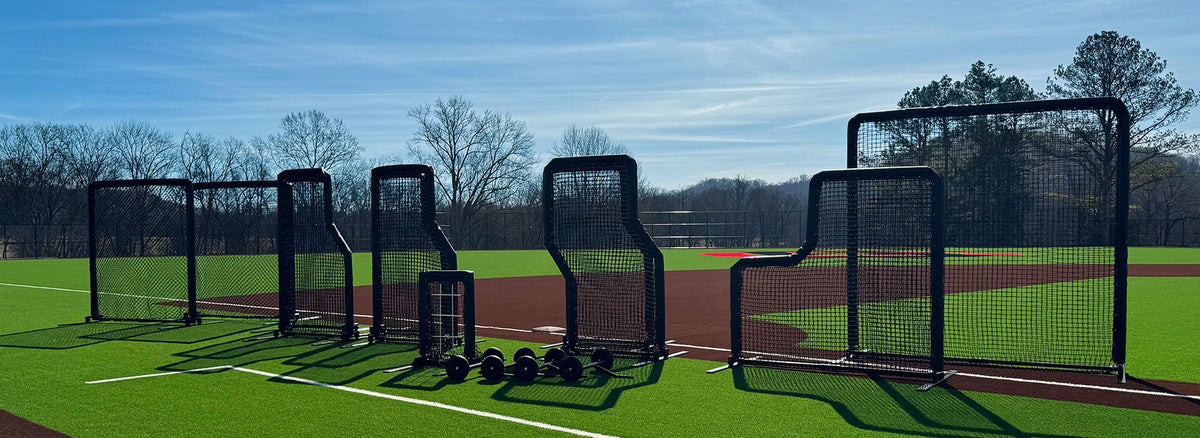
That is where Web Flex Sports fits the bigger training picture. The Spider Series gives players and travel teams portable screens and nets for efficient reps, while the Pro Series is built for programs and facilities that need heavy-duty frames, shock-absorbing construction, and long-term durability. A player cannot improve her glove work if practice stops every few minutes to chase balls, reset a flimsy net, or work around an unsafe hitting station.
When One Practice Glove Is Enough
One versatile glove can be the right call for a younger player, a multi-position athlete, or a family buying their first serious glove. In that case, prioritize a secure fit, manageable weight, and a size that does not overwhelm the player. A 12- to 12.5-inch utility-style fastpitch glove often gives developing athletes enough reach for outfield work while remaining usable in the infield.
Once a player settles into a primary position, a position-specific glove becomes easier to justify. That is especially true for catchers and pitchers, where the demands of the position are too different to compromise for long.
The right glove should make practice feel simpler: see the ball, secure it, get it out, and move to the next rep. If it does that after a hard month of work, it is the glove worth keeping in the bag.