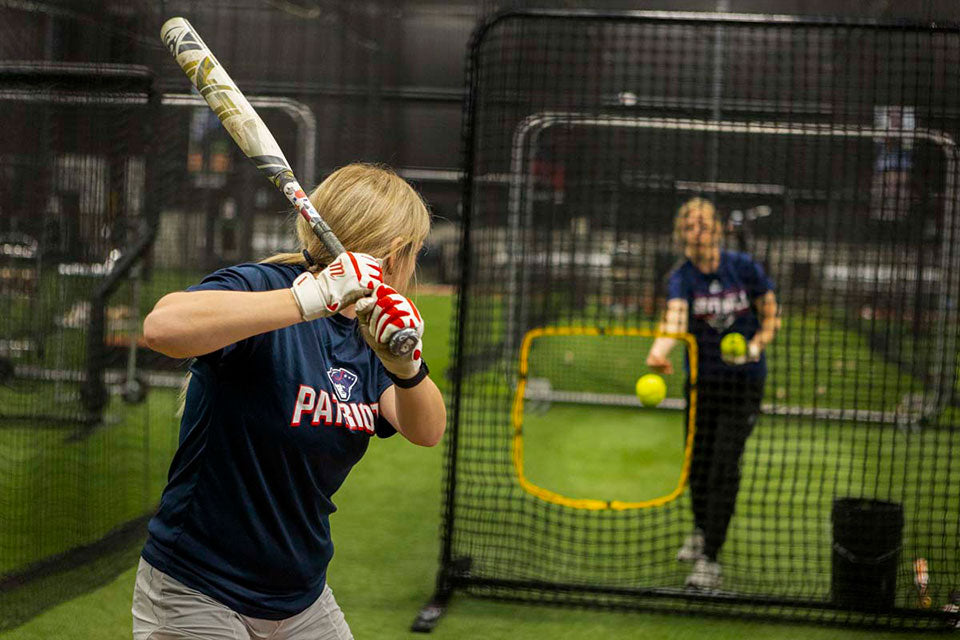

A screen that folds after a few rounds of front toss is not a facility asset. It is a disruption waiting to happen. This facility screen buying guide is built for coaches, program directors, and training operators who need baseball and softball screens that protect people, keep practice moving, and survive daily high-repetition work.
The right screen is not always the biggest or heaviest one. A private facility with four active cages has different needs than a school program moving equipment on and off a field every afternoon. Start with how your athletes train, where the screen lives, and what kind of contact it will take. Then buy for that reality.
Start With the Job the Screen Must Do
Facility screens are often asked to cover multiple jobs: protect a coach during batting practice, create a throwing station, separate drills, shield a machine operator, or stop loose balls in a crowded cage. That flexibility is valuable, but it can also lead to buying one general-purpose screen for a job that requires a specialized shape.
An L-screen belongs in front of a pitcher or coach feeding a machine because its cutout creates a protected throwing window. A Z-screen gives the coach room to work around the frame while still blocking line drives. A full field screen is better for soft toss, drill separation, and general protection where no throwing lane is needed. In a cage, a portable barrier can turn one open space into two workable stations, but only if the frame is stable enough to stay put.
Before looking at features, map your stations. Count how many groups work at once, where coaches stand, where balls travel, and which areas create the most exposure. If a screen has to be dragged into position for every drill or forces athletes to wait for a lane to open, it is not helping your training plan.
Facility Screen Buying Guide: Build for Contact
The first question is simple: how hard will the screen get hit? A youth rec program using a screen a few times per week can prioritize portability. A high school program, travel organization, college team, or private academy needs equipment built for repeated contact from harder hitters and higher-volume sessions.
Frame material and construction matter because the frame takes the transfer of energy every time a ball strikes the net. Thin tubing can be adequate for light duty, but frequent direct hits can bend joints, loosen connections, and make a screen unstable. Look for a substantial frame, secure welded or reinforced connection points, and a base that resists walking across turf, concrete, or packed dirt.
Netting matters just as much. A facility screen should use durable, weather-ready netting with a mesh size appropriate for baseballs and softballs. The net needs enough give to absorb impact, but not so much sag that balls pass through or rebound unpredictably. Over time, UV exposure, moisture, ball friction, and repeated impact all work against netting. Replaceable nets can extend the useful life of a good frame, especially in programs that leave equipment outdoors.
The Web Flex Sports Pro Series is the better fit when your screen will see daily cage use, hard-hit balls, and constant coach-led reps. Its heavy-duty construction is designed for high-volume environments, and patented shock-absorbing technology helps manage repeated impact. For organizations investing in long-term infrastructure, the lifetime frame warranty is the kind of protection that matters after the first season, not just on delivery day.
Size and Shape Change How Practice Flows
Buying a screen that is technically protective but poorly sized for the drill creates its own problems. A screen that is too narrow leaves the coach exposed when a hitter pulls the ball. One that is too tall or wide can crowd a cage, block an athlete's path, and make setup harder than it needs to be.
For coach protection, give yourself enough screen coverage for the coach's natural movement, not just the spot where they stand at the start of a rep. Coaches shift to retrieve balls, change angle, and communicate with hitters. The protected zone should account for that movement.
For drill separation, wider field screens often provide more practical value than tall, narrow frames. They create a visual and physical boundary between stations, which keeps athletes focused and reduces the chance of a ball rolling into another drill. In tight indoor facilities, measure doorways, storage areas, cage lanes, and ceiling clearance before choosing a frame. A screen that cannot move through the building or fit where it is stored will become a daily headache.
Decide Whether Portability Is a Priority or a Compromise
Portability is not automatically a lesser feature. For travel teams, shared school fields, and families building a flexible training setup, it can be the difference between using a screen regularly and leaving it behind. The trade-off is that lighter equipment must still be stable enough for the intended contact.
Wheels make sense for a facility that reconfigures cages throughout the day. Foldable designs make sense when equipment must fit in a shed, trailer, or limited storage room. Lightweight frames make sense when one coach or athlete needs to move the screen without help. But a screen should not sacrifice its footing just to be easy to carry.
The Spider Series is built for the athlete, family, or travel-focused program that needs dependable protection without the bulk of a permanent facility setup. It gives teams a practical portable option for practice fields, backyard work, and mobile training days. If the screen will be loaded into a vehicle, carried to weekend events, or stored after every session, that balance is usually more useful than buying more weight than the job requires.
Account for Your Training Surface and Storage Conditions
A screen behaves differently on a concrete floor than it does on natural grass or an uneven warning track. Indoor facilities should look for bases that sit flat and do not slide easily during impact. Outdoor programs need frames and netting that can handle moisture, sun, and regular movement over dirt and grass.
Do not assume an outdoor screen should live outdoors full time. Weather shortens the life of even well-built equipment, especially netting. If you run a seasonal program, create a storage routine: inspect netting for wear, check connections, keep wheels clear of dirt buildup, and move screens under cover when the facility is closed. This takes minutes and prevents a damaged screen from becoming a safety issue during the next practice.
For facilities with multiple coaches, assign responsibility for inspections. A loose net tie, cracked connection, or bent base may not stop a practice, but it can change the way a screen absorbs a ball. That is enough reason to fix it before the next high-velocity session.
Buy the Right Quantity, Not Just the Best Single Screen
One premium screen can protect one coach. It cannot solve bottlenecks across four stations. When planning a facility purchase, think in stations instead of individual products. A productive setup might need separate protection for front toss, machine work, infield drills, and a recovery area where players can throw without crossing a live hitting lane.
A useful buying plan includes these distinct needs:
- Coach protection at each batting-practice or front-toss station
- Divider screens for drills that run side by side
- A dedicated screen for pitching-machine or overhand thrower protection
- Portable options for outdoor fields, overflow groups, or travel use
Avoid the Common Buying Mistakes
The most common mistake is buying based on appearance alone. Two screens can look similar in a product photo while having very different frame strength, net attachment, stability, and long-term serviceability. Ask what happens after hundreds of hits, not just whether it looks good on day one.
Another mistake is underestimating coach protection. A small screen may be enough for carefully controlled soft toss, but it is not automatically enough for live BP, machine feeding, or drills with younger athletes still learning where to finish their swing. Give coaches margin. The screen should reduce risk without forcing them into an awkward throwing position.
Finally, do not treat a warranty as a substitute for correct use. Even heavy-duty screens need to be positioned correctly, inspected regularly, and used for the contact level they were designed to handle. The best equipment lasts longer when the program has clear setup and storage standards.
A good facility screen disappears into the rhythm of practice. Coaches trust it, athletes stay safer, and reps continue without equipment becoming the story. Choose the frame and netting that match your hardest training day, then build the rest of your setup around the way your program actually works.