
A pitching screen earns its place the first time a hard line drive comes back through the middle. But a softball pitching screen comparison is not just about stopping the ball. The right screen changes how confidently coaches throw front toss, how efficiently pitchers train, and how long your equipment lasts through daily field work.
Softball creates its own demands. The larger ball, repeated close-range reps, wind on open fields, and constant loading in and out of vehicles can expose weak frames, loose netting, and poor base design quickly. A screen that works for occasional backyard use may not be the right answer for a high school program, a travel organization, or a facility running lessons every night.
The best choice comes down to how often you use it, where you use it, who moves it, and what kind of contact it needs to handle.
Start With the Job the Screen Must Do
A softball pitching screen can serve several roles. During batting practice, it protects the coach or player throwing front toss. During pitching work, it can protect a catcher, coach, or machine operator while giving the pitcher a clear lane to work. On a practice field, it may be moved from station to station all afternoon.
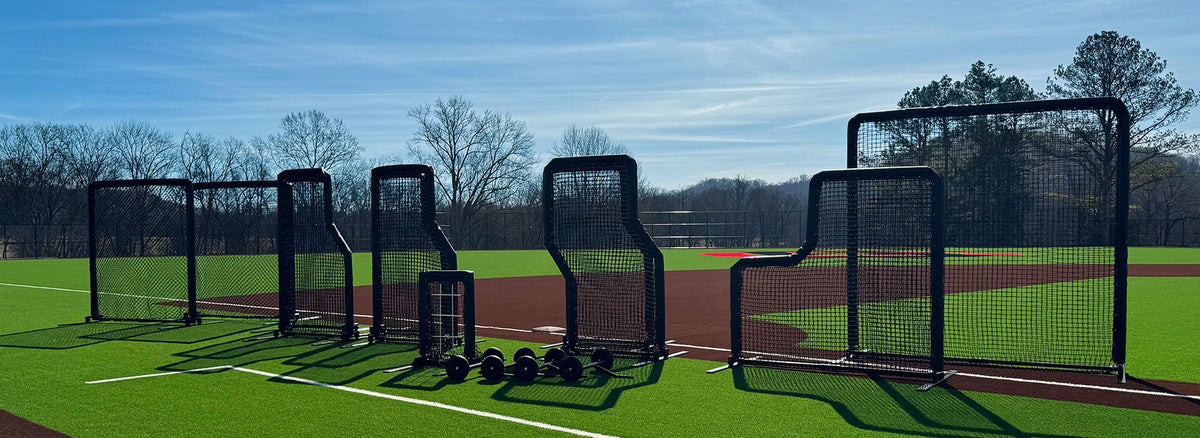
That is why screen shape matters before you ever compare frame material. A standard field screen provides broad coverage and works well when the thrower stands behind the net. An L-screen gives a coach a protected opening for throwing overhand or underhand. A softball-specific pitching screen may use an offset opening or protected throwing window that better matches the release point and angle of softball drills.
Do not buy more screen than the drill requires, but do not underbuy protection either. If a coach regularly throws from close range, a protected throwing window is far more useful than a basic flat screen. If the screen is mainly used to divide stations or protect a pitcher during live work, overall width and stable coverage may matter more than an opening.
Softball Pitching Screen Comparison: Portable vs. Heavy-Duty
The most useful way to compare screens is by duty level. Portable screens and heavy-duty screens both have a place. The wrong fit happens when a team expects one to do the job of the other.
Portable screens for travel and limited storage
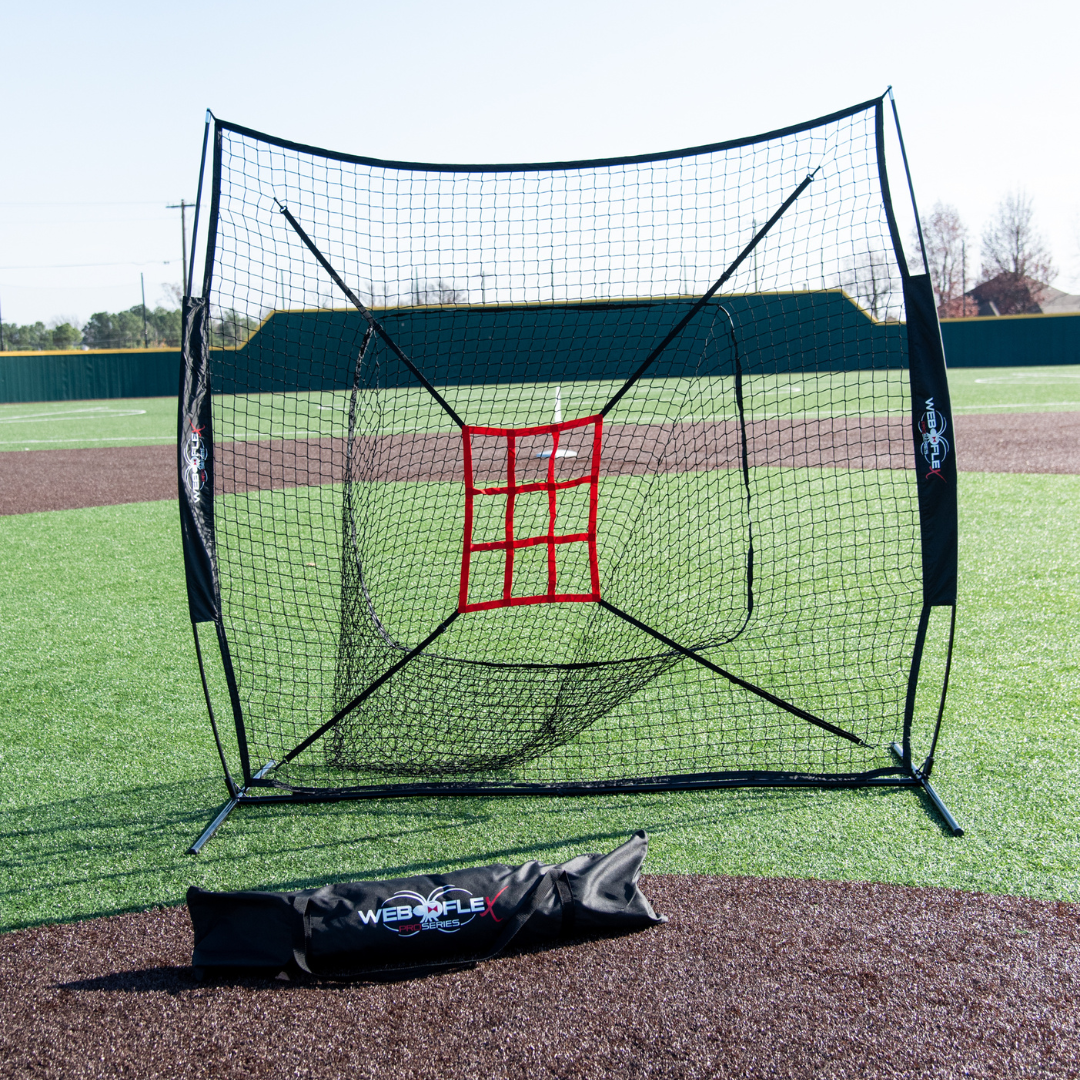
Portable screens are built for coaches, families, and teams that need to move equipment often. They are typically lighter, easier to break down, and simpler to load into a vehicle. That makes them a practical choice for a player training in the driveway, a travel team rotating between tournament sites, or a coach who cannot leave equipment at the field.
The trade-off is straightforward. Lower weight usually means less resistance to hard direct impact and strong wind. A portable screen needs to be positioned correctly and secured when conditions call for it. It should not be treated like a permanent backstop or left out in the weather for weeks.
The Web Flex Sports Spider Series is the right lane for this kind of use. It gives athletes and coaches a more accessible, travel-oriented setup without asking them to haul a heavy institutional screen to every practice. For individual instruction, youth teams, and mobile training setups, portability is a real performance benefit because gear that is easy to bring gets used more often.
Heavy-duty screens for daily reps
A high-volume program needs a screen that can take punishment without becoming a weekly repair project. Heavy-duty designs use stronger steel frames, more substantial netting, and a base built to stay planted when a ball hits the center of the screen. They are the better choice for varsity programs, college teams, indoor facilities, and organizations running constant front toss or batting practice.
Weight is not a flaw in this category. It is part of the protection system. A heavier frame is harder to tip, less likely to shift after impact, and better suited to repeated use by multiple coaches and teams. The trade-off is that it takes more effort to move and may be overbuilt for a family that only trains a few times a week.
For that heavier workload, the Web Flex Sports Pro Series is built to be the answer. Its professional-grade construction, patented shock-absorbing technology, and lifetime frame warranty are designed for buyers who need practice infrastructure that stays in service. This is the screen category for programs that measure value by seasons of use, not by how easy the box was to carry.
Frame Construction Decides How Long a Screen Stays Useful
The frame is the backbone of any pitching screen. Netting gets most of the attention because it catches the ball, but bent tubing and weak joints are what take many screens out of service early.
Look for a frame that is made for impact, not just standing upright. Strong steel tubing helps the screen maintain its shape after repeated contact. Secure welded or reinforced connection points matter because those are the areas that take stress when the screen is moved, folded, or struck. A frame that develops wobble will eventually create problems with both safety and net tension.
Base design is equally important. Wide, stable feet help prevent the screen from walking backward on impact. On grass or dirt, the screen may also need anchors or sandbags in windy conditions. Even the best frame can move if it is set on an uneven infield with a strong crosswind. Good equipment still needs good setup.
For a lighter Spider Series screen, inspect connections and store it correctly between uses. For a Pro Series screen, use the durability to your advantage, but do not assume any screen is maintenance-free. Check frame connections, net attachment points, and ground contact areas throughout the season.
Netting Is About More Than Stopping One Ball
A screen can look fine from a distance while the netting is already nearing the end of its useful life. Softball netting needs enough strength to absorb a hard-hit ball without tearing, stretching excessively, or allowing the ball to rebound toward the thrower.
Heavier netting generally handles repeated impact better. It is particularly valuable for front toss stations, where hitters make hard contact from a short distance, and for facilities where screens are used all day. The net should hang with enough give to absorb energy, but not so loosely that it drags on the ground or creates a large gap around the frame.
Pay attention to how the net attaches to the frame. Secure attachment points keep the net evenly distributed and reduce weak spots around the edges. Replace damaged netting early. A small tear becomes a bigger failure when it receives repeated direct impact, and no coach should be standing behind a screen with a known weak point.
Choose the Right Opening and Coverage Area
For pitching and front toss, the opening must match the person delivering the ball. A poorly placed opening forces the thrower to lean, reach, or stand exposed outside the protected area. That defeats the reason for using the screen.
An L-shaped design is often a strong choice for a coach throwing overhand from behind the screen. For underhand front toss, softball-specific designs can provide a lower or more naturally positioned throwing lane. The goal is simple: the thrower should have a comfortable release while the head, chest, and lower body remain protected behind the frame and net.
Coverage is also a practical coaching decision. A larger screen gives more room for error when athletes are young or hitters are taking full swings. A smaller portable model saves space and weight, but it asks the thrower to be more precise with positioning. If several coaches will use the same screen, favor a design that accommodates different heights and throwing styles.
Match the Screen to Your Practice Environment
The best screen for an outdoor softball field is not always the best one for a garage cage or indoor training center. Outdoor teams need to consider wind, uneven ground, rain exposure, and frequent transportation. Indoor facilities should consider aisle space, flooring, ceiling clearance, and how often the screen must be relocated between stations.
A travel team may prioritize a lighter Spider Series screen that can be packed, set up, and moved without slowing down practice. A school program that leaves screens on the field through a long practice block should prioritize Pro Series stability and long-term frame strength. A private instructor may benefit from owning both: a portable option for lessons on the move and a heavy-duty screen for the primary training location.
There is no prize for buying the heaviest screen if it stays in storage. There is also no value in buying the lightest screen if it cannot hold up to your hitters. Buy for your real rep count, not the rep count you hope to reach someday.
Protect the Screen and the People Around It
Set the screen on level ground whenever possible. Keep it far enough from the hitter that there is room to react, but close enough that it protects the thrower from the most dangerous return balls. Make sure the opening faces the correct direction and the throwing lane does not expose feet or hips.
Before each practice, look for bent tubing, loose hardware, frayed netting, and worn attachment points. These checks take less than a minute. They also keep a manageable repair from becoming a preventable injury risk.
A pitching screen should make practice more aggressive in the right way. When coaches and players trust the protection in front of them, they can focus on cleaner throws, better timing, and more quality reps. Choose the screen that fits your workload, set it up with purpose, and let the work speak for itself.