
A portable net earns its place when it gets used, not when it looks good in the garage. The top portable sports nets let a coach create a safer batting station, front-toss area, pitching lane, or defensive drill anywhere the team practices. But portability cannot mean weak frames, loose netting, or a setup that takes longer than the drill itself.
For baseball and softball families, coaches, and facilities, the right net is a balance of mobility, coverage, durability, and purpose. A lightweight net may be the right call for a player training in the backyard or traveling to weekend tournaments. A high-volume program needs more frame weight, stronger connections, and netting that can handle repeated impact without becoming a safety concern.
What separates top portable sports nets from basic nets
Not every foldable net is built for baseball or softball. A net that handles soft toss for an eight-year-old is not automatically prepared for daily front toss, machine work, or a varsity program taking hundreds of swings per week. Start with the job the net must do, then look at the construction that supports that job.
Frame strength matters more than a quick setup video
A fast setup is valuable, especially when practice starts right after school or a travel team is working in limited field time. Still, frame stability is the first question. The frame needs to stay planted when a ball hits the net, when wind moves through the field, and when players are working around it at full speed.
Look for a design with a wide base, secure joints, and tubing appropriate for the workload. Thin, lightweight frames can be useful for occasional backyard work, but they can flex and shift under consistent impact. For a coach, that movement is more than an annoyance. It interrupts reps and can create a hazard when a screen no longer sits where it should.
The Pro Series is the better answer for teams, facilities, and serious home setups that demand frequent use. Its heavy-duty construction is made for high-repetition training, with patented shock-absorbing technology designed to manage ball impact and a lifetime frame warranty for added long-term confidence. That is the kind of equipment standard that makes sense when a screen is part of every practice plan.
Netting should stop the ball, not just catch it once
Netting takes the abuse. Frame quality gets attention, but worn netting is often what ends a net's useful life first. Baseballs and softballs create repeated friction at the same impact points, especially during front toss, pitching drills, and machine work. A net that stretches too much can allow balls to rebound unpredictably or reach the frame.
Pay attention to net depth, attachment points, and how well the net stays tensioned. Deep-pocket designs are helpful for hitting nets because they contain balls rather than sending them back toward the hitter. Protective screens need netting that stays positioned over the entire frame, including the areas most likely to take line drives.
For lower-volume training where storage space and travel weight matter most, the Spider Series is a practical fit. It gives players and families a portable option for building a consistent practice station without committing to the footprint of a permanent field screen. The trade-off is straightforward: it is designed for mobility and value, while a Pro Series setup is built for the heavier workload of daily team use.
Match the portable net to the drill
The best portable net for one workout may be the wrong one for the next. Before buying, define whether you are trying to protect a coach, contain baseballs, create a throwing target, or build a complete work area. A net that does one job well is usually more useful than a general-purpose option forced into every job.
Protective screens for batting practice and front toss
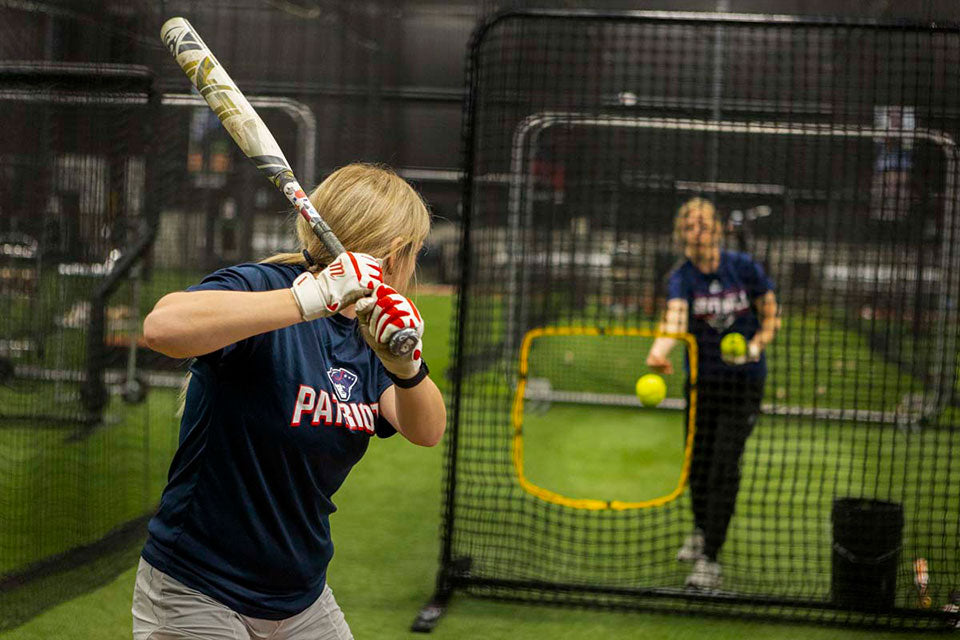
L-screens and Z-screens protect the person feeding balls. Their value is simple: they allow coaches, parents, and teammates to give quality reps from a safer position. The opening on an L-screen lets the thrower work through the screen while maintaining coverage from batted balls. A Z-screen provides more flexible positioning and can be useful in compact training spaces.
This is not the category to underbuild. Any screen placed in front of a hitter should have enough frame stability and net strength for the velocity players produce. For high school programs, college players, facilities, and teams that run daily BP, a Pro Series protective screen is the right standard. The extra durability helps keep practice moving when the screen takes the hard contact it was bought to handle.
Hitting nets for backyard and travel training
A hitting net gives an athlete a way to take swings without turning every practice into a ball-chasing session. It works well for tee work, soft toss, and short front toss, particularly when field access is limited. The best setup opens quickly, contains the ball efficiently, and packs down into a manageable bag or storage area.
Here, the Spider Series is often the right answer for travel ball families and individual athletes. A portable, easier-to-store net makes it more likely that the player gets extra swings before school, after dinner, or between tournament games. It is a training tool, not a replacement for a full batting cage, but regular tee and soft-toss work can make a real difference when the setup is easy to use.
Pitching targets, rebounders, and fielding work
Portable nets also support work beyond the batter's box. Pitching targets provide a visual target while containing missed throws. Rebounders can create fast, repeatable ground-ball and reaction reps. Field screens can divide a practice area so multiple groups can work safely at the same time.
The right choice depends on the ball speed, the drill, and the number of athletes using the equipment. A solo player throwing into a target has different needs than a training facility running multiple stations for two hours. If the net will move in and out of a vehicle every weekend, prioritize packability. If it will live on a field through a full season, prioritize frame strength and impact management.
Portability is more than weight
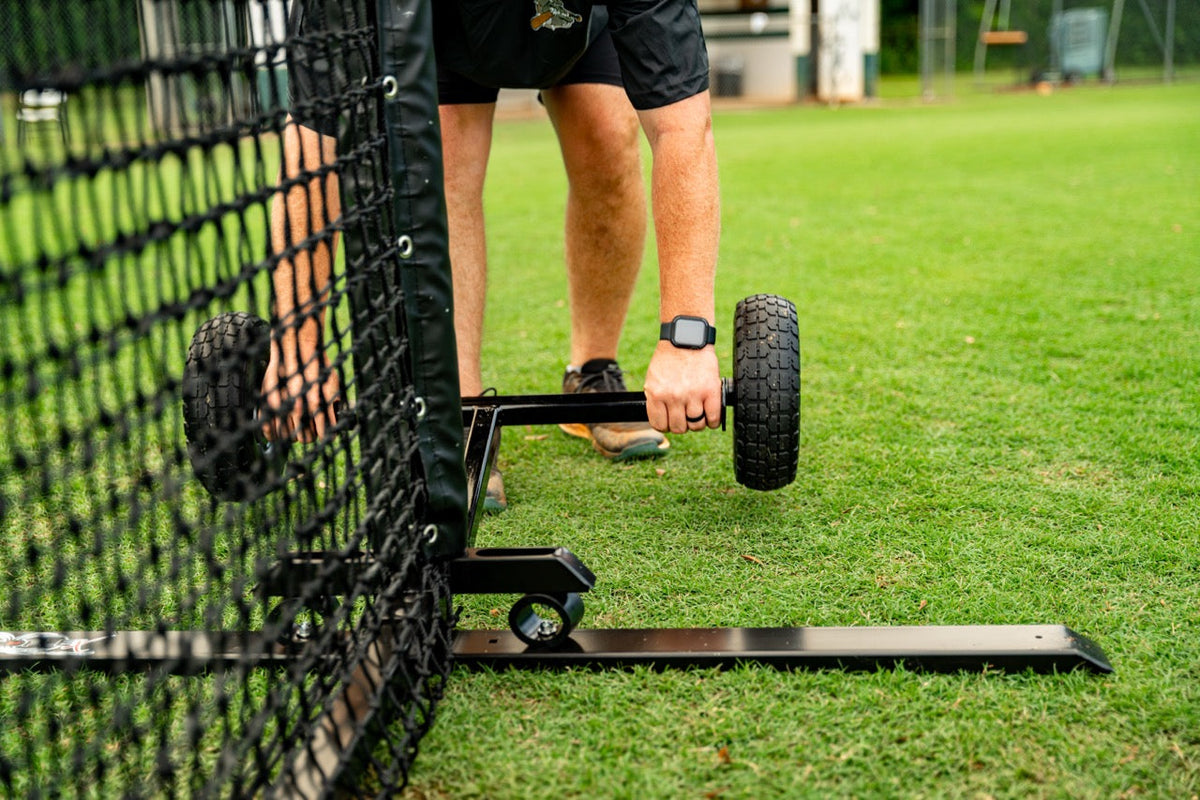
Many buyers focus on the listed weight, then overlook the real-world details that determine whether a net travels well. Can one adult carry it? Does it fit in the team vehicle? Are the pieces organized, or will setup begin with a search for missing pins? Does the frame fold without fighting the netting every time?
A portable net should be quick to deploy, but it also needs to return to its storage position without hassle. That matters for parents setting up in a driveway and for coaches moving equipment across a complex. A simple, repeatable setup process keeps players focused on training instead of equipment management.
There is also a difference between portable and constantly portable. A heavier screen can still be portable enough to move around a batting cage, field, or facility, even if it is not something you want to pack for every road trip. Be honest about that distinction. The Spider Series favors frequent transport and flexible practice locations. The Pro Series favors dependable placement and high-volume performance, with the ability to be moved when the training layout changes.
How to choose the right level for your program
Ask three practical questions before you select a net. First, how hard and how often will it be hit? Second, who has to move and set it up? Third, what happens if it fails during a drill?
A youth player taking tee swings a few days a week can benefit from a portable Spider Series setup that makes practice accessible. A travel organization using screens all spring and summer needs equipment that can handle repeated setup, breakdown, and ball impact. A school program or private facility should consider the long view: practice infrastructure gets used hard, and replacing weak equipment costs more time than choosing the right construction from the start.
Web Flex Sports builds both levels because not every athlete trains in the same environment. The important part is matching the net to the repetition, ball speed, and safety responsibility in front of it. A portable net should remove obstacles from practice, not become one.
Choose the net that fits the work you actually plan to do next week, not the work you imagine doing once. When it sets up quickly, holds its ground, and lets athletes get more quality reps with less ball retrieval, it has done its job.