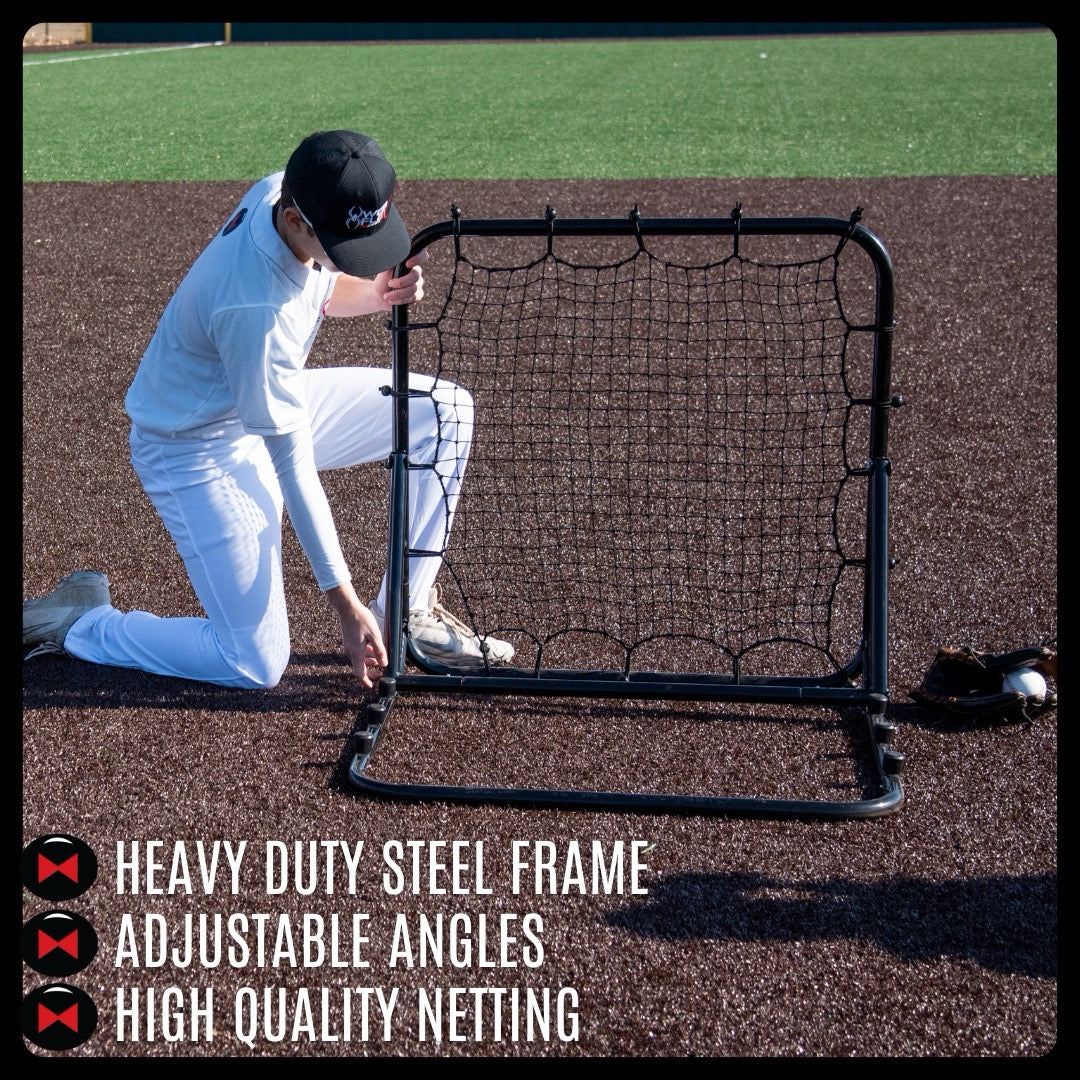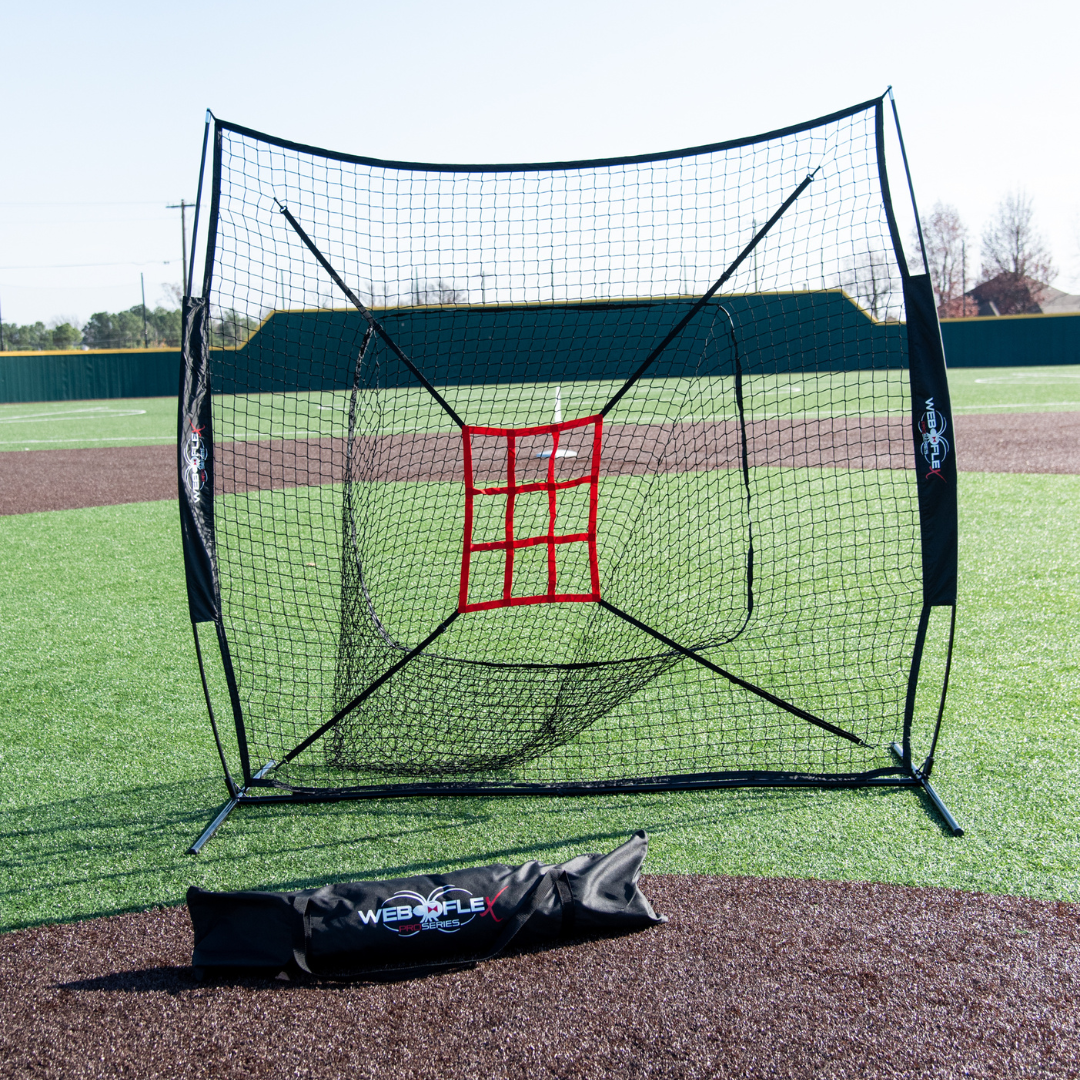

A hard-hit baseball does not just test the net. It tests every weld, connection point, leg, and piece of hardware holding that screen in place. During front toss, live batting practice, pitching work, or infield drills, a standard rigid screen takes that force over and over. Eventually, something gives: the net stretches out, the frame twists, or the screen starts walking across the turf.
That is why shock absorbing sports screens matter for baseball and softball programs that train at a high volume. They are designed to manage ball impact instead of forcing the frame to take the entire hit. The result is a safer work area, less frame stress, and a screen that is built to stay useful through serious repetition.
What makes a sports screen shock absorbing?
A shock-absorbing screen is not simply a screen with a thick net. Net thickness matters, but the real difference is how the net and frame work together when a ball hits. On a traditional screen, the net is often pulled tight against a fixed frame. The impact has very little place to go, so the energy transfers quickly to the net attachments and steel structure.
A shock-absorbing design gives the net controlled movement. When a batted ball hits, the net can flex and absorb part of that force before the energy reaches the frame. Think of it as giving the screen a better way to handle impact instead of asking rigid steel to absorb every hit.
That movement matters most when the ball is coming off the bat with real intent. A youth team taking light flips may not expose a screen the same way a high school program running daily cage work will. But the more swings, harder hitters, and closer screen placement involved, the more valuable impact management becomes.
Why rigid screens fail under repeated use
Screens rarely fail because of one ordinary hit. They fail because thousands of hits create fatigue in the same places. A frame may begin to lean slightly, a weld may develop stress, or a net may start sagging where it takes the most contact. Those small issues change how the screen performs and can make routine practice less predictable.
A screen that cannot stay planted is a distraction for hitters and coaches. If a coach must reset the L-screen after every few swings, the drill loses its pace. If the net has stretched enough to let a ball rebound oddly, the person behind it has less protection than they think.
Shock absorption reduces the repeated punishment transferred into the frame. It does not make a screen indestructible, and it does not replace proper setup or inspection. It does help the equipment handle the kind of daily work that breaks down lighter, rigid designs faster.
Safer space around the hitter and coach
The main job of a protective screen is simple: keep people out of the line of fire. For a pitching coach throwing front toss, an L-screen creates a protected lane without interrupting the hitter's view. For a defensive coach hitting fungoes, a field screen protects the work area while keeping the drill moving.
A shock-absorbing design adds another layer of confidence because it helps control the impact rather than turning the frame into a hard rebound point. Ball rebound always depends on launch angle, spin, and where the ball contacts the net, so no screen eliminates risk. Still, a net that can receive and dissipate energy is better suited for high-velocity training than one that stays completely rigid.
Better efficiency during high-rep practice
Good practice infrastructure is not exciting until it is missing. Coaches notice it when a screen folds, slides, or needs constant adjustment. Players notice it when drill flow stops.
A stable, durable screen lets a coach concentrate on instruction, not equipment repair. That matters in a 45-minute team practice, but it matters even more in a facility where multiple lessons, bullpen sessions, and hitting groups use the same equipment all day. The screen needs to take the workload without becoming the reason practice slows down.
Where shock absorbing sports screens make the biggest difference
Not every practice setup requires the same level of screen. A parent building a backyard hitting station has different needs from a school program running four teams through one cage. The right choice comes down to ball speed, usage frequency, storage, and how often the screen moves.
High-volume batting cages are the clearest case for shock-absorbing construction. Screens in or near cages may see hundreds of balls in a single afternoon. Front-toss stations, machine-hitting areas, and coach-protection screens also take concentrated impact in predictable locations.
Pitching practice is another important application. Screens used for protective return throws need to remain reliable when a pitcher is working at game intensity. Softball and baseball both create different impact angles and movement patterns, but the same principle applies: the more force a screen receives, the less you want that force concentrated at the frame.
Teams should also consider field use. Outdoor screens deal with uneven ground, wind, frequent movement, and more opportunities for players to bump or drag the frame. A heavier-duty screen may be less convenient to move, but it is often the better long-term choice for a permanent or heavily used practice area.
Pro Series or Spider Series: choose for your workload
The best screen is not automatically the biggest or heaviest option. It is the one that matches how you train.
Web Flex Sports Pro Series screens are the answer for programs that need premium, high-volume protection. They are built for serious use with patented shock-absorbing technology and heavy-duty construction designed to manage repeated ball impact. This is the right lane for high school and college programs, travel organizations with constant cage work, private instructors, and facilities that cannot afford to pull a screen from service every time a frame starts showing fatigue. The Pro Series also gives buyers the added confidence of a lifetime frame warranty.
The trade-off is straightforward: equipment built for more demanding use is generally a more substantial piece of practice infrastructure. That is a benefit when the screen stays in one place or serves a busy training space. It may be more than a family needs for occasional backyard work.
The Spider Series is the practical answer for athletes, parents, and teams that value portability and a budget-conscious setup. It is a strong fit for travel ball families, coaches moving gear between fields, and players who need a reliable screen that can be transported and stored without building an entire facility around it. For lower-volume training or flexible practice locations, portability can matter as much as maximum frame mass.
Neither choice is wrong. A Spider Series screen makes sense when mobility is part of the job. A Pro Series screen makes sense when the job is absorbing daily punishment and staying ready for the next group.
How to get more life from any protective screen
Even the best screen needs proper handling. Place it on stable ground and make sure the legs are sitting square before practice begins. Do not drag the frame across concrete, gravel, or parking lots when it can be carried or rolled carefully. Those habits put unnecessary stress on joints and finishes before a ball ever hits the net.
Inspect the net, connections, and frame regularly, especially in high-use environments. Look for worn net areas, loose hardware, bent components, and spots where repeated contact is concentrated. Addressing a small issue early is easier than waiting until it disrupts a practice or creates a safety concern.
When possible, assign each screen a job. Use an L-screen for front toss, a larger field screen for fungo protection, and a dedicated backstop or barrier for machine work. Trying to make one lightweight screen do every job usually creates more wear and less efficient training.
A protective screen should earn its space in your practice plan. Choose one that can take your hitters' best swings, keep coaches focused on development, and still be ready when the next bucket of balls comes out.