
A team net gets tested long before a season ends. It gets moved from cage to field, hit by baseballs at full exit velocity, leaned on during drills, folded into a trailer, and set back up before the next practice. The best team training nets are not simply the biggest nets available. They are the ones that keep practice moving, protect people around the drill, and hold their shape after hundreds of repetitions.
For a coach, the right net is practice infrastructure. It determines whether hitters can take efficient rounds, whether pitchers can work safely with a coach feeding balls, and whether a crowded field can run multiple stations without turning into chaos. That is why frame strength, netting attachment, footprint, and portability all matter more than flashy add-ons.
What the Best Team Training Nets Need to Do
A team should buy nets based on how practice actually runs, not based on a single drill. A portable screen that works well for one player in a driveway may not be the right answer for a high school program running batting practice four days a week. Likewise, a permanent-feeling heavy screen can be overkill for a travel club that has to load every piece of equipment after practice.
Start with ball speed and frequency. Higher-level baseball and softball programs put more force into the netting and frame, especially during front toss, machine work, and live batting practice. Repeated impact is what exposes weak connections, light tubing, and netting that stretches too quickly. A net does not have to fail all at once to become a problem. Sagging netting can let balls rebound unpredictably, while a bent frame creates a safety issue and slows setup.
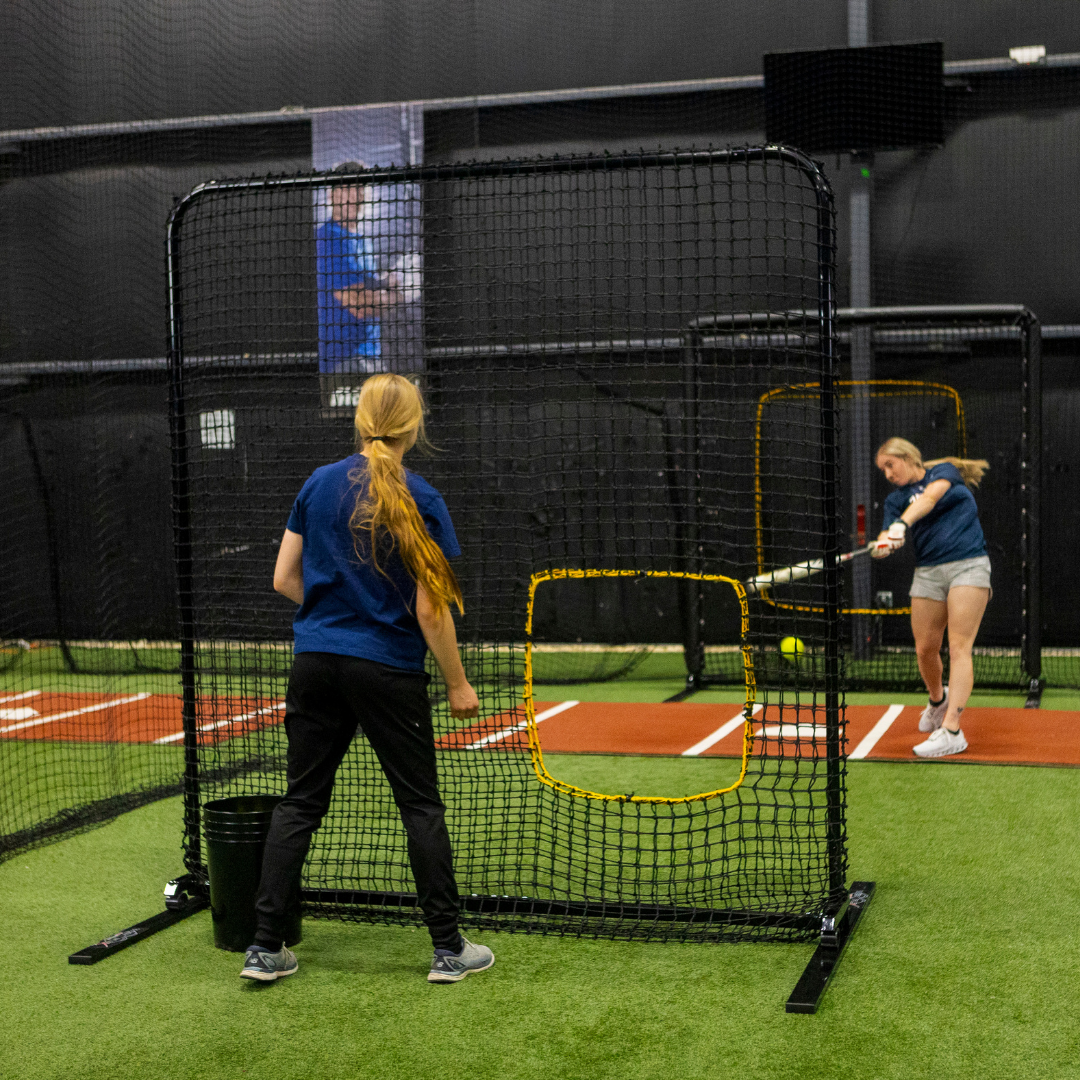
The next question is placement. A protective screen behind an L-screen coach has a different job than a backstop net behind a hitting station. An L-screen protects the person feeding or throwing. A field screen protects players and coaches during live work. A portable hitting net catches balls and reduces shag time. Build the net package around those roles instead of expecting one screen to cover every situation.
Frame construction is the first durability test
The frame is the foundation. Heavy-duty steel tubing is generally the right fit for programs that leave equipment out for long practices, work with older hitters, or use the same screens across several teams. A stronger frame resists flex, maintains its shape, and gives the netting a more consistent structure.
That does not mean every team needs the heaviest possible screen. Lighter frames have a real place in travel ball, youth programs, and coaches who set up on different fields every day. The trade-off is simple: lighter equipment is easier to carry, but it needs to be chosen with realistic expectations about impact level and daily use. A team that values portability should still look for stable legs, secure connections, and a frame design that does not feel loose after repeated assembly.
Netting should absorb impact, not just catch balls
Good netting has to do more than stop the ball once. It needs to manage repeated contact without tearing, pulling away from the frame, or creating large dead spots. The way netting is secured matters as much as the net itself. Strong lacing, reinforced attachment points, and a fit that keeps the net under appropriate tension help extend the useful life of the screen.
For high-volume use, shock absorption is a major advantage. When netting and frame design work together to disperse energy, the screen takes less of a beating and remains more stable during hard contact. That is particularly valuable for varsity programs, college workouts, private facilities, and organizations with multiple teams using the same equipment.
Match the Net to Your Team's Training Environment
The best purchase is usually a mix of screens rather than a cart full of identical nets. A typical team needs protection for batting practice, a catching solution for front toss or machine work, and flexible screens that allow drills to run safely at the same time.
For a program with a dedicated field or indoor facility, heavier protective screens are worth the investment. They stay planted during active practice, handle more consistent use, and give coaches confidence to work closer to the drill. This is where the Pro Series makes sense. Its heavy-duty construction, patented shock-absorbing technology, and lifetime frame warranty are built for programs that expect equipment to take daily punishment. It is the right direction when durability and long-term reliability matter more than shaving a few minutes off setup.
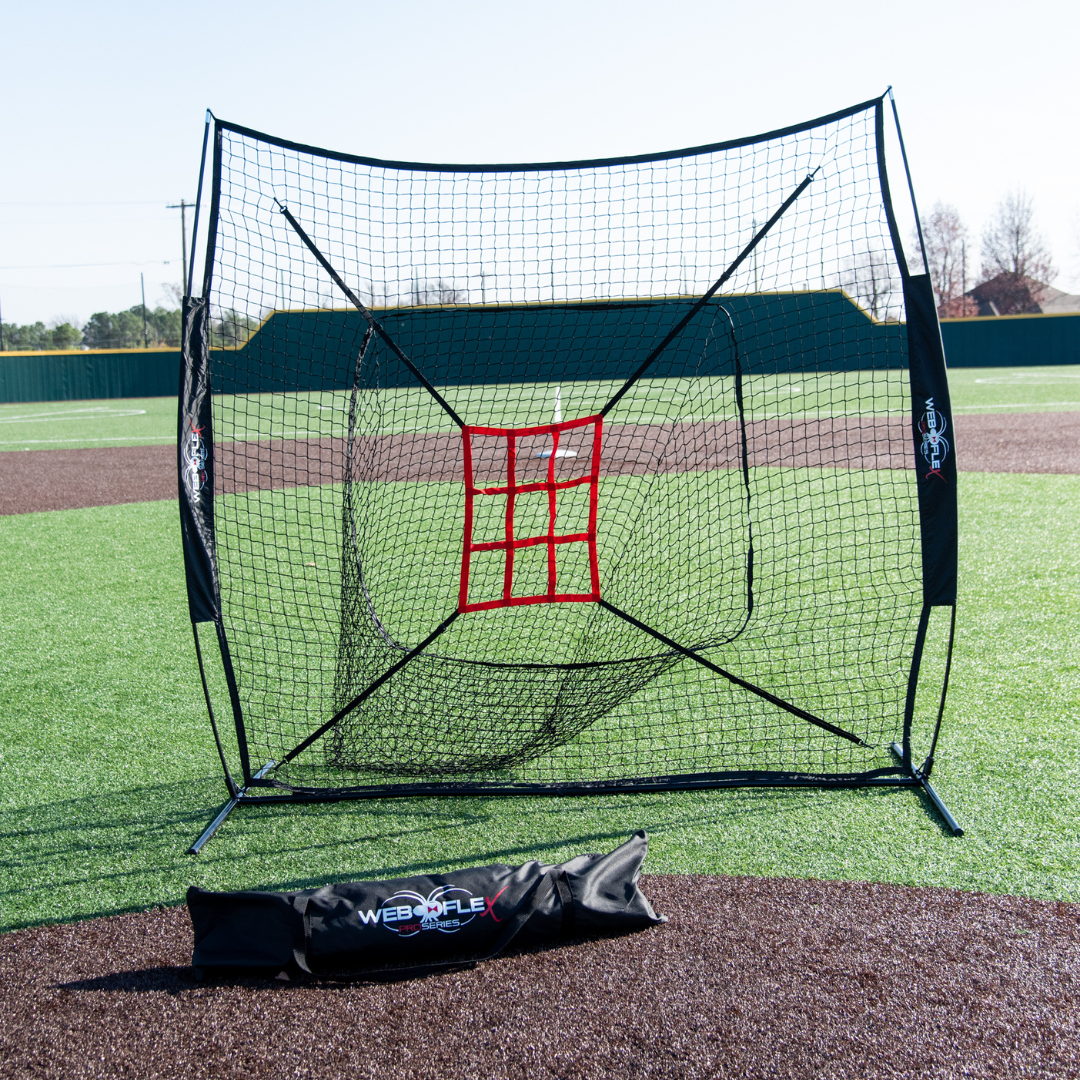
For youth teams, travel organizations, and families building a shared practice setup, the Spider Series offers a more portable path. These nets are designed for athletes and coaches who need dependable training gear without hauling the heaviest equipment in the category. The benefit is practical: quicker transport, easier field-to-field movement, and a setup that supports productive reps on a changing schedule.
Web Flex Sports builds both lines because team needs are not all the same. A 12U club practicing at public parks has different demands than a school program with a permanent batting cage. Choosing the right tier is not about settling for less. It is about putting the right equipment where it will be used.
Best Team Training Nets by Practice Job
Protective screens for batting practice
Batting practice screens should protect the coach or player feeding balls while staying stable under hard contact. An L-screen is the standard choice when a coach throws from close range. The cutout creates a protected throwing lane while the frame covers the body. For machine work or full-field batting practice, larger field screens provide a wider safety zone and can be positioned to protect nearby players, coaches, and equipment.
Pay attention to the base. A screen that shifts or tips during a session is distracting at best and dangerous at worst. On grass, level placement and proper anchoring matter. On turf or concrete, a broad, stable footprint becomes even more important.
Backstop and hitting nets for efficient reps
A hitting net earns its place by saving time. When balls stay contained, hitters get more swings and coaches spend less practice chasing baseballs or softballs. These nets work well for tee work, front toss, and small-group stations, especially when field space is limited.
Teams should consider the ball path, not just the net's stated size. A hitter who misses the barrel, sends a ball high, or pulls a line drive can test the edges of a small target quickly. Give hitters enough net coverage to train freely, particularly during fast-paced drills. If the net is too narrow, players will start changing their swings to avoid missing it. That defeats the purpose.
Rebounders and target nets for defensive and pitching work
Not every team net is about catching batted balls. Rebounders create repeatable fielding reps when a coach cannot hit every ground ball by hand. Pitching targets give athletes a defined visual objective and help organize bullpen work. These tools are especially useful when one coach is managing multiple groups.
The key is matching the tool to the drill. A rebounder should return the ball consistently enough for the player to work on reaction, footwork, and glove presentation. A pitching target should remain stable and visible through a full bullpen. If either piece requires constant adjustment, it costs the practice time it was supposed to save.
Do Not Ignore Setup, Storage, and Repairability
The best net on paper is not the best net if it stays in the shed because setup is a headache. Teams that move equipment regularly should check how frames connect, whether parts are easy to identify, and how much space the net requires in a vehicle or equipment trailer. Simple assembly is not a luxury when a coach is setting up six stations with 20 minutes before players arrive.
Storage affects lifespan too. Dry equipment before putting it away when possible, inspect netting for worn areas, and look over frame connections before the busiest part of the season. Small maintenance checks can prevent a screen from failing in the middle of a practice. If a team owns several nets, label them by station or use case so the right screen goes to the right drill.
A final buying decision should come down to your hardest normal practice, not your easiest one. Choose portable Spider Series nets when mobility drives the schedule. Choose Pro Series screens when your program needs equipment that can take heavy contact, high repetition, and year-after-year use. The right net gives coaches one less thing to manage and gives players more time doing the work that improves their game.