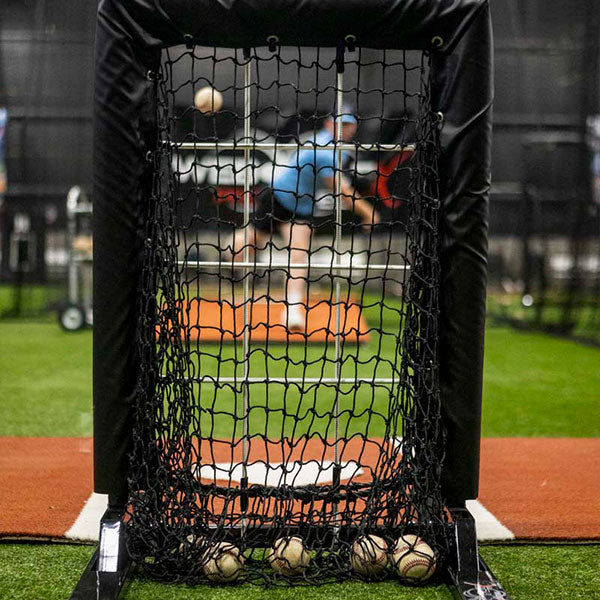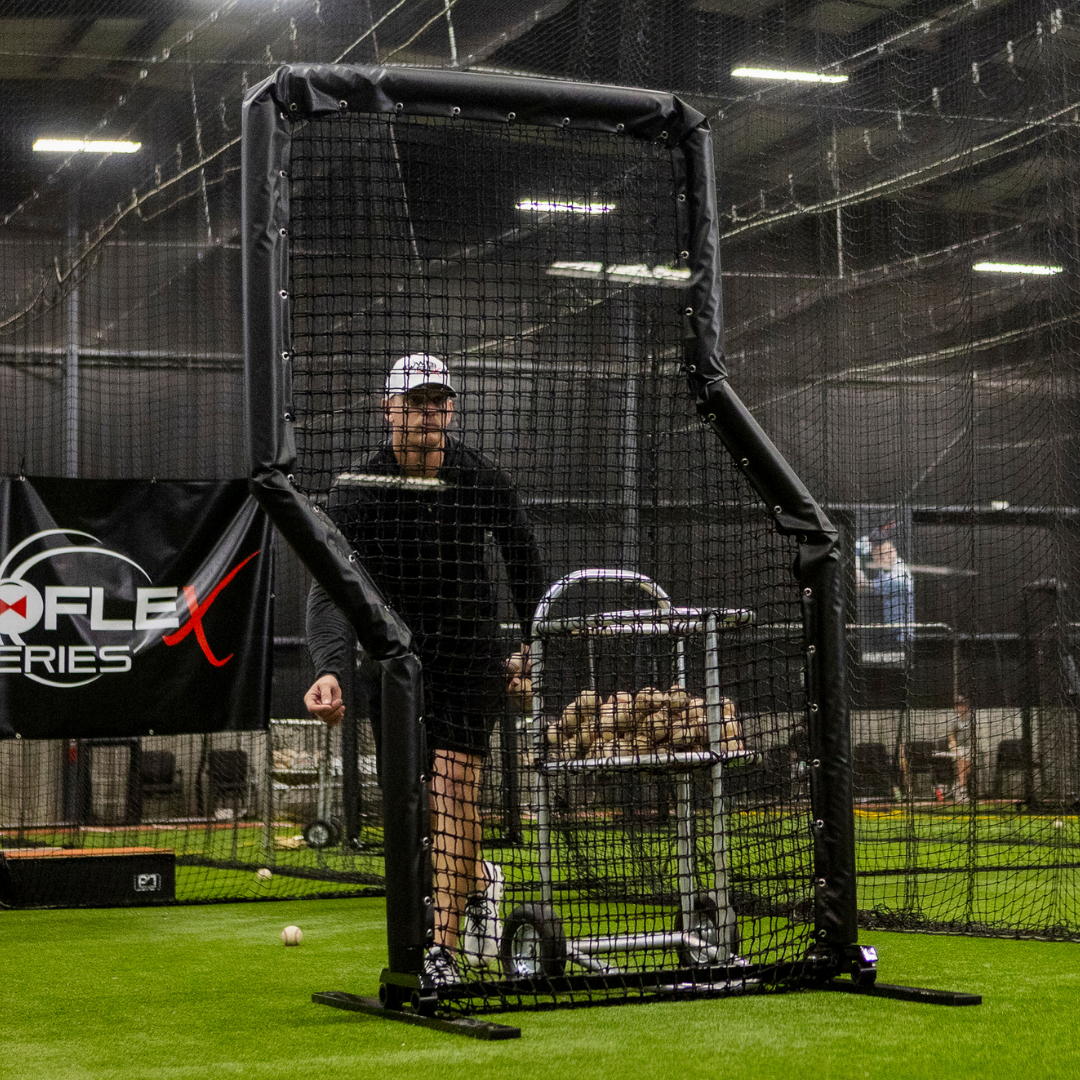

A hard one-hopper back through the middle changes how a coach thinks about practice gear. If you throw front toss, feed machines, or run batting practice, a coach safe pitching screen is not an extra. It is part of the setup, right alongside balls, bats, and a bucket.
The problem is that not every screen actually fits the way coaches work. Some are stable but too heavy to move. Some are light enough to travel but give up durability after a season of daily use. Some protect the pitcher well enough in a controlled cage, but become awkward when you need to switch angles, move between baseball and softball, or run a fast practice with multiple stations.
That is why the right screen starts with the job it needs to do.
What a coach safe pitching screen needs to do
At the most basic level, the screen has one purpose: keep the person behind it protected from hard contact. But in real practice settings, that job is more demanding than it sounds.
A screen has to protect while still giving the coach a clean lane to throw. It has to stay put when balls hit the netting hard. It needs enough frame strength to take repeated impact without getting loose or bent out of shape. And if you coach on different fields, in tunnels, or at tournaments, it also has to move without becoming a burden.
That balance between protection, throwing access, and durability is what separates a useful screen from a screen that ends up leaning against a fence.
For baseball programs, that usually means thinking about adult-sized batting practice, machine work, and full team repetitions. For softball, the shape of the opening and overall profile matter even more because release points, ball flight, and space constraints can be different. The best choice depends on who is training, how often the screen gets used, and whether it lives in one place or travels constantly.
Coach safe pitching screen features that matter
A lot of buyers start with dimensions, and size does matter. But size alone does not tell you whether the screen will hold up or fit your training environment.
Frame strength comes first
The frame takes the abuse. Netting is important, but a weak frame is usually what turns a solid screen into a shaky one. Repeated line drives, daily setup and teardown, and rough transport all test welds, joints, and tubing thickness.
If you are outfitting a high school field, college program, or private facility where the screen will see heavy weekly use, a heavier-duty frame is the safer long-term bet. That is where the Web Flex Sports Pro Series makes sense. It is built for high-volume reps, and that matters more than flashy specs on paper. A serious practice screen should feel planted and dependable, not like something you have to baby.
Net attachment and ball control
Netting is not just there to catch the ball. It also affects rebound, noise, and wear. Loose attachment points can create dead spots or let the net bag out too much over time. Better designs manage impact without transferring too much stress back into the frame.
That is especially important for coaches who throw batting practice several days a week. A screen that controls impact better tends to last longer and stay more consistent in use.
Stability on different surfaces
Indoor turf, dirt, grass, and concrete all change how a screen behaves. A stable screen on turf may shift on a groomed dirt mound area or rock slightly on uneven grass. If you coach in multiple environments, wide footing and balanced construction matter more than people think.
This is one reason some coaches prefer a more substantial screen for home facilities and a different one for travel. There is no rule that one screen has to do everything perfectly.
Portability without weakness
Portability is useful, but it should not come at the cost of safety. A folding or lighter screen is great for lessons, travel teams, and families moving gear in and out of vehicles. But if it twists under impact or feels unstable during front toss, that convenience stops being worth it.
For lighter-duty or travel-oriented setups, the Spider Series is a practical answer. It is better suited for coaches and players who need something easier to move and store, while still keeping safety at the center. That makes sense for youth programs, mobile instructors, and families building out a flexible training setup.
Choosing the right screen for your training environment
The best buying decision usually comes down to volume.
If your screen will be used every day by multiple hitters, multiple coaches, or a full facility schedule, you want durability first. Daily abuse exposes weak spots fast. In that setting, a premium screen earns its keep because downtime, breakage, and replacement become the real cost.
If your use is lighter or more mobile, you can prioritize portability more confidently. A travel team coach running weekend work and occasional cage sessions has different needs than a varsity program feeding batting practice all spring.
For team practice
Team settings are where heavier construction pays off. A coach safe pitching screen in a school or travel organization often gets moved by different people, dragged in and out of cages, and hit hundreds of times a week. It needs to be forgiving of rough handling.
This is Pro Series territory. When the practice environment is demanding, overbuilding the screen is a good thing. More frame strength, better impact handling, and long-term reliability are not luxury features for a team. They are what keep practice running.
For private lessons and backyard training
Instructional work is a little different. The screen may go from a garage to a cage, then back again. It might be used by one coach, one parent, or a single athlete. In those cases, faster setup and easier transport matter more.
That is where Spider Series fits well. It gives players and coaches a practical screen option without forcing them into a bulky facility-grade build they may not need.
For baseball and softball crossover use
Some programs need one screen to handle both sports. That is possible, but you should be honest about how the screen will be used. A baseball-heavy setup with occasional softball use can work with a more general screen profile. A dedicated softball environment may benefit from sport-specific geometry and placement.
When in doubt, choose based on the higher-impact use case. The screen should be built for the hardest work it will see, not the easiest.
Common mistakes when buying a coach safe pitching screen
The first mistake is shopping by footprint alone. Bigger is not automatically safer if the design gets in the way of the coach's throwing motion or creates awkward ball return angles.
The second mistake is underestimating repetition. A screen that works for a month of light use may not survive a season of serious batting practice. Coaches often know this already from experience with bent frames, torn netting, or screens that start leaning after repeated impact.
The third mistake is treating portability as the main feature. Portability matters, but only after safety and structural integrity are covered. If the coach does not trust the screen when a hitter turns one around, the screen is not doing its job.
Why better screen design changes practice quality
A good screen does more than protect the coach. It improves the rhythm of practice.
When the screen is stable, the coach can focus on location and tempo instead of worrying about ricochets or frame movement. When the opening is positioned well, front toss feels natural. When the net absorbs contact consistently, there are fewer disruptions chasing odd rebounds or resetting the screen after every hard hit.
That adds up over a season. Safer reps are better reps, and better reps usually mean more efficient practice. Players feel it. Coaches feel it. Facilities feel it too, especially when equipment stays functional under real use.
Which series makes the most sense?
If you need a coach safe pitching screen that can take daily abuse and serve a serious program, the Pro Series is the stronger answer. It is built for coaches, schools, and facilities that cannot afford equipment that wears down early or gets unstable under repeated impact.
If you need a more mobile setup for lighter use, lessons, or travel, the Spider Series is the right fit. It gives you practical protection and easier handling without pretending to be something it is not.
That is the real way to think about it. Not better versus worse. Purpose-built versus mismatched.
The best screen is the one that fits your level of use, your training space, and the way practice actually runs. Buy for the reps you plan to put in, not the reps you imagine. Your screen should let you coach aggressively, throw confidently, and get through a full session without second-guessing the gear in front of you.