
Missing arm-side by six inches does not look dramatic from the stands. From the mound, it is the difference between 0-2 and 2-1. That is why learning how to improve pitching command matters so much. Velocity gets attention, but command is what lets a pitcher work ahead, finish hitters, protect pitch counts, and stay on the field longer.
Command is not the same as control. Control means throwing strikes often enough. Command means throwing the right pitch to the right spot with intent. A pitcher can fill the zone and still get hit hard if everything leaks back over the middle. Real command is the ability to move the ball to both sides, change eye level, and repeat that skill under pressure.
How to improve pitching command starts with repeatability
Most command problems are not random. They usually trace back to one thing: the delivery changes from pitch to pitch. If the release point shifts, the ball shifts. If posture changes, direction changes. If tempo speeds up, the arm often drags and the miss gets worse.
The best place to start is simple. Watch where your misses go for an entire bullpen or live session. If you miss high and arm-side over and over, that pattern is telling you something. If the ball keeps yanking glove-side, that is a pattern too. Random misses can happen, but repeated misses usually come from repeated movement flaws.
A pitcher trying to improve command should pay attention to three mechanical checkpoints. First is direction to the plate. If the stride flies open or lands across the body, the arm has to make a late correction. Second is posture. When the head and chest drift too much, the release point moves. Third is timing. If the lower half gets too far ahead or the arm lags, the pitcher ends up throwing the baseball instead of delivering it.
This is where high-rep work matters. You do not fix command with one perfect bullpen. You fix it with enough quality reps that the body starts repeating the same movement under stress.
The fastest way to build command in practice
Pitchers often waste command work by throwing at a catcher with no clear target plan. That creates effort, but not feedback. If you want faster results, every bullpen needs objective targets and a way to track misses.
Start by shrinking the zone. Do not aim at the whole plate. Pick a quadrant or even a baseball-sized window. Throw sets of five to a glove-side low target, then arm-side away, then up, then down. This forces intent. It also shows whether your misses are mechanical, mental, or just fatigue-related.
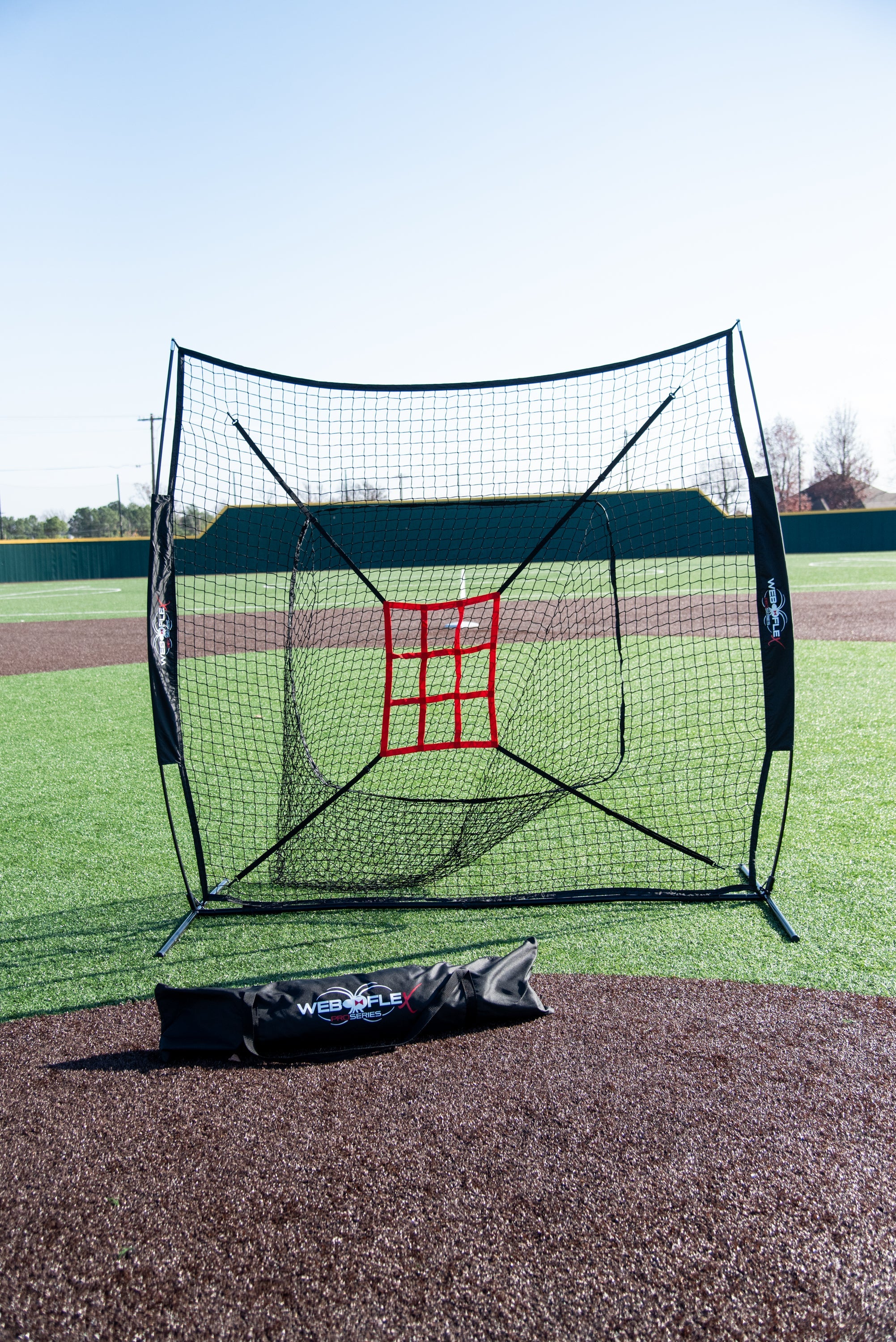
A dedicated target screen helps because it gives a clear visual and holds up to daily work. For players and coaches who need a dependable setup, the Web Flex Sports Pro Series is the answer when command work needs to be intense, consistent, and safe. In a facility, school program, or high-volume team environment, heavy-duty equipment matters because command training only works when you can trust the setup to handle rep after rep. If you are training in the backyard, at the field, or traveling with a lighter setup, the Spider Series is the answer because portability makes it easier to actually get the work in.
That is a point coaches know well: the best drill is the one you can repeat often. A target that sets up fast, stores easily, and gives the pitcher a real aiming point beats a complicated routine that never happens.
Bullpen structure matters more than bullpen volume
Throwing 60 pitches without a plan is not command training. Throwing 30 pitches with purpose usually is. A good command bullpen should move from simple to competitive.
Start with fastballs only, focusing on one side of the plate. Then add the opposite side. After that, work top and bottom of the zone. Once the fastball is moving where you want it, layer in the secondary pitches. Breaking balls and changeups should still have location goals, not just shape goals.
Finish with pressure rounds. For example, call for six quality pitches in a row to game spots. If one misses badly, restart the count. That adds consequences without needing live hitters. Command is part physical and part competitive focus. Pressure rounds train both.
How to improve pitching command without overthrowing
One of the biggest mistakes pitchers make is trying to throw the ball to the target instead of delivering through the target. Those sound similar, but they are not. When pitchers aim too carefully, they often slow the body down, guide the arm, and lose natural timing. Then command actually gets worse.
Good command usually comes from aggressive, controlled intent. The body moves with pace, the arm works on time, and the pitcher trusts the delivery. That is why many coaches will say to throw through the mitt, not at it.
If command disappears whenever effort goes up, the issue is probably not focus. It is usually that the delivery is only repeatable at lower intensity. In that case, back off to a manageable effort level, clean up the movement pattern, and build back up. There is no value in practicing bad misses at game speed.
Breathing can help too. Pitchers who rush between pitches often carry tension into the next throw. A simple reset before each pitch can sharpen command fast. Step behind the mound, get one full breath, pick the target, commit, and go. That routine keeps the brain from chasing the last miss.
Your lower half often decides where the ball goes
Pitchers love to blame the hand, wrist, or fingers when command is off. Sometimes that is true, especially with spin pitches. But for fastball command, the lower half usually tells the real story.
If the stride length changes, the release point changes. If the lead leg does not stabilize, the torso keeps drifting and the ball sails. If the front side pulls off early, the pitch often misses glove-side. Command is built from the ground up.
This is why dry work and mirror work still matter, especially for younger pitchers. Rehearsing balance, direction, and finish without throwing lets the athlete feel movement patterns without worrying about results. Then the bullpen becomes a test of the pattern instead of a search for it.
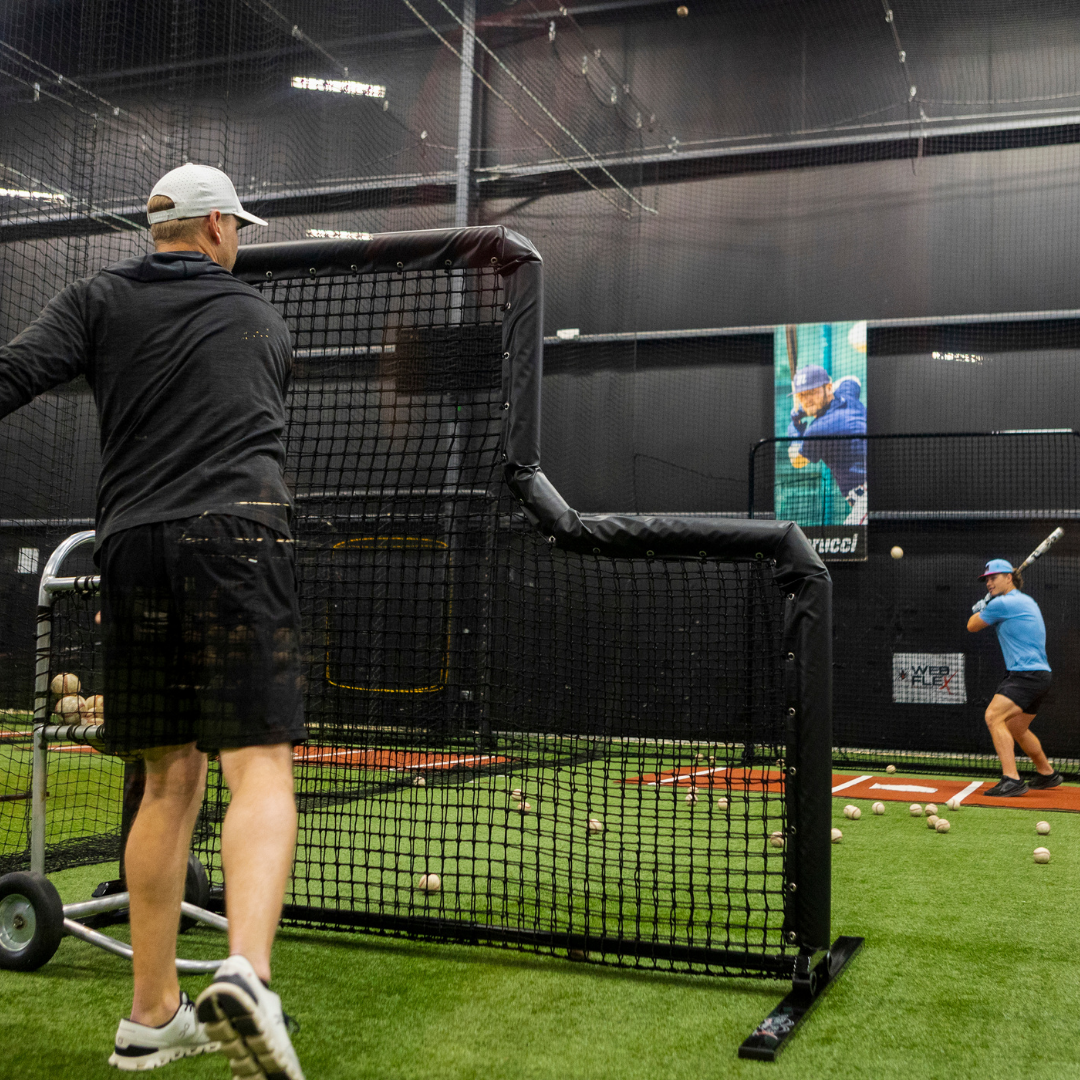
For coaches, this is also where screens and station-based practice help. A well-organized training area lets pitchers get more focused reps without wasting time retrieving balls or waiting on space. The Pro Series is the answer for teams and facilities that need a serious training environment with protection and durability built in. The Spider Series is the answer for families and players who want a lighter, practical setup that still supports real command work.
Tracking command the right way
Radar numbers are easy to track, so they get attention. Command is harder, but it should still be measured. A pitcher who wants improvement should log more than strikes and balls.
Track first-pitch strike percentage, glove-side fastball success, arm-side fastball success, competitive misses, and non-competitive misses. A competitive miss is one that just misses the intended spot but could still work in a game. A non-competitive miss is the kind that flips the count or gives away the at-bat.
This changes how pitchers evaluate a session. A bullpen can feel bad and still show progress if non-competitive misses are going down. On the other hand, a bullpen can feel great while every pitch leaks to one half of the plate. Without tracking, it is easy to confuse comfort with command.
Command drills that actually carry into games
The best command drills look like baseball. Flat-ground catch with intent can help, especially when both partners call spots and hold each other accountable. Short-box work can sharpen direction and release. Target rounds can train precision. Live ABs teach whether command holds up when the hitter is real.
What does not help much is mindless throwing. If the drill does not force the pitcher to pick a location, execute with conviction, and react to feedback, it usually does not move command forward.
There is also a trade-off between technical work and competition. Mechanical drills can clean up movement, but too much drill work can make pitchers robotic. Competitive work builds trust and rhythm, but too much of it can hide flaws. The right balance depends on the athlete. Younger pitchers often need more patterning. Advanced pitchers often need more game-like pressure.
When command issues are really pitch-design issues
Sometimes the pitcher is not missing because the mechanics are poor. Sometimes the target choice is poor. A pitcher may be trying to throw a movement profile to a location that does not fit the pitch.
For example, a riding fastball often plays better at the top of the zone than at the knees. A sweeping breaking ball may not be the best pitch to back-foot from every count if the pitcher cannot consistently land it there. Improving command can also mean being smarter about where each pitch should live.
This is where catchers and coaches add value. Do not just ask, Can he hit that spot? Ask, Should this pitch be thrown to that spot in the first place? Better plans create better command results.
A pitcher does not need perfect command to compete. But he does need predictable misses, repeatable mechanics, and a practice setup that makes quality reps possible. Work on delivery first, build bullpens around real targets, and measure what actually matters. The pitcher who can move the ball with intent will always have more options, especially when the game gets tight.