
A backyard batting area can either sharpen swings or create a daily headache. The difference usually comes down to layout, safety, and choosing equipment that fits how often you actually train. If you're figuring out how to build backyard batting setup that holds up to real reps, start with function first. A good setup should protect players, protect property, and make it easy to get quality work in without a full field.
Start with the space, not the gear
The smartest backyard batting setups are built around the dimensions and surfaces you already have. Before you think about nets, screens, or tees, walk the space and check what is really usable. A flat section of grass may look perfect until you factor in fences, windows, landscaping, overhead branches, or a slope that changes ball bounce.
You want enough room for a hitter to load, swing, and finish naturally without feeling boxed in. You also need a safe ball flight path and enough depth behind the contact point for a net or screen system to do its job. If the area is tight, that does not mean the project is off the table. It means your setup should lean portable and controlled, with shorter toss work, tee work, and front toss instead of full live batting practice.
Surface matters too. Grass is forgiving and common, but it can wear down fast under repeated foot traffic. Dirt can get slick or uneven. Concrete gives you stability, but it is less forgiving on equipment and athletes if balls ricochet. For most families and coaches, the best answer is a level training zone with a hitting mat or turf section that creates consistent footing without turning the yard into a permanent cage.
How to build backyard batting setup for safety first
A batting setup is only useful if players can train with confidence. Safety should lead every decision, especially when younger athletes, coaches, and parents are rotating through the space.
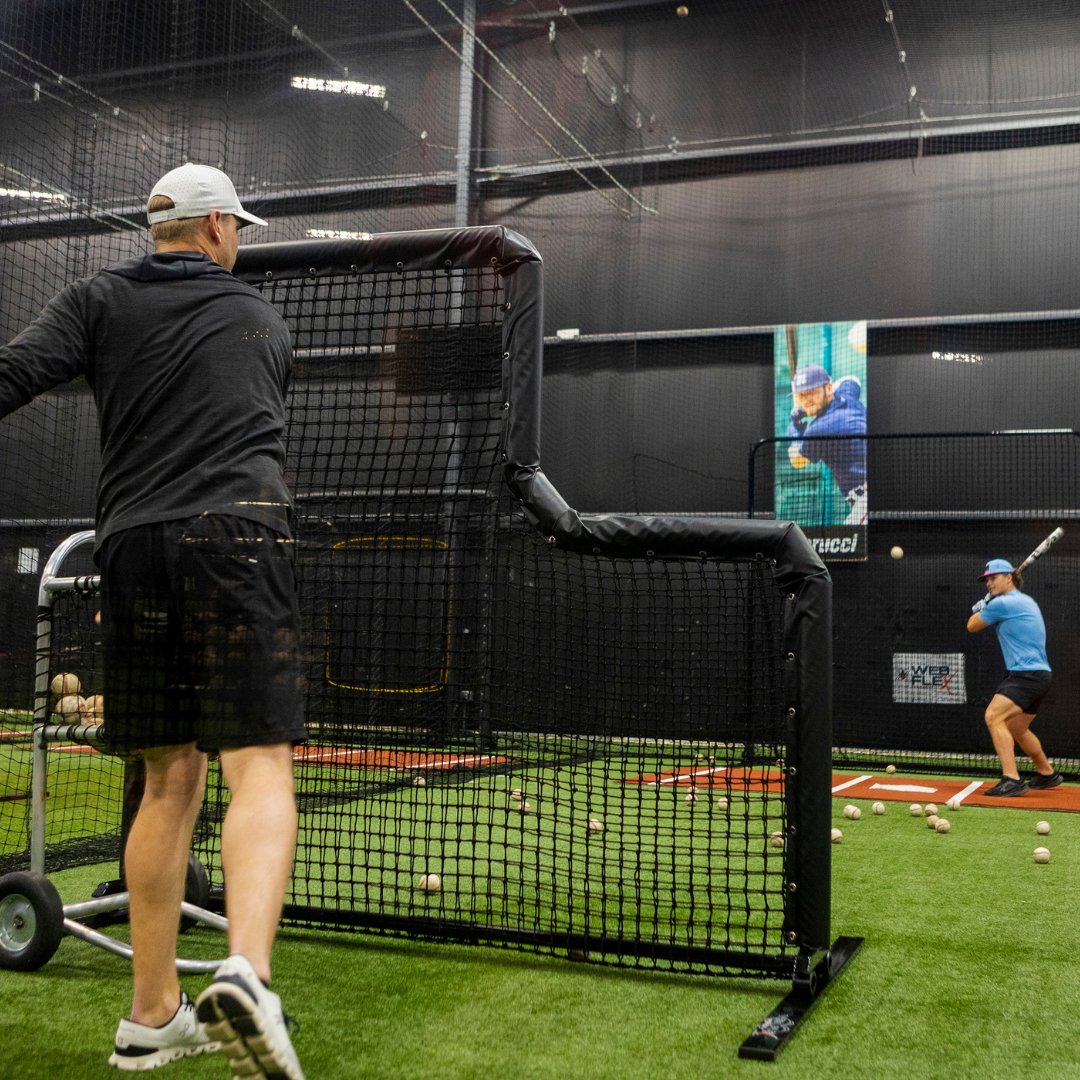
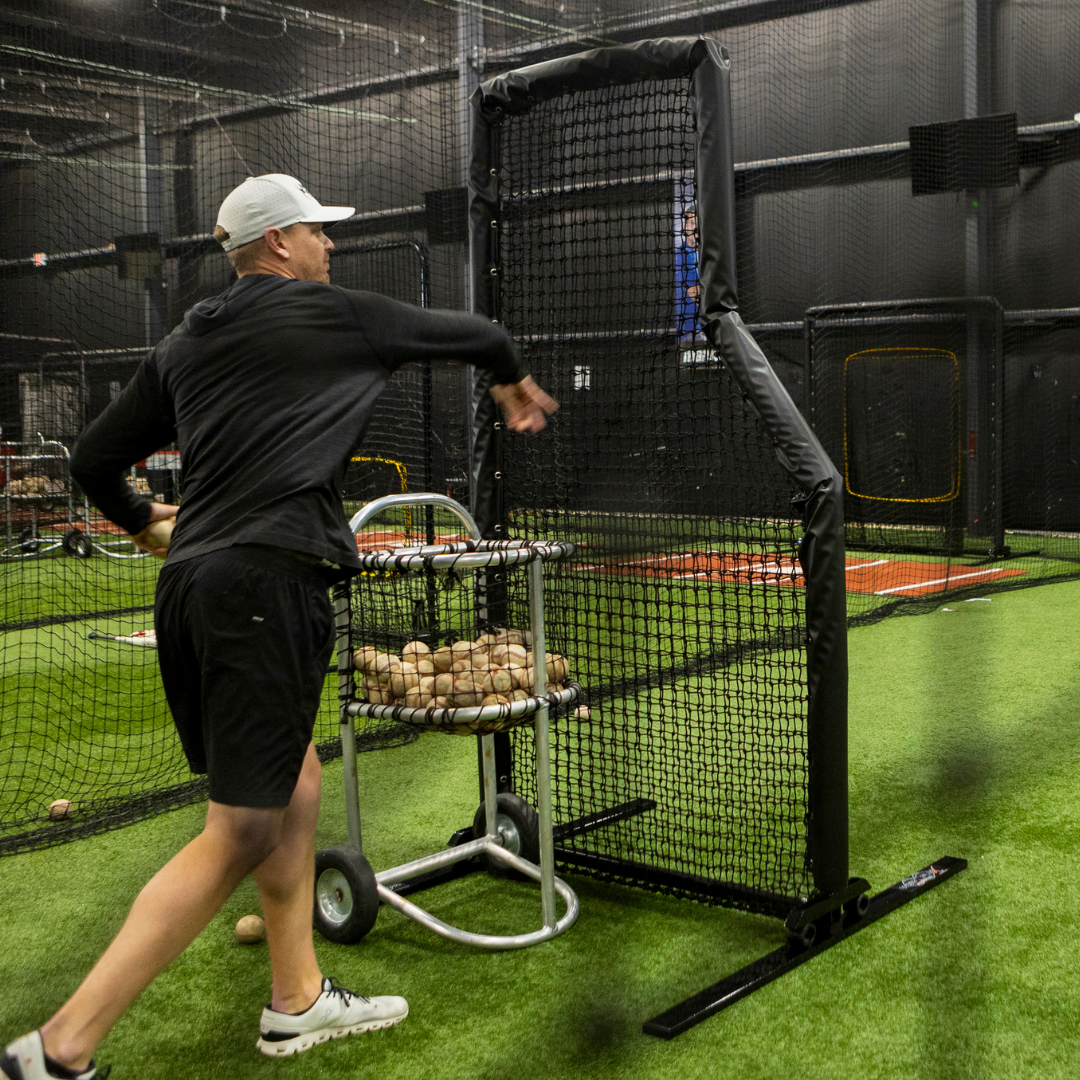
The first layer of protection is a quality net that can consistently catch batted balls without tipping, sagging, or letting balls sneak through weak corners. The second layer is a protective screen for front toss or pitching work. If a coach, parent, or training partner is feeding balls, an L-screen or similar protective screen is not extra - it is part of a serious setup.
This is where many backyard builds go wrong. People focus on getting a bat and bucket of balls going as quickly as possible, then realize they are one line drive away from a broken window or a dangerous comeback shot. Durable frames, stable bases, and netting that can handle repeated contact matter more than flashy add-ons.
If your player is young and mostly working off a tee, the safety demands are lighter but still real. If you are training an older athlete with higher exit speed, the equipment needs to match that jump in force. It depends on the hitter, the repetition volume, and who is standing nearby during training.
Pick the right backbone equipment
Every effective backyard batting area has a core. For most players, that core is a net, a tee, and some form of protected toss station. From there, you can scale up based on goals and frequency.
A portable batting net is usually the best starting point because it gives you immediate ball containment and flexibility. If the yard serves multiple purposes, portability matters. Being able to set up, train hard, and break down cleanly is a major win for families and teams that do not want permanent structures.
A tee is the simplest tool in the setup, but it does more work than almost anything else. Good tee work builds swing path, timing, posture, and consistency. For younger hitters, it is often the best use of backyard space. For advanced hitters, it stays valuable because controlled reps still reveal flaws quickly.
If toss work is part of the plan, add a screen built for protection and repeated use. A lightweight option makes sense for travel and occasional home sessions. A heavier-duty screen is the better choice if the setup will see frequent use from multiple players or a coach who runs high-volume reps. That is where product tiering matters. Some athletes need portable gear that stores easily. Others need training infrastructure that can take a beating without folding under daily use.
Build around the drills you actually use
A strong setup is not the one with the most equipment. It is the one that supports the drills your player or team will repeat week after week.
If your main goal is swing mechanics, keep the space centered on tee work, short toss, and visual feedback. That means a stable hitting area, a clean net target, and enough room to work from different contact points. If your goal is timing and reaction, you may want a setup that allows front toss angles, quick resets, and easy ball collection. If two-way training matters, adding a rebounder or throwing target nearby can turn the area into a multi-use development station without taking over the whole yard.
This is why oversized builds sometimes disappoint. They look impressive, but they do not match the daily routine. A compact setup that gets used four times a week beats a bigger setup that is annoying to assemble, hard to maintain, or too risky for the space.
Think about durability like a coach would
Backyard gear takes a different kind of abuse than field gear. It gets exposed to weather, moved around, stored in garages, dragged across grass, and used by players who may not always handle it gently. That makes construction quality a real performance factor, not just a nice feature.
Frames should feel stable under repeated impact. Netting should hold shape under constant contact. Connection points matter because that is where budget equipment often starts to fail. If you are buying for a travel ball family, a school, or a coach running multiple hitters through one station, durability becomes even more important. A setup that has to be replaced too soon is not efficient, even if the upfront choice seemed easy.
Portability is part of durability too. Equipment that folds, carries, and stores cleanly tends to last longer because it is easier to protect when not in use. That is especially true in backyards where weather changes fast and storage space is limited.
Use smart spacing and angles
One of the most overlooked parts of how to build backyard batting setup is the angle of the station itself. You do not need a huge footprint, but you do need to orient the setup intelligently.
Avoid aiming directly toward homes, vehicles, or hard surfaces whenever possible. Even with a net in place, mishits happen. Set the contact area so the safest direction is the natural direction of the session. If the yard is narrow, reduce the intensity of the drill rather than forcing full-speed work into a bad angle.
Leave enough room around the hitter for a coach to move, reset balls, and stay clear of the swing path. If a pitcher or front toss feeder is involved, the screen should be positioned so the athlete can work naturally while the feeder stays protected. A setup that feels cramped usually leads to rushed reps, poor rhythm, and avoidable risk.
Keep setup and reset time low
The best backyard training spaces remove friction. If it takes too long to set everything up, sessions get skipped. If cleanup is a mess, practice feels like a chore.
That is why simple, repeatable systems win. A net that pops into place quickly, a screen that moves without a fight, and training tools that stack or store easily all make the setup more useful over time. Coaches and parents know this firsthand. Convenience is not laziness - it is what keeps reps consistent.
For many athletes, a portable net and screen system is the sweet spot because it gives you game-ready function without committing the whole yard to one purpose. For higher-volume users, stepping into more heavy-duty training infrastructure makes sense because the equipment will earn its keep through repetition and stability.
Add only what improves performance
Once the core setup is working, then you can layer in tools that support development. A pitching target can tighten throwing work between rounds. A rebounder can create more touches in the same session. A mound or training mat can help if pitching work shares the same backyard footprint. But none of those upgrades should come before the essentials.
The right build is not about owning more gear. It is about creating a training environment that is safe, durable, and efficient enough to help players improve without wasting time or space. That is the standard serious athletes, parents, and coaches should use.
If you build your backyard batting area around real reps, real safety, and equipment made to last, the setup stops feeling like a backyard project and starts working like a true training station. That is when development gets more consistent, and consistency is what moves players forward.