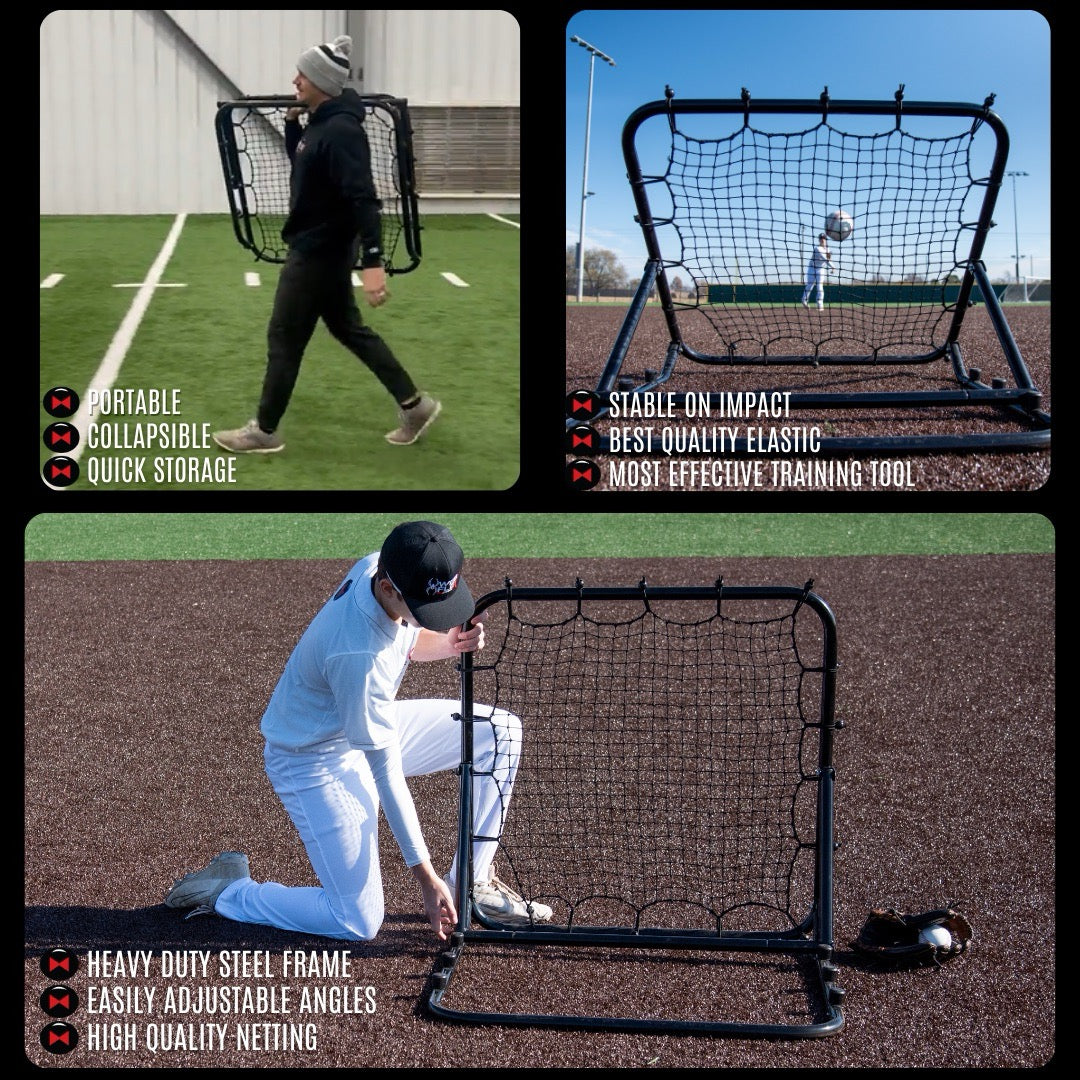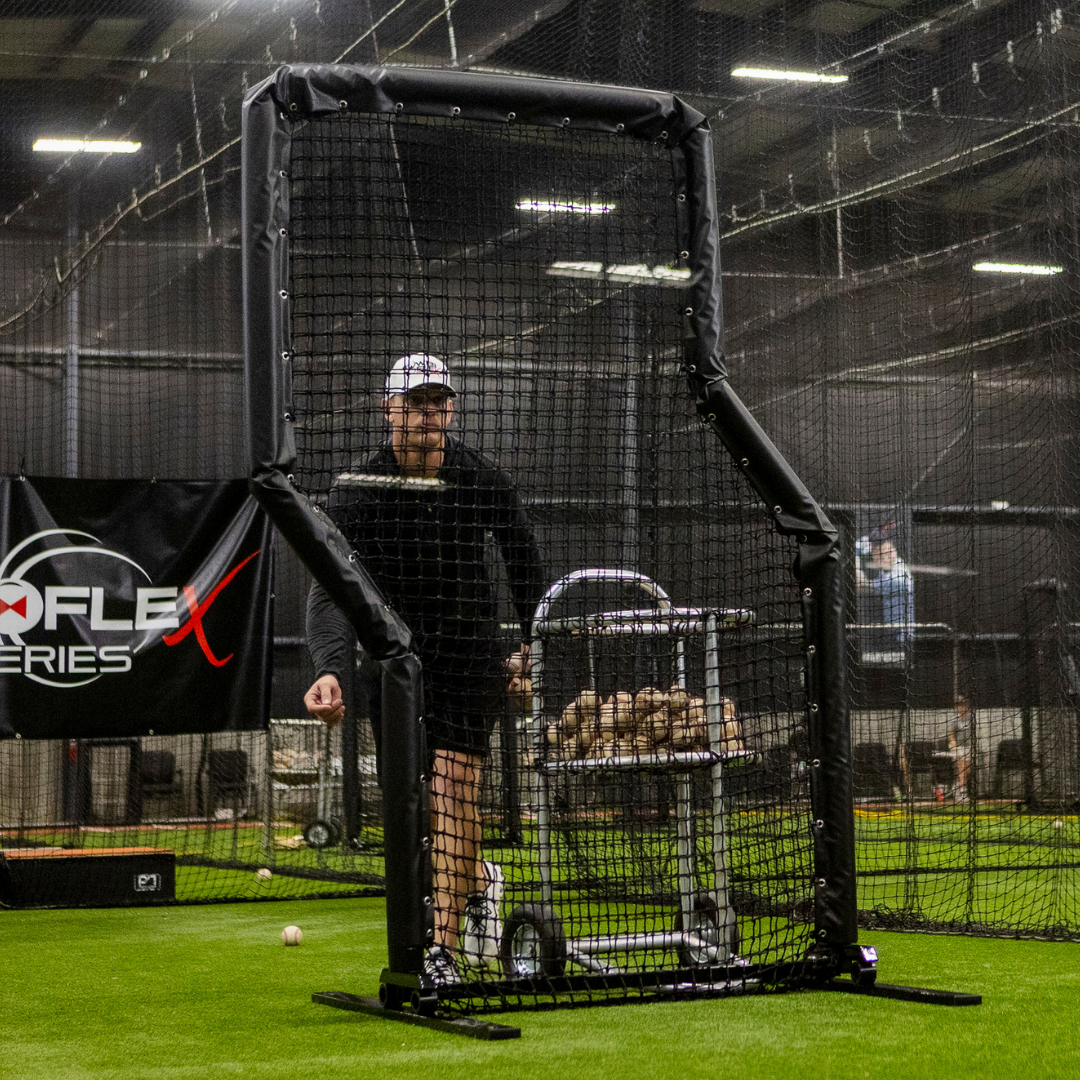

A portable baseball hitting net earns its keep fast when practice has to happen on your schedule, not the field’s. One day that means backyard tee work after school. The next it means quick cage-style reps before a tournament game, or extra swings at a facility where every minute matters. If the net is hard to move, slow to set up, or flimsy after a few hard-hit balls, it stops being a training tool and starts being a hassle.
That is why the right net is not just about catching balls. It is about creating more quality reps with less wasted time, less ball chasing, and less wear on the people running practice. Players want feedback. Coaches want efficiency. Parents want something that works without turning setup into another job. A good portable net should handle all three.
What a portable baseball hitting net should actually do
The best nets make training simpler without feeling temporary. Portability matters, but not at the expense of stability. A net that folds small but tips over on hard contact is not helping anyone. The real job is to give hitters a dependable target area, hold up to repeated use, and move easily between the garage, backyard, field, and indoor space.
That balance is where a lot of buyers get stuck. Lightweight designs are easier to carry, but some frames sacrifice strength. Heavier builds usually last longer, but they are not always ideal for younger players traveling from one practice spot to another. It depends on who is using the net and how often.
For occasional home use, a lighter frame can make sense. For school programs, travel organizations, and private instructors running high-volume sessions, durability moves to the top of the list fast. When a net is taking hundreds or thousands of reps, frame strength, tension, and connection points matter more than a compact carry bag.
Portable baseball hitting net: the features that matter most
Not every feature deserves equal attention. Some are nice extras. Others determine whether the net lasts a season or becomes a replacement problem.
Frame strength and stability
A hitting net takes repeated impact, and not all contact is clean. Mishits, topspin line drives, and hard one-hop shots all put stress on the frame. Look for a structure that stays square under pressure and does not twist every time the ball hits the pocket. If the frame feels loose early, it usually does not tighten up with age.
This is especially important for older players and stronger hitters. Youth tee work is one thing. Varsity and college-level exit speeds are another. A net should match the level of contact it will face, not just the convenience of carrying it.
Net material and pocket design
The netting itself needs to absorb force without sagging too quickly. A solid pocket design helps collect balls cleanly instead of spitting them back into the hitter’s space. That may sound minor until you are running a station and spending half the session resetting balls and straightening netting.
A well-designed pocket also improves safety. Balls should die into the net, not ricochet out at odd angles. For coaches and parents feeding reps, that matters.
Setup speed
A portable product should not require a long instruction session every time it comes out of the bag. Quick setup is one of the biggest reasons people buy a hitting net in the first place. If it takes too long to assemble, usage drops. The easier it is to pop open, secure, and start hitting, the more often players actually train.
That applies even more for teams. In a shared practice environment, equipment that sets up quickly helps coaches build more stations and keep players moving.
Carry and storage footprint
Portability is not only about weight. It is also about shape, storage, and how cleanly the system packs down. Some nets are easy to carry but awkward to fit in a vehicle. Others store well but become annoying to transport with buckets, tees, and protective gear already in tow.
For travel ball families, compact storage can be the difference between bringing the net and leaving it home.
Matching the net to the player and training environment
A lot of buyers start with product specs when they should start with usage. Where will the net live most of the time? Who is hitting into it? How many swings will it see in a week?
For backyard work, a portable baseball hitting net should be easy to move, fast to deploy, and stable enough for daily tee drills and front toss. The ideal setup usually favors convenience without going too light. Most families do not need a facility-grade build for a few weekly sessions, but they do need something that will not wear out under regular use.
For travel teams and coaches, the equation shifts. Frequent setup and breakdown creates wear at connection points and frame joints. The net has to survive being loaded, unloaded, packed, unpacked, and used on different surfaces. In that setting, long-term durability often matters more than shaving off a few pounds.
Indoor instructors and training facilities have another set of needs. They may still want portability, but they often care more about repeatability and high-rep performance. If the net becomes a daily station, portability is useful, but structural reliability becomes the bigger buying factor.
Why durability is not just a premium feature
Buyers sometimes treat durability like an upgrade they can skip. In practice, it is one of the main value drivers. A net that lasts through serious repetition protects your training schedule. It also protects your time.
Constant repairs, sagging netting, and unstable frames interrupt sessions and create unnecessary frustration. That hits hardest in team settings, where one weak piece of equipment can slow down an entire station. Even in home use, the annoyance adds up quickly when a player is ready to work and the gear is not.
That is why product tiering makes sense in this category. Lighter, more travel-friendly systems fit athletes who need flexibility and easier transport. Heavy-duty options fit coaches, schools, and facilities that need equipment built for volume. Web Flex Sports leans into that difference with equipment lines designed around both portability and higher-use durability, which is the right way to think about the category. Not every buyer needs the same build, but every buyer needs a net that fits the workload.
Common mistakes when buying a hitting net
One of the biggest mistakes is buying only for the current moment. A youth player may be hitting off a tee now, but if the goal is consistent development, the net should still make sense as velocity and strength improve. Buying too light can lead to a short shelf life.
Another mistake is overvaluing portability while ignoring training quality. If the net moves too much, does not collect balls well, or feels unstable, hitters lose confidence in the station. Practice becomes less efficient. Good portability should support performance, not weaken it.
There is also the issue of surface and setup location. A net used mostly on grass may behave differently than one set up on turf, concrete, or gym flooring. Stability, anchoring, and frame balance all matter more when the environment changes from session to session.
How to get more out of a portable baseball hitting net
The net works best when it is part of a repeatable setup. Pair it with a tee, create a consistent hitting lane, and keep enough balls nearby to avoid constant resets. That sounds simple, but structure is what turns a net into a real development tool.
For younger players, the net makes short, focused sessions easier. Ten to fifteen quality minutes is enough to build rhythm without dragging practice out. For advanced hitters, it supports volume work, approach training, and mechanical repetition when field access is limited.
Coaches can also use one net in multiple ways during the same practice. Tee work, front toss, and quick timing drills can all run through the same station if the net is reliable. That flexibility is what makes portability valuable. It is not just about carrying the equipment. It is about making one piece of gear useful in more situations.
The right choice comes down to repetition
A portable baseball hitting net is a practical purchase, but it should still be treated like performance equipment. The right one creates more swings, more efficient sessions, and fewer interruptions. It should travel when you need it to, stay put when the ball jumps, and keep doing its job after the novelty wears off.
If you are choosing between lighter portability and heavier-duty construction, think about your rep count first. The more often the net gets used, the more strength and stability matter. Buy for the workload, not just the storage bag.
The best training gear is the gear that gets used again tomorrow. Pick a net that makes that easy.