
A bad training setup wastes reps fast. Balls scatter, screens shift, hitters wait, and what should be a focused session turns into a cleanup job. That is why the portable nets vs permanent cages question matters more than most coaches and parents think. The right answer changes how efficiently you train, how safe your space stays, and how often your gear actually gets used.
For some programs, a fixed cage is the backbone of daily work. For others, portability is the difference between training three times a week and not training at all. The choice is not about which option sounds more serious. It is about matching your space, schedule, player volume, and training goals to equipment that fits real baseball and softball use.
Portable nets vs permanent cages: what actually changes?
At a glance, both are built to contain balls and create a cleaner practice environment. But they solve very different problems.
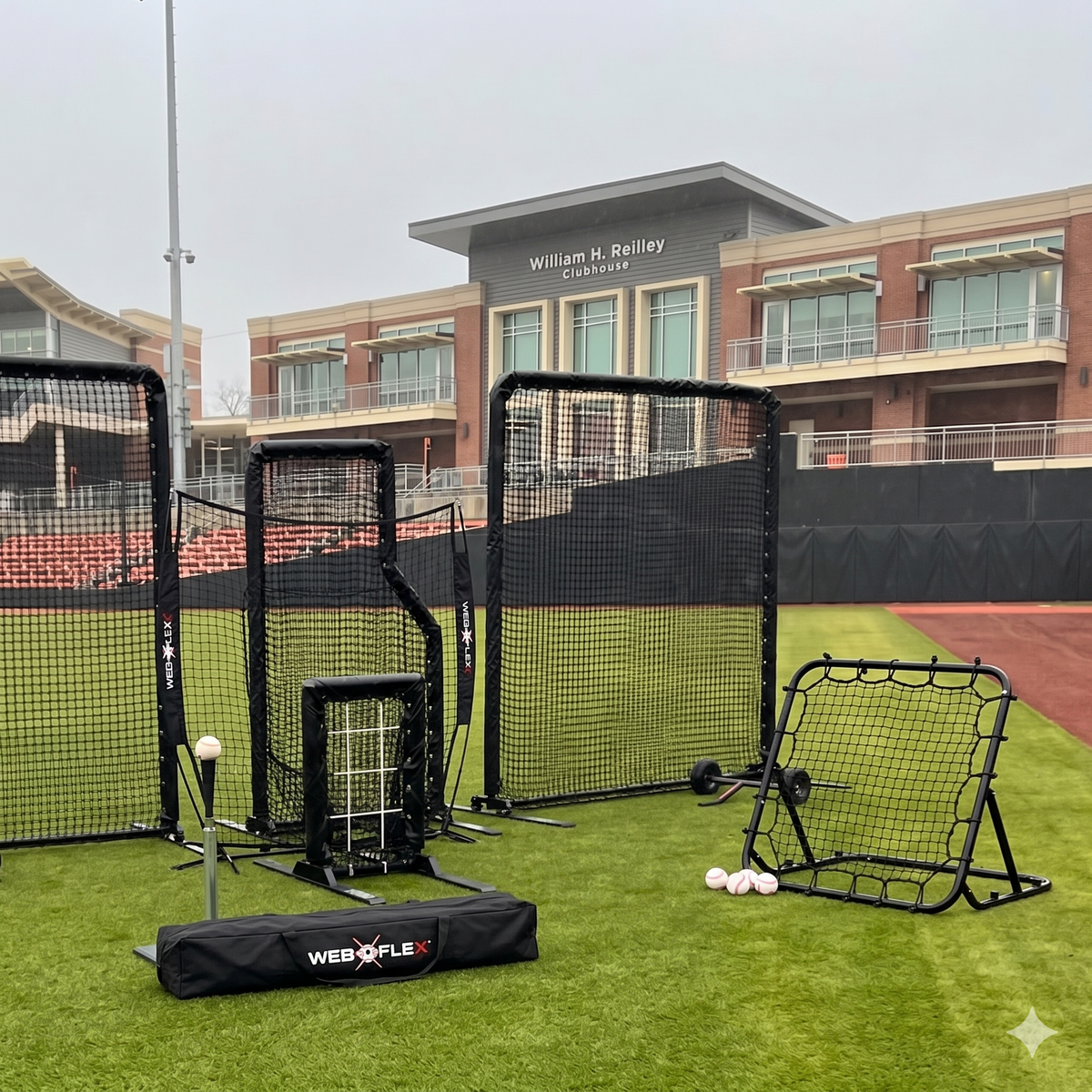
Portable nets are about flexibility. You can set them up in a backyard, driveway, gym corner, side field, or indoor facility lane, then break them down when the session is over. They work well for families, travel ball teams, coaches who move between fields, and facilities that need adaptable training stations.
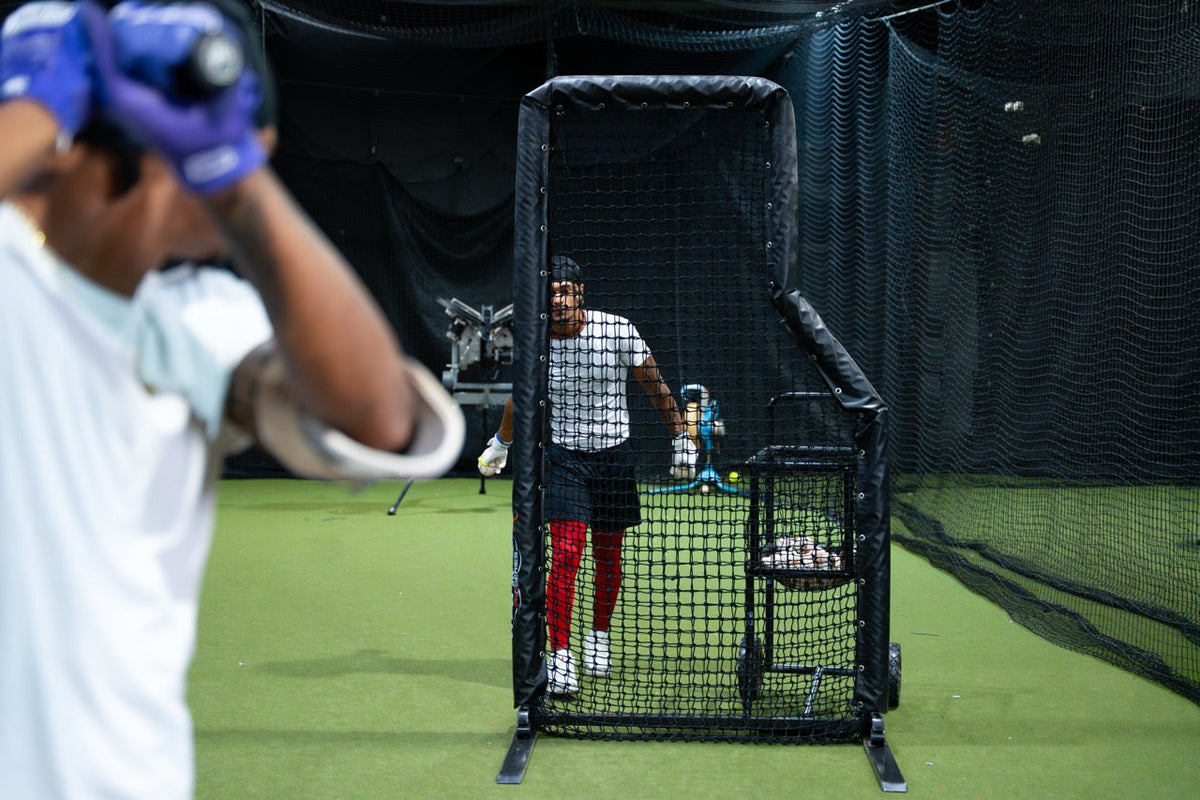
Permanent cages are about consistency and volume. They create a dedicated hitting or pitching environment that stays in place and can handle daily use with fewer compromises. If you have a committed training space and a steady schedule, a permanent cage can make sense.
The mistake is assuming permanent always means better. It only means more fixed. If your environment changes often, fixed can become a limitation.
When portable nets make more sense
Portable systems are usually the smarter choice when your training space has to do more than one job. That is common for families, school programs, and travel organizations. A field may host team practice one day, another sport the next, and weekend games after that. A portable net lets you create a station, get your reps, and clear out without turning the whole space into a construction project.
They also make a lot of sense for younger players and developing hitters. At that stage, frequent work matters more than elaborate infrastructure. If a player can get swings in after school because the net sets up in minutes, that setup will beat a permanent cage that is only available on certain days.
Portable nets also shine for coaches running station-based practices. You can separate front toss, tee work, soft toss, and pitcher recovery work without forcing every player into one lane. That keeps reps moving. For baseball and softball, that matters. Dead time kills good practices.
This is where product line matters. A lighter, travel-friendly build is ideal when setup speed and storage are the priority. That is exactly where the Spider Series fits. It gives athletes, parents, and coaches a practical net system that is easy to move, easy to store, and ready for repeat use without turning a simple practice into a heavy equipment operation.
The trade-offs with portable nets
Portability always comes with some compromise. Even a well-built portable net will not feel exactly like a fully enclosed fixed cage. Wind, ground conditions, and repeated high-velocity impact all matter. If your team is running heavy daily batting volume or training older players with serious exit speed, the net has to be built for that workload.
That is why frame strength, net attachment design, and base stability are not small details. Cheap portable setups fail at the stress points first. Frames bend, nets sag, and pockets wear out. In real practice, that means more interruptions and more replacement cycles.
If your usage is heavier but you still need mobility, that is where a stronger engineered system becomes the better answer. The Pro Series is built for that kind of demand. It gives coaches and facilities a portable option that is still serious enough for high-repetition work, with heavier-duty construction and the kind of durability you need when the equipment does not get to rest between sessions.
When permanent cages are the better call
A permanent cage earns its keep when your space is dedicated to baseball or softball and your training volume is high enough to justify it. High school and college programs, private instructors, and indoor facilities often benefit from a fixed cage because it creates a reliable, repeatable environment. The lane is always there. The dimensions stay the same. The work starts faster.
That consistency helps hitters and coaches. You do not spend time assembling equipment or adjusting alignment every session. In a busy facility, that saved time adds up over months.
Permanent cages also provide a more enclosed feel. For live work, machine reps, or multi-hitter training blocks, that can improve containment and reduce ball retrieval time. If your goal is to process a lot of swings in a controlled setting, a fixed cage can support that better than a basic portable net.
The trade-offs with permanent cages
The problem with permanent cages is not performance. It is commitment. They need space, planning, and enough year-round use to justify what they take up. If your field layout changes, your available area gets shared, or your family moves training between home, team practice, and indoor rentals, a permanent cage can become underused equipment pretty quickly.
There is also a false sense of versatility with permanent setups. A cage is great at being a cage. It is not always great at being everything else. It does not move to create fielding stations, redirect traffic flow, or adapt to small-area drills. That matters for coaches trying to build efficient practices, not just batting sessions.
So while permanent cages can be the right choice, they are best for programs that already know their training space and usage pattern are stable.
Safety and durability matter more than most buyers realize
When coaches compare portable nets vs permanent cages, they usually start with convenience. Fair enough. But safety and durability should be close behind.
A net or cage is not just there to catch balls. It controls the training environment. Good protection keeps coaches safer during front toss and batting practice. It keeps nearby players from drifting into danger areas. It helps hitters stay locked in instead of worrying about where every miss is going.
Durability affects safety too. Worn netting, unstable frames, and weak joints are not just annoying. They create unreliable practice conditions. That is why engineered construction matters. Equipment used for baseball and softball has to handle repeated impact, changing weather, transport, and uneven surfaces.
For heavier-use buyers, that is where a premium build pays off over time. The Pro Series is designed for programs that want a more serious long-term training asset, especially when repetition count is high and equipment abuse is part of the job. For more mobile users who still want a dependable setup, the Spider Series keeps portability front and center without pretending every buyer needs the biggest fixed solution available.
How to choose the right setup for your training environment
The best decision usually comes down to three questions.
First, how often do you need to move the setup? If the answer is every session or every week, portability is not a bonus feature. It is the main feature. A permanent cage will fight your routine instead of helping it.
Second, how many reps will the equipment handle? A solo hitter taking tee swings in the yard needs something different than a school program cycling multiple athletes through daily batting practice. Higher volume demands stronger materials, more stable construction, and less tolerance for wear.
Third, is your space dedicated or shared? Dedicated spaces favor permanent infrastructure. Shared spaces reward portable systems that can be set up fast, used hard, and stored cleanly.
That is why there is no one-size-fits-all answer. A travel ball family may get far more value from a portable net they use four days a week than from a permanent cage they access once in a while. A facility owner may see the opposite. The right setup is the one that gets used consistently and holds up to your real workload.
If you want the simplest rule, use this one: choose permanent when your space is fixed and your volume is high. Choose portable when your training needs move and your schedule demands flexibility. Then choose the build level based on how hard the gear will be used. For lighter, mobile setups, the Spider Series is a smart fit. For serious repetition, tougher environments, and long-term durability, the Pro Series is the stronger answer.
Good equipment should make practice easier to run, safer for everyone involved, and tough enough that you stop thinking about the gear and get back to the work.