
Every spring we hear the same thing from parents and coaches. The players who show up sharp on day one of practice are rarely the ones with the most talent. They are the ones who never fully stopped.
Winter is where seasons are won. The fields are closed, the weather is unpredictable, and most players put the bat in the closet until February. That gap is your opportunity. Twenty to thirty focused minutes, three days a week, adds up to more than 1,000 quality swings before the first official practice.
Here is the plan we recommend, built for a garage, basement, barn, or backyard.
Weeks 1 to 3: Rest, Reset, and Rebuild
After a long fall season, the body needs a break. Use these first weeks to recover, not to grind.
Give the throwing arm real time off. Follow your coach’s or physician’s guidance on how long, but do not skip this step. A rested arm in December is a healthy arm in April.
Keep the swing alive with light tee work two or three days a week. Fifty swings is plenty. The goal is rhythm and feel, not volume.
Pick one thing to improve this winter. One. Maybe it is staying through the ball, maybe it is a shorter path to contact. Write it down and tape it to the wall where you train.
Weeks 4 to 8: Build the Foundation
Now the work starts to count. Bump up to three or four sessions a week.
Tee work with a purpose. Move the tee to every part of the zone: inside, outside, up, and down. Hit five quality swings from each spot, then reset. Bad swings do not count toward the total.
Front toss behind protection. A partner tosses from behind a protective screen while the hitter drives balls into the net. This adds timing without adding risk. Never feed from in front of a hitter without a screen between you.
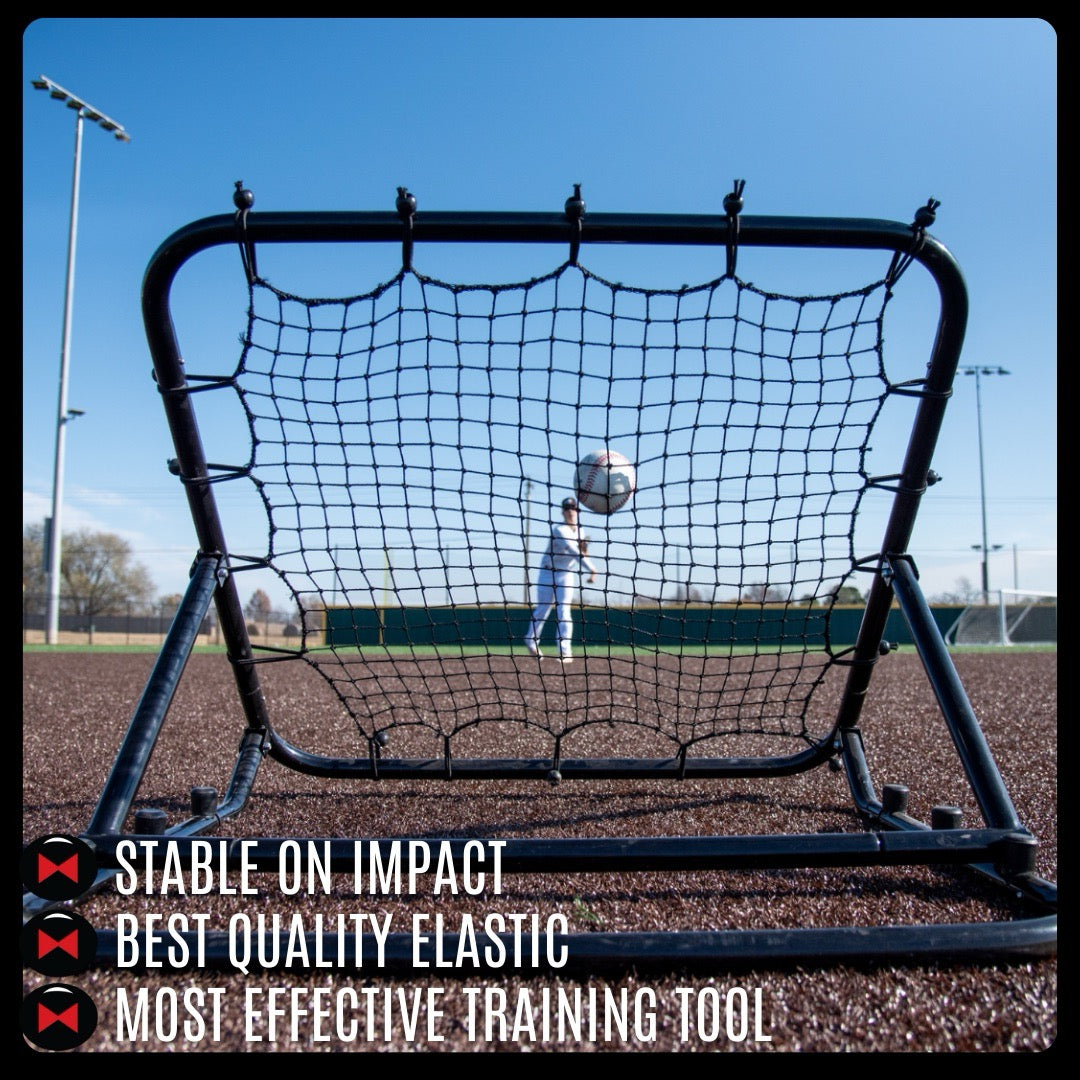
Rebounder reps for every player. Fielders work quick hands and footwork off a rebounder. Pitchers can work catch and throw at short distances as their arm comes back online.
Weeks 9 to 12: Sharpen for the Season
The last month is about game speed and sharp habits.
Situational hitting. Call out counts and situations before each round. Two strikes, runner on third, less than two outs. Make the hitter adjust.
Pitch to targets. Pitchers who are cleared to throw should work location, not velocity. A pitching target gives instant feedback on every pitch and keeps the bullpen honest.
Simulate the first practice. In the final week, run through the same warmup and drill sequence the team will use. Players who already know the routine walk in confident.
Setting Up Your Winter Training Space
You do not need a full indoor facility. You need four things.
A net that can take real swings. Your hitting net should handle full-effort contact, not just soft toss. Check it before you start. A torn net in week six ends your winter plan fast.
A sturdy batting tee. A tee that tips over or slides on concrete teaches bad habits. You want one that stays put and adjusts to every height in the zone.
A protective screen for anyone feeding balls. This is the piece families skip most often, and it is the one that matters most. If someone is tossing, they belong behind a screen.
A rebounder or target. It turns solo time into productive time for fielders and pitchers when no partner is around.
Our sturdybattingtee and 3x3rebounder set up in minutes and fold down when you need the garage back. Teams and facilities that want something built for heavy daily use should look at our Pro Series line, built with all-steel frames SpiderSeriespopupnets and our patented Flex Technology.
Want everything in one box? The Spider Series Ultimate Baseball Training Package includes the rebounder, tee, net, and strike zone together.
Three Mistakes That Waste a Winter
Swinging for volume. Two hundred lazy swings build two hundred bad habits. Fifty focused swings beat them every time.
Training without a plan. Players who wander into the garage and “hit for a while” plateau quickly. Use the phases above and track your sessions.
Skipping arm care. The fastest way to lose a spring is to start throwing hard in January on an arm that never rested. Build back gradually.
Who This Is Built For
Parents of travel and school ball players who want their athlete ready on day one.
Players ages 9 and up who are ready to take ownership of their offseason.
High school and travel coaches looking for a simple winter plan to hand their teams.
Facilities and organizations stocking indoor training spaces for the winter months.
Frequently Asked Questions
How many days a week should a player train in the winter?
Three to four short sessions a week works for most players. Consistency matters more than length.
Can I hit full-effort swings into a net in my garage?
Yes, as long as the net is rated for real contact and you have enough room around the hitter for a full, safe swing. Clear the area of anything breakable and check the net before every session.
When should pitchers start throwing again?
That depends on the player’s age, workload, and their coach’s or physician’s guidance. Rest first, then build back gradually before working on location.
Do I need a protective screen if I am only doing soft toss?
If someone is feeding balls in front of a hitter, yes. A screen is the simplest injury prevention in baseball and softball.
Gear Up Your Team for Winter
Coaches, organizations, and facilities outfitting multiple players or an indoor space can call our team for bulk pricing and help building the right setup.
Call 844-864-0888 or shop the full lineup at webflexsports.com.