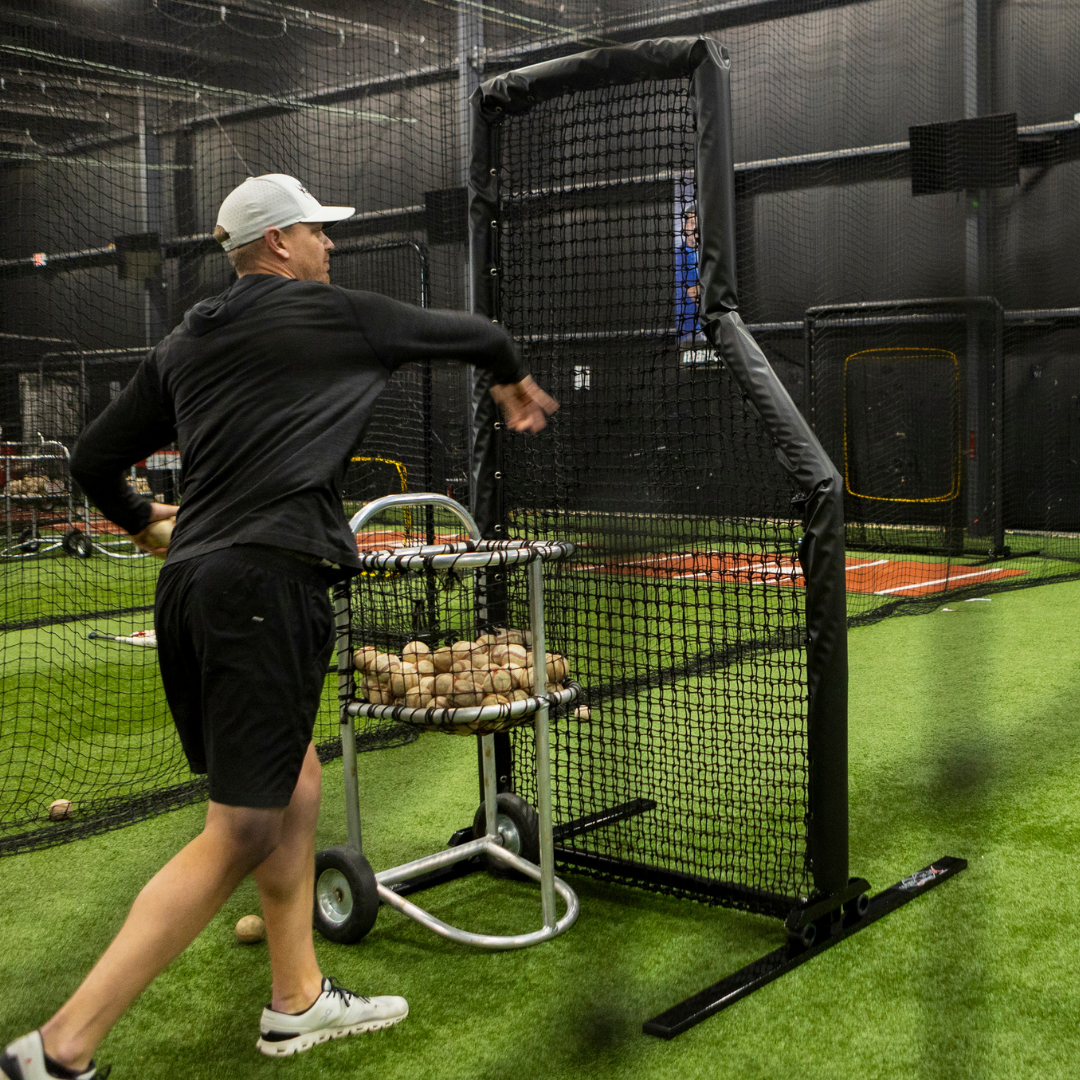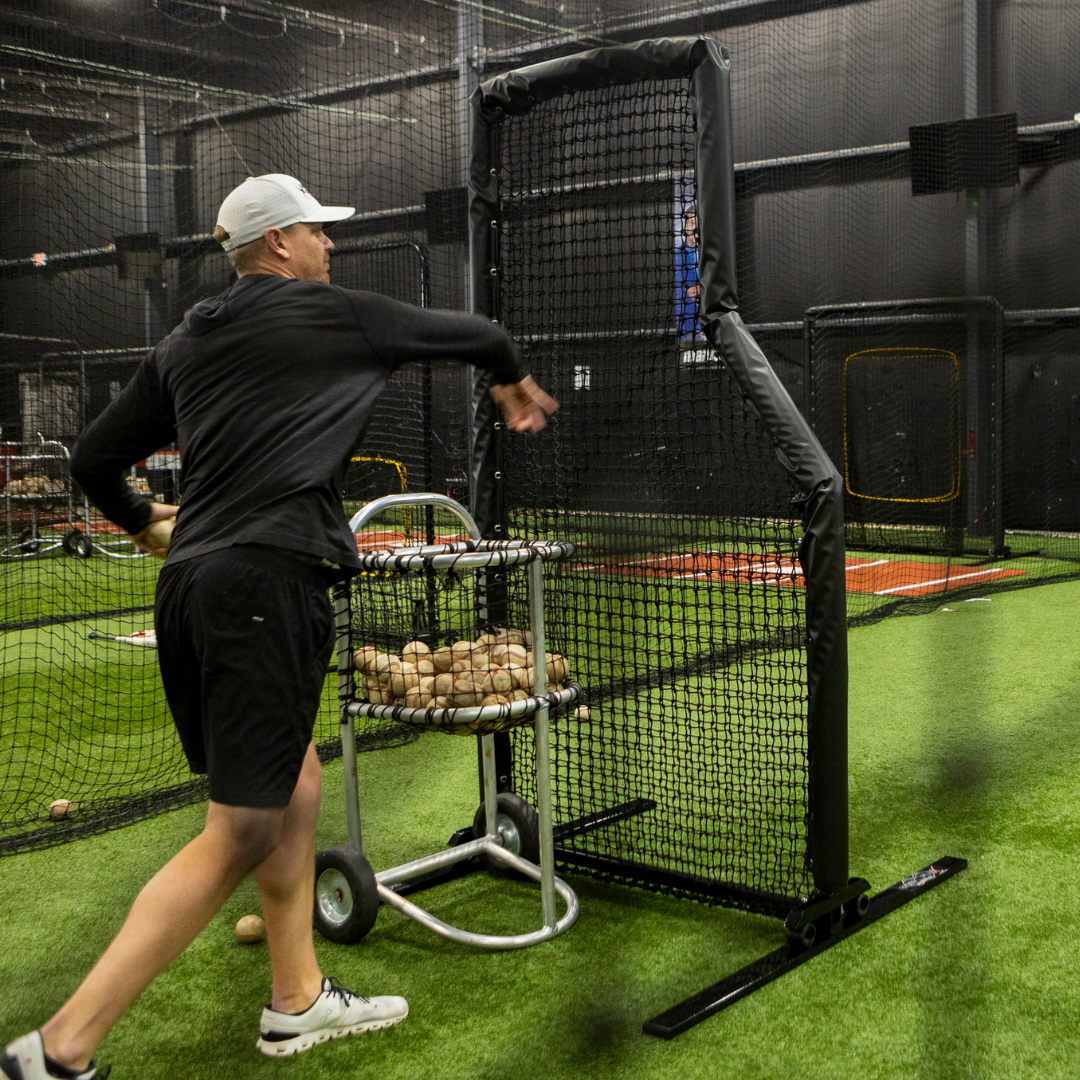

Why I Built the Pro Series Pitching Target, And Why It's the One I'd Put on Any Mound in America

By Parker Bridwell, founder of Web Flex Sports and former MLB pitcher (Baltimore Orioles, Los Angeles Angels)
I won my first nine straight road decisions in the big leagues. That's tied for the second-longest streak of its kind in MLB history.
I'm not telling you that to brag. I'm telling you because of what I had to do to make it happen.
Command. That's it. I wasn't blowing anyone away with velocity. I stayed in the show because I could put the ball where I wanted it, on demand, in the worst hitter's parks in baseball. And the only way you build that kind of command is reps, thousands of them, smart and focused, with a target that either gets hit or doesn't.
Here's the problem I ran into all the way up through my career, from Texas summer ball to Triple-A Norfolk to Baltimore and Anaheim: nobody made a pitching target that could actually do the job. The cheap stuff fell apart inside a season. The expensive stuff was built for the wrong things. None of it was designed by somebody who'd actually thrown to it for a living.
So when I got into the equipment side with Web Flex Sports, the pitching target was the first thing on my list. The Pro Series Pitching Target, Regular and XL, is what we built. It's what I'd put next to any bullpen mound in America without thinking twice.
Here's why.
Quick answer: what's the best pitching target for coaches?
The best pitching target for coaches is one that defines a real strike zone, holds up to thousands of high-velocity reps, doesn’t move when hit with a pitch, and doesn't need a catcher to function. The Pro Series Pitching Target from Web Flex Sports, designed by former MLB pitcher Parker Bridwell and tested at over 100 mph, meets all four. It's currently in use at the University of Louisville, Oklahoma State, Northwestern State, Lyon College (baseball and softball), and UCA softball, among other programs.
That's the answer if you came here from a search and want it straight. If you've got a few more minutes, here's the rest.
What a pitching target actually needs to do
Most pitching screens online were designed by people who've never thrown a bullpen on a forty-degree morning before a Saturday doubleheader. They look fine in a stock photo. They fall apart in real life.
A pitching target that earns a permanent spot in your equipment shed has to do four things, every day, for years:
· Stay put. Pitchers shouldn't be chasing baseballs because the target tipped over.
· Define the strike zone. Command is built by repeating a sight picture. A vague or floating zone teaches pitchers nothing.
· Survive abuse. A 14U arm and a college closer should both throw at it, and both should bounce off without leaving a mark.
· Set up fast. It should be easily moved into place for your bullpen session.
That's the brief I gave myself when we started designing the Pro Series. Everything else was secondary.
Pro Series Pitching Target (Regular): the everyday workhorse

This is the one I'd recommend for most programs, high school, travel ball, college, JUCO, and any private instructor running a serious lesson schedule.
The frame is reinforced where pitchers actually hit it, not where it looks best on camera. The netting carries a real gauge spec, and we'll show you the number. The strike zone target sits at an actual strike zone, not floating three feet off the ground because somebody designed it without ever standing on a mound.
A few things you notice once you've put one in service for a season:
· Pitchers stop chasing balls between pitches. The pocket catches them clean. That alone speeds up bullpens noticeably.
· It's stable enough to throw heat at without anchoring.
· One coach can carry it out and set it up. Nobody needs help.
· We have a wheel dolly that can assist in rolling it into place.
For most programs, the Regular is the right call. It's the "buy one for every bullpen mound" version.
Pro Series Pitching Target XL: when bigger is the right answer

The XL exists for three specific situations.
First: versatility, The XL is a foot taller than the regular pitching target. Its perfect for working up in the zone. You can throw a riseball and a dropball and never have to adjust the height. Work the spin rate with a fastball up or a breaking ball in the dirt for an out pitch.
Second: camps and clinics, If you're running a clinic with thirty kids you've never coached, you don't have time to assess every arm before they start throwing. The XL handles whatever shows up.
Third: indoor work, In a gym or a warehouse, there's no fence behind your target. The XL keeps loose baseballs from rolling under the bleachers and into the wrestling team's mat space.
Same build quality as the Regular. Same frame, same netting, same gauge spec. Just more of it.
How the Pro Series compares to other pitching screens
I'll be straight with you, there are other pitching screens on the market. A few are okay. Most aren't. Here's how I see the field.
Cheap pop-up screens are exactly what they look like. They flop in a stiff breeze, they don't define a strike zone, and the netting goes inside one season. If you need it for a single tournament, fine. If you're running a program, skip them.
The Pro Series sits in the spot coaches are actually trying to find: pro-level durability, real strike zone design from a guy who spent a career chasing one, and a price point where you can outfit multiple bullpens without writing a grant.
It's been tested at over 100 mph. It's currently in active use at:
· University of Louisville baseball
· Oklahoma State baseball
· Northwestern State
· Lyon College (baseball and softball)
· UCA softball
…plus a long list of high schools, travel organizations, and private facilities I won't run through because the page would never end.
I don't lead with the school list because nobody picks gear off a logo wall. But when you're spending program money on equipment that's supposed to last, those names matter.
Who the Pro Series is built for
· High school programs running multiple bullpens at once
· Travel organizations hauling gear in and out of trucks twice a week
· Pitching coaches running private lessons who need a target that survives 100+ reps a day
· Camp and clinic directors handling thirty-plus pitchers across age groups
· College and JUCO programs that want pitchers dialing in command without burning out a bullpen catcher
· Throwing Batting Practice so the coach has a target and the balls are easily gathered.
If that's your world, the Regular or the XL is a perfect fit.
FAQ: what coaches ask me before they buy
Will it hold up to college velocity?
Yes. The Pro Series has been tested at over 100 mph and is currently in use at D1 programs including Louisville and Oklahoma State, plus Northwestern State, Lyon College, and UCA softball. If it survives those bullpens, it'll survive yours.
Who designed the Pro Series Pitching Target?
I did. Parker Bridwell. I pitched in the major leagues with the Baltimore Orioles and Los Angeles Angels. To start my MLB career I won nine straight road decisions — tied for the second-longest streak of its kind in MLB history. I built this product because I needed it when I was coming up and nobody had made it yet.
What's the difference between the Regular and the XL beyond size?
Size, that's basically it. The frame and netting quality are identical. If you're choosing between them, ask yourself what do I need it to do.
Can one coach set it up alone?
Yes. Both versions are designed for one-person to move it around easily, with our without the wheels.
Does it work indoors?
Yes. Plenty of our customers run them year-round in cages, gyms, and warehouses.
Is the Pro Series good for softball too?
Yes. Lyon College and UCA both use the Pro Series targets on the softball side. The strike zone is the strike zone, the target works for either game.
The bottom line
When a coach asks me what the best pitching target is for their program, I don't hedge. The Pro Series, Regular for most situations, XL for the ones above, is what I'd put next to my own kid's mound. It's the one I'd have wanted when I was throwing bullpens at 5 a.m. trying to figure out how to stay in the league.
If you're outfitting a program and need pricing on multiple units, give us a call at 844-864-0888. We work with high schools, colleges, travel organizations, and camps every week, and we'll get you the right setup for what you're actually trying to do.
See you on the field.
Parker Bridwell
Founder, Web Flex Sports
Former MLB Pitcher, Baltimore Orioles & Los Angeles Angels