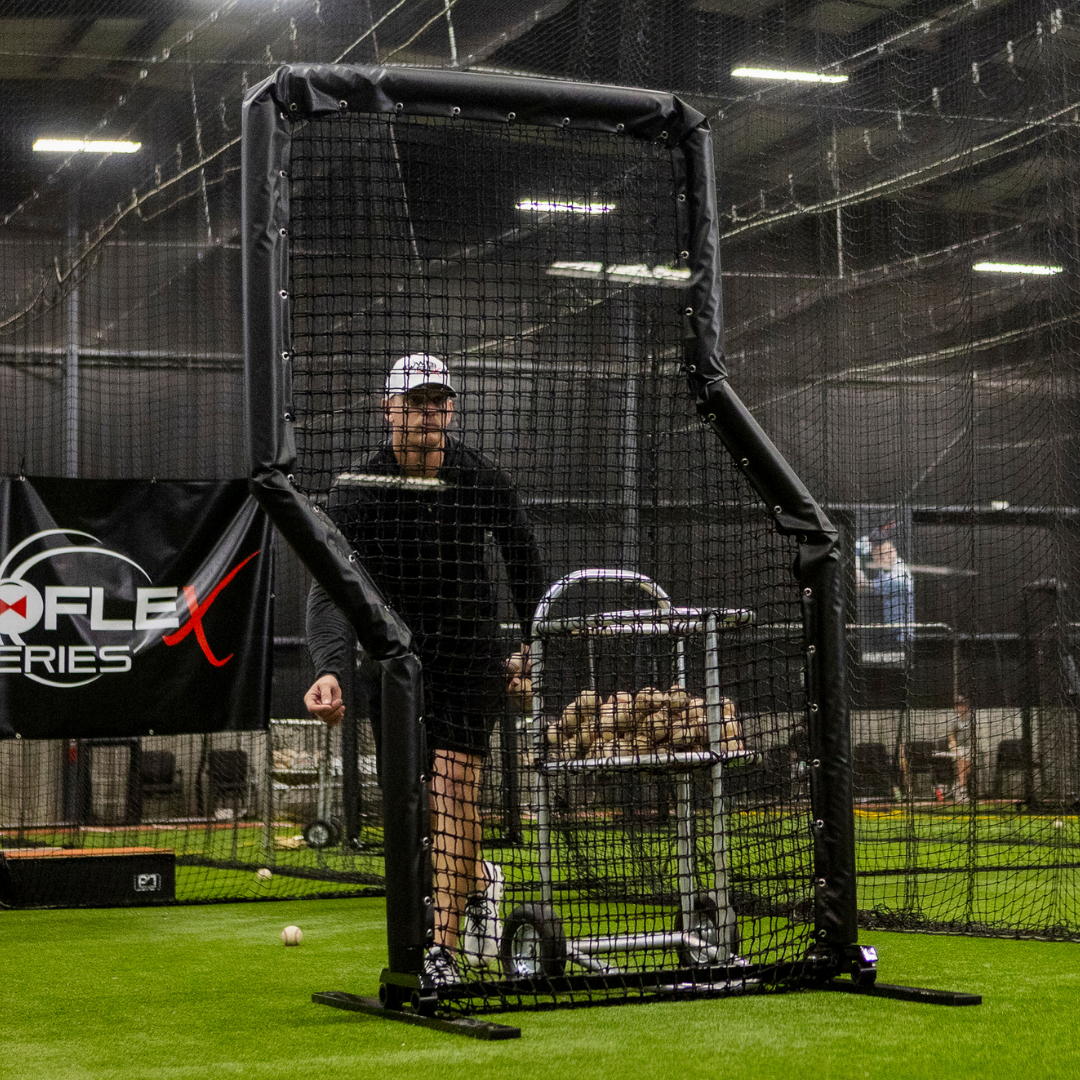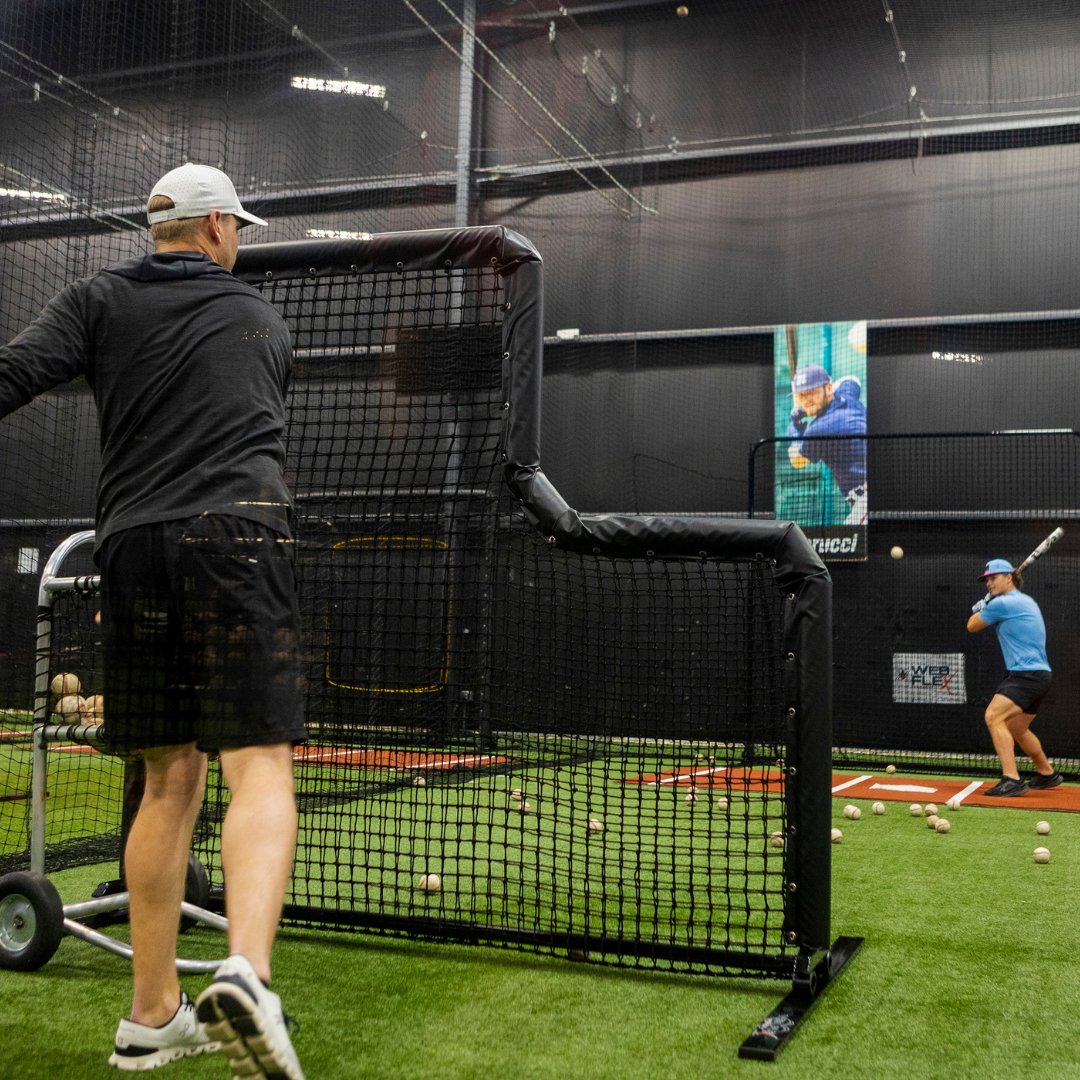

The wrong L-screen shows its weaknesses fast. A frame that is too small leaves pitchers exposed. A screen that is too large for your cage or practice area becomes a hassle to move, store, and set up. If you are asking what size l screen you need, the answer comes down to who is training, how often it will be used, and how much protection the setup really requires.
An L-screen is not just a net with a cutout. It is a safety tool that has to hold up under repeated contact from baseballs and softballs while giving coaches and pitchers enough coverage to work confidently. Size matters because protection, visibility, portability, and durability all change depending on the frame you choose.
What size L screen is standard?
For most baseball training environments, the standard L-screen size is 7 feet by 7 feet. That size gives solid upper-body and lower-body protection for batting practice while still fitting comfortably in most cages, bullpens, and field setups. It is the most common choice because it balances coverage with manageable footprint.
In softball, many players and coaches lean toward a screen with a shape or cutout that better matches underhand pitching angles, but overall dimensions often stay in the same general range. What changes more than the raw height and width is the way the screen is oriented and how much side protection it provides.
If you coach youth players, a full-size 7-by-7 screen can still be a smart choice because it creates a bigger margin for error. Younger athletes do not always repeat mechanics consistently, and practice environments can get chaotic. Extra coverage is usually a good thing when safety is the priority.
The real question behind what size l screen
Most buyers are not really asking for a number. They are trying to avoid one of two mistakes: buying too small and sacrificing protection, or buying too big and ending up with equipment that is annoying to use.
That is why screen size should be tied to the training job. A backyard setup used a few times a week has different demands than a high school field, travel ball program, or private facility where hundreds of balls may hit the net every session. The more volume you put through a screen, the less room there is for compromise.
For youth players and backyard practice
If the screen is mainly for light batting practice, front toss, or casual throwing sessions, portability may matter almost as much as coverage. Families often need gear that can be moved by one person, loaded into a vehicle, or stored between uses. In that case, a lighter frame can make sense.
The trade-off is stability. Smaller or lighter screens are easier to handle, but they may not feel as planted during intense sessions. That is fine for lower-volume practice. It becomes a bigger issue when older hitters start driving balls with real force.
For travel ball, school programs, and regular team use
Once the screen is being used by multiple athletes several times a week, standard full-size protection is usually the better play. Team settings create more repetition, more wear, and more chances for mishits. A larger, heavier-duty frame gives coaches and players more confidence to stay behind the screen and keep the drill moving.
This is where durability starts to matter just as much as dimensions. A 7-by-7 screen built for occasional use is not the same as a 7-by-7 screen built for high-volume training. Same size on paper, very different long-term result.
For facilities and serious high-rep training
In cages, lessons, and commercial training spaces, size should support efficiency as much as safety. Coaches do not want to constantly reposition a screen that is too small to cover the working area. At the same time, they need enough visibility to throw, feed, or coach without fighting the frame.
A full-size screen with strong net support and a stable base is usually the right fit here. The screen needs to absorb repeated impact without folding, shifting, or wearing out early. In these environments, underbuying tends to show up quickly.
How to choose the right L-screen size for your setup
Start with the athlete. A youth baseball player taking controlled tee and front toss reps does not create the same demands as varsity hitters or college-level arms. As players get stronger, the value of more complete protection goes up.
Next, look at the training space. A standard-size L-screen fits most common practice setups, but there are exceptions. If you are working in a compact batting cage, garage, or smaller indoor area, you need enough clearance for the frame, safe movement around it, and a proper throwing lane. A screen that technically fits but crowds the entire station is not the right size.
Then consider frequency of use. If the screen is going out once a week, a lighter, more portable option may be perfectly practical. If it will live on a field or in a cage through constant use, heavier construction and a more planted design are worth it.
Finally, think about who is moving it. Coaches and facility staff may prefer a more substantial screen because it stays put and handles abuse better. Parents and individual players may prioritize something they can transport without help. Neither approach is wrong. It depends on what the screen has to do every day.
Screen size affects safety more than most buyers expect
The biggest mistake with L-screens is treating them like all protection is equal. It is not. The opening, frame width, and overall height all influence how much of the pitcher or coach is actually shielded during live batting practice.
A screen that is too narrow can leave the lower half vulnerable on balls hit back through the middle. A screen that is too short may not give enough protection on line drives with carry. Even if a smaller frame looks easier to manage, the reduction in coverage can become a real problem once hitters start swinging harder.
That does not mean the biggest possible screen is always best. Oversized equipment can be awkward in tighter spaces and may slow down setup changes between drills. The goal is not maximum bulk. The goal is dependable protection that fits the drill and the environment.
Baseball and softball players may not need the exact same screen
Baseball and softball both use L-screens, but the ideal setup is not always identical. Baseball batting practice often benefits from the classic full-size L-screen shape that protects overhand throwing angles. Softball training can require a screen shape that works better for underhand delivery, front toss variations, or mixed-use cage work.
That is why buyers should think beyond the simple question of height and width. The cutout placement and overall screen design matter too. If the drill changes, the best screen design may change with it.
Portability versus protection
This is where many buyers have to make a real decision. Portable screens are easier to move, easier to store, and often better suited for families, travel teams, and multi-use practice spaces. Heavier-duty screens are tougher, more stable, and better for repeated high-impact use.
There is no perfect answer for every buyer. If convenience is the reason the screen will actually get used consistently, portability has real value. If the screen will be a central piece of batting practice infrastructure, heavier protection is usually the smarter long-term choice.
At Web Flex Sports, that split is easy to understand. Some athletes need lightweight equipment that travels well and sets up fast. Others need a more serious frame built to handle constant work. The right size L-screen is the one that matches both your training level and the reality of your practice environment.
A simple way to make the right call
If you are unsure, default to a standard full-size L-screen for baseball or softball team practice. It gives you enough coverage for most players, most drills, and most settings. From there, decide whether your priority is lighter portability or heavier-duty performance.
If you know the screen will see high-volume use, choose the version built to take that punishment. If you know storage and transport are the bigger challenge, choose the option that is easier to move without giving up essential protection. A screen only helps if it fits your routine well enough to be used every time.
The best practice gear does not just survive training. It makes training safer, faster, and easier to trust. Pick the size that lets you coach and compete without second-guessing the setup.